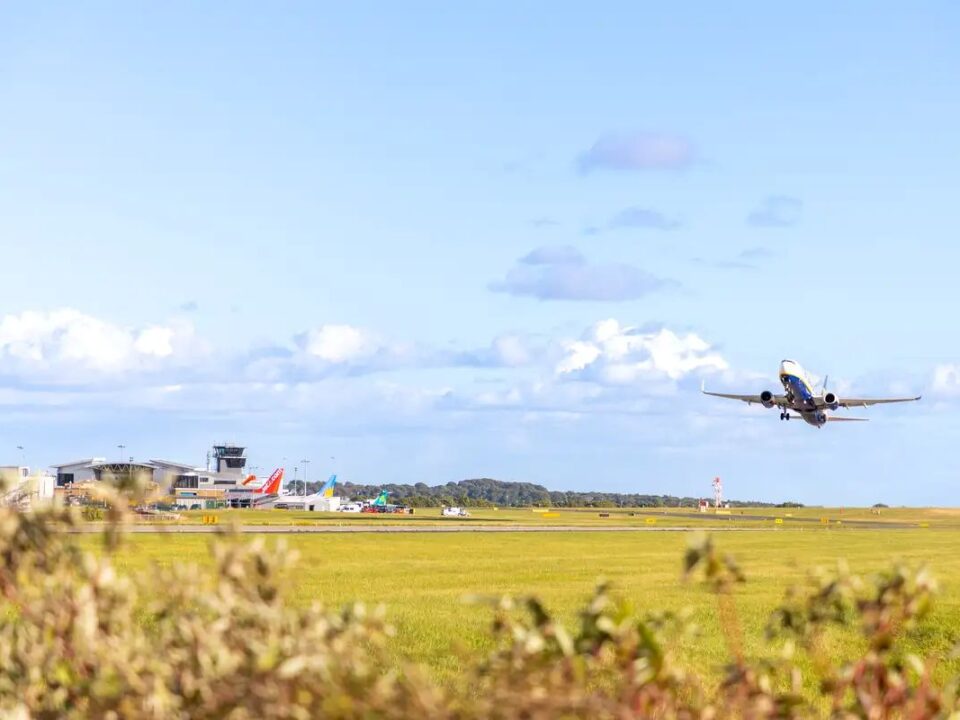
Hot air balloons carrying thousands of cartons of contraband cigarettes from Belarus entered Lithuanian airspace over the weekend, forcing the temporary closure of Vilnius Airport and disrupting operations as they drifted through the country’s airspace.
The National Crisis Management Centre (NCMC) reported that 25 high-altitude balloons crossed into Lithuania from Belarus, entering via the south-eastern part of the country. The balloons were recorded flying between 8:45 pm on Saturday and 4:30 am on Sunday. Two of the balloons flew directly over Vilnius Airport, disrupting operations there for over 30 hours, with some speculating that it was a Russian probing operation.
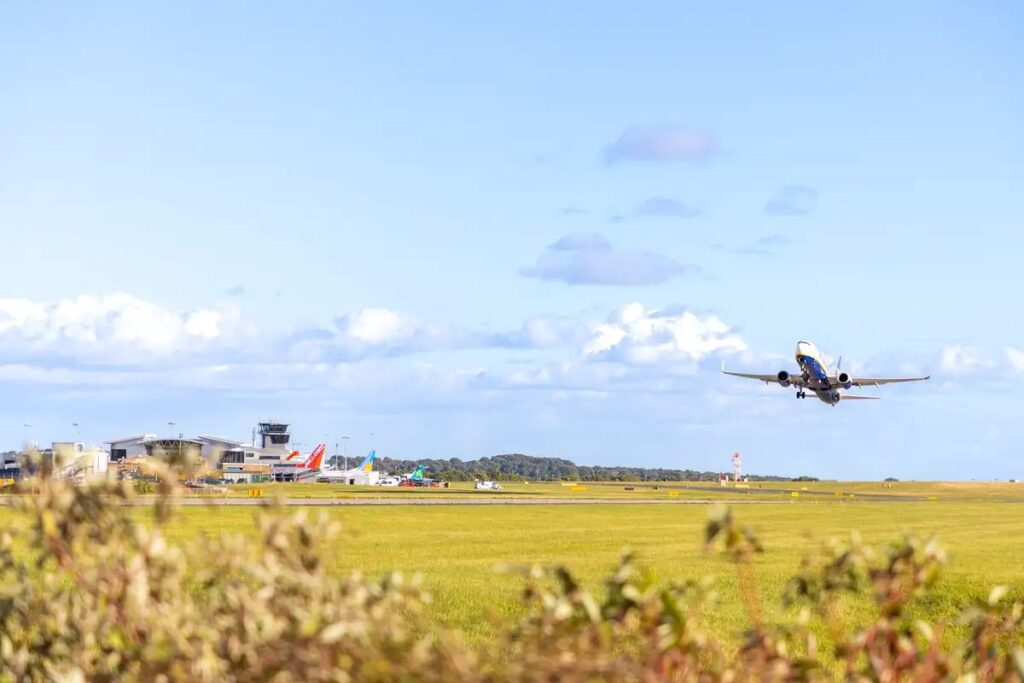
Due to safety concerns, the airport temporarily suspended all activities for several hours. As a result, 30 flights were cancelled, affecting 6,000 passengers directly, while others were redirected to Kaunas and Riga.
The airport issued a statement saying that it had received information about a possible series of hot air balloons flying in the direction of Vilnius Airport. To ensure flight safety, it said it decided to apply temporary restrictions. The airspace reopened on Sunday morning at around 4:50 am.
According to Lithuanian authorities, fourteen of the balloons floated over Vilnius County, close to the Belarusian border. The State Border Guard Service has confirmed that eleven of the balloons have been recovered so far.
Lithuania's Vilnius Airport announced that its airspace had reopened after a closure in the early hours of Sunday,
— FL360aero (@fl360aero) October 5, 2025
More than 20 balloons used to smuggle counterfeit cigarettes from Belarus to Lithuania disrupted operations at Vilnius airport overnight and affected around 30… pic.twitter.com/U7KgqrmiUf
While this incident has made the headlines due to the disruption it has caused at the airport, it is not an isolated phenomenon. Since the beginning of 2025, 544 balloons have been recorded entering Lithuanian airspace from Belarus. In 2024, 966 balloons were logged.
Darius Buta, an NCMC spokesperson, told the Associated Press that “balloons carrying contraband cigarettes from Belarus are nothing new in Latvia, Poland and Lithuania”.
In Poland, the authorities have recorded 100 cases of balloon fraud smuggling in the past month. They also arrested a Belarusian citizen believed to be involved in one such smuggling operation after discovering a geolocation tag on his phone that linked him directly to the illicit goods smuggled via the balloon.
Buta explained that the objective of NCMC’s services was “to seize the largest possible quantities of contraband and detain organisers and perpetrators, rendering this activity unprofitable and eliminating the risk to civil aviation”.
Although they are not steerable, smugglers have favoured meteorological balloons for several years because they are cheaper than drones.
Balon z transportem 2 tysięcy paczek papierosów wylądował w centrum Białegostoku. Do tego momentu pozostawał niezauważony. Miał aktywny lokalizator. Papierosy marki Mińsk na BY w detalu kosztują 6 zł. To 90 tego rodzaju próba przemytu z BY wykryta przez Policję i SG. Skoro to… pic.twitter.com/ozD9bDMuf8
— SluzbyiObywatel.pl (@SluzbyiObywatel) September 27, 2025
In recent months, multiple airspace violations involving drones have caused significant disruption to international flights. Russia has denied any involvement in the latest balloon smuggling case.
However, Moscow’s ongoing incursions into NATO airspace have put the European Union (EU) on high alert, with some officials suggesting that Russia may be ‘testing the waters’ by probing the effectiveness and responsiveness of regional air defence and detection systems.
On 10 July, a Russian-made Geran-2 drone, which has been widely used by Russia in Ukraine, was flown into Lithuania from neighbouring Belarus and ended up crashing in Vilnius County.
Less than three weeks later, another drone crashed on military training grounds. In response, the Lithuanian authorities authorised the armed forces to shoot down any unmanned aerial vehicle that violates its airspace.
Belarus’ president, Alexander Lukashenko, is a close ally of Vladimir Putin and has supported Moscow since its invasion of Ukraine in 2022. The country hosts Russian troops and equipment, shares air defence systems, and allows Russian troops to operate from its territory.