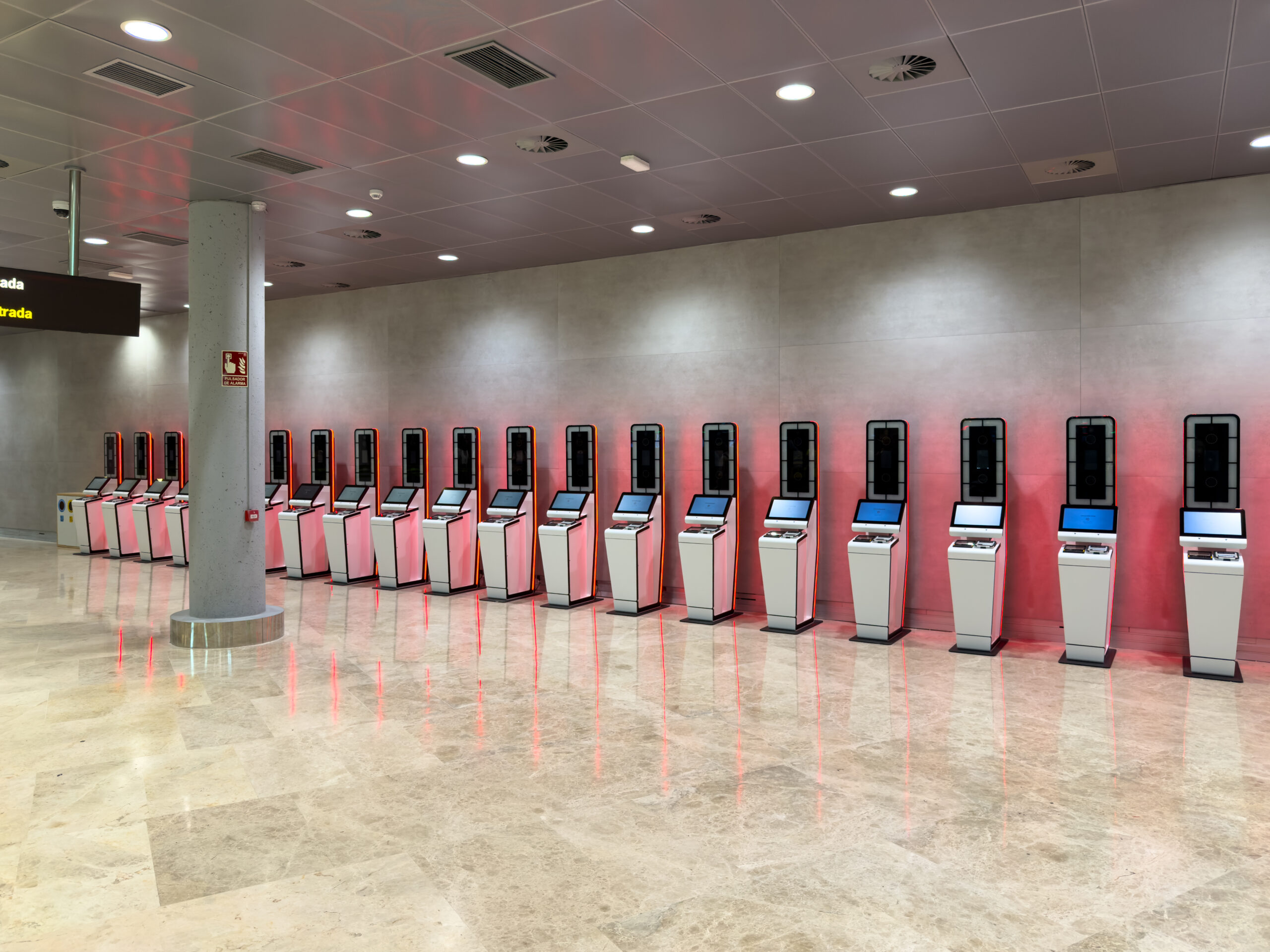


Europe’s new Entry-Exit System is causing massive increases in airport processing times, an airport industry body has said. In a press release, ACI EUROPE has called on the European Commission, euLISA, Frontex and Schengen Member States to deal with what it calls “mounting operational issues with the implementation of the Schengen Entry-Exit System (EES), which started on 12 October 2025.”
EES is intended to boost European security by logging information from travellers and tracking their journeys within the Schengen area. After a long lead-in period, the system came into force under a phased schedule in October. But the “progressive scalingup of the registration and capture of biometric data from third country nationals entering the Schengen area has resulted in border control processing times at airports increasing by up to 70%,” ACI claims, noting waiting times of up to three hours at peak traffic periods. The association, which represents airport operators worldwide, said the problem is “severely impacting the passenger experience — with airports in France, Germany, Greece, Iceland, Italy, Portugal and Spain especially impacted.”
The new Entry/Exit System (EES) has started recording non-EU nationals travelling to Europe for short stays.
— Europol (@Europol) December 20, 2025
💡 Find out how the EES helps combat crime, what type of data Europol has access to and how does this comply with data protection standards: https://t.co/g16o5XKAPi pic.twitter.com/WrSBs4Irg7
ACI has blamed the situation on a combination of issues, including regular EES outages and “persistent” EES configuration problems, including the partial deployment or unavailability of selfservice kiosks used by travellers for registration and biometric data capture, the “continued unavailability” of Automated Border Control (ABC) gates for EES processing at many airports, the lack of an effective preregistration app, and “insufficient deployment of border guards at airports, which reflects acute staff shortages at the authorities in charge.”
In a statement, Olivier Jankovec, Director General of ACI EUROPE, warned that even with the current threshold for traveller registration at only 10%, “significant discomfort is already being inflicted.” With that threshold due to increase to 35% on 9 January 2026, he said that “much more severe congestion and systemic disruption for airports and airlines” would result, including possible “serious safety hazards.”
Jankovec added: “We fully understand and support the importance of the EES and remain fully committed to its implementation. But the EES cannot be about mayhem for travellers and chaos at our airports. If the current operational issues cannot be addressed and the system stabilised by early January, we will need swift action from the European Commission and Schengen Member States to allow additional flexibility in its rollout.”
🎄Planning to #TravelToEurope for the holidays? You may hear about two new EU border systems: EES and ETIAS.
— EU Home Affairs (@EUHomeAffairs) December 19, 2025
🛂The Entry/Exit System (EES) started operating in October 2025.
ETIAS is a travel authorisation expected to start in the last quarter of 2026. Learn the differences🎥 pic.twitter.com/L5D9c55lum
But the European Commission has denied any problems. A spokesperson said: “The entry-exit system was successfully launched across member states in a progressive approach on 12 October 2025. Since its start, the system has operated largely without issues, and any initial challenges typical of new systems have been effectively addressed.” The spokesperson added that Member States have exceeded the initial 10% registration threshold, and have been “even surpassing the next threshold, with already more than 50% of estimated arrivals registered. Any concerns about potential issues at the 35% registration threshold have therefore been disproven.”