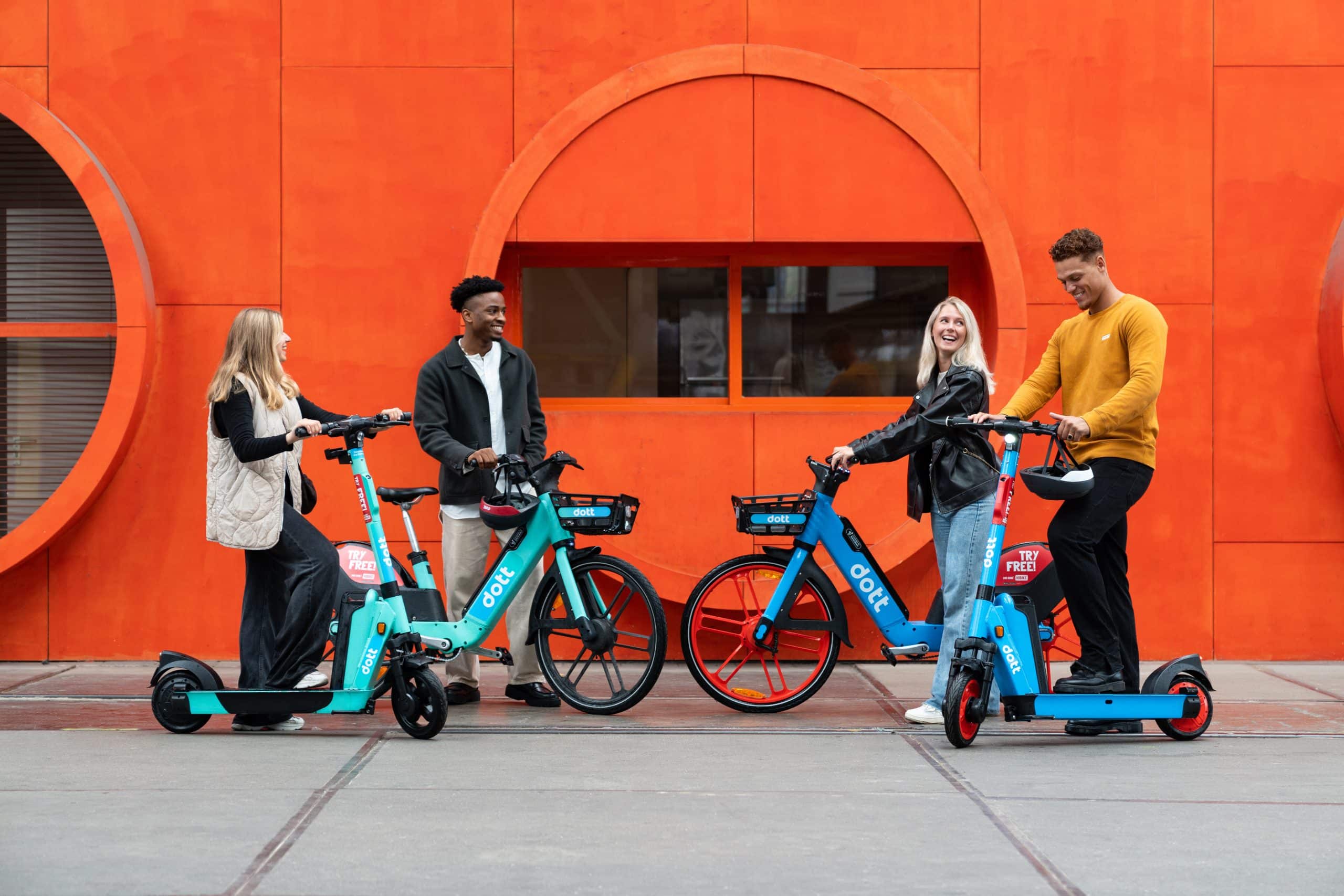



From today, helmets are compulsory in Belgium for riders of electric scooters with a top speed above 20 km per hour, following a decree issued by the Federal Service of Mobility and Transport on 28 August 2026. The helmet must protect the rider’s temples and the back of the head and meet the EN1078 standard.
Concerns over scooter safety have been multiplying for a number of years since their first introduction on city streets around the world. The hop-on-hop-off nature of easily rented street scooters has been promoted as a “final kilometre” micro-mobility solution, but medical professionals and data point to a surge in head injuries caused by scooter accidents. Many riders appear unequipped with protective clothing, headgear, or any understanding of the consequences of a fall or accident at high speed.
“International studies, medical and accident statistics all point in the same direction: in serious and fatal accidents involving motorised transport, particularly electric scooters, head and brain injuries are very common,” the Mobility and Transport service said.
🪖 Vanaf 1 september: helm op de elektrische step!
— Politie Leuven (@PolitieLeuven) August 31, 2026
Rijdt je elektrische step sneller dan 20 km/u? Dan is een helm vanaf 1 september verplicht, ook als je op dat moment trager rijdt. Je kiest zelf wat voor type helm, zolang de achterkant van je hoofd en je slapen bedekt zijn. pic.twitter.com/UCaILasTZG
Now officials hope to address the scourge with a blanket rule: if the scooter is capable of reaching speeds above 20 km per hour, the rider must wear a helmet. The rule seeks to remove any questions about speed detection or enforcement, with the emphasis simply placed on the capability of the transport device, rather than the speed it is travelling at any given time.
Former scooter industry lobbyist Peter Beckett, writing in The Brussels Times, has argued that the government is getting its response wrong. He highlights that the 26% increase in accident numbers recorded between 2024 and 2025 came as shared scooter trips also increased by 26%. But the long-recognised worldwide standard for measuring road safety is per million inhabitants, not per trip, in order to capture the overall burden placed on a whole society by the way people behave on the roads.
When it comes to that burden, the advent of thousands of scooters on Belgian streets has caused not only safety worries, but also a growing public outcry over clutter from discarded scooters in parks, woodlands, and streets, as well as their impact on street accessibility, especially for people with reduced vision or mobility.
#SécuritéRoutière
— Préfecture de la région Hauts-de-France et du Nord (@prefet59) August 27, 2026
🛴 Qui est concerné par l’obligation du port du casque ?
Trottinettes électriques, gyropodes, hoverboards, monoroues… l’obligation concerne les utilisateurs d’engins de déplacement personnel motorisés (EDPM).
🗓️ Dans le Nord, le port du casque deviendra… pic.twitter.com/e21tyVEgDy
Scooters that can travel above 25 km per hour are already prohibited in the Belgian capital, Brussels, and rentable e-scooters, such as fleets belonging to Bolt, Dott, and Lime, have been banned. The ban was due to come into effect in September 2026, though they remain on the streets until December 2026 under a transition arrangement.
Personal scooters, rather than shared ones, are still permitted, but riders must respect the same rules: they must comply with the maximum speed of 25 km per hour and wear a helmet if the device is capable of reaching over 20 km per hour. No one under 16 is permitted to ride a scooter, according to the law.
Meanwhile, rules about bicycles and helmets do not follow the same logic. Bike helmets are optional in Belgium for adults and children, even if the bike can reach 25 km per hour. Helmets are compulsory for e-bikes capable of travelling above that speed. Until recently, much Belgian advice on bike safety centred on “riding style” as a way to prevent accidents. Around a thousand injuries involving bikes occur per year in Brussels alone.
Belgium’s road safety statistics in general have long been cause for scrutiny, with the country sitting in the middle of the regional table, recording around double the number of fatalities per million inhabitants annually compared with safety leaders such as Norway, Sweden, and the United Kingdom.