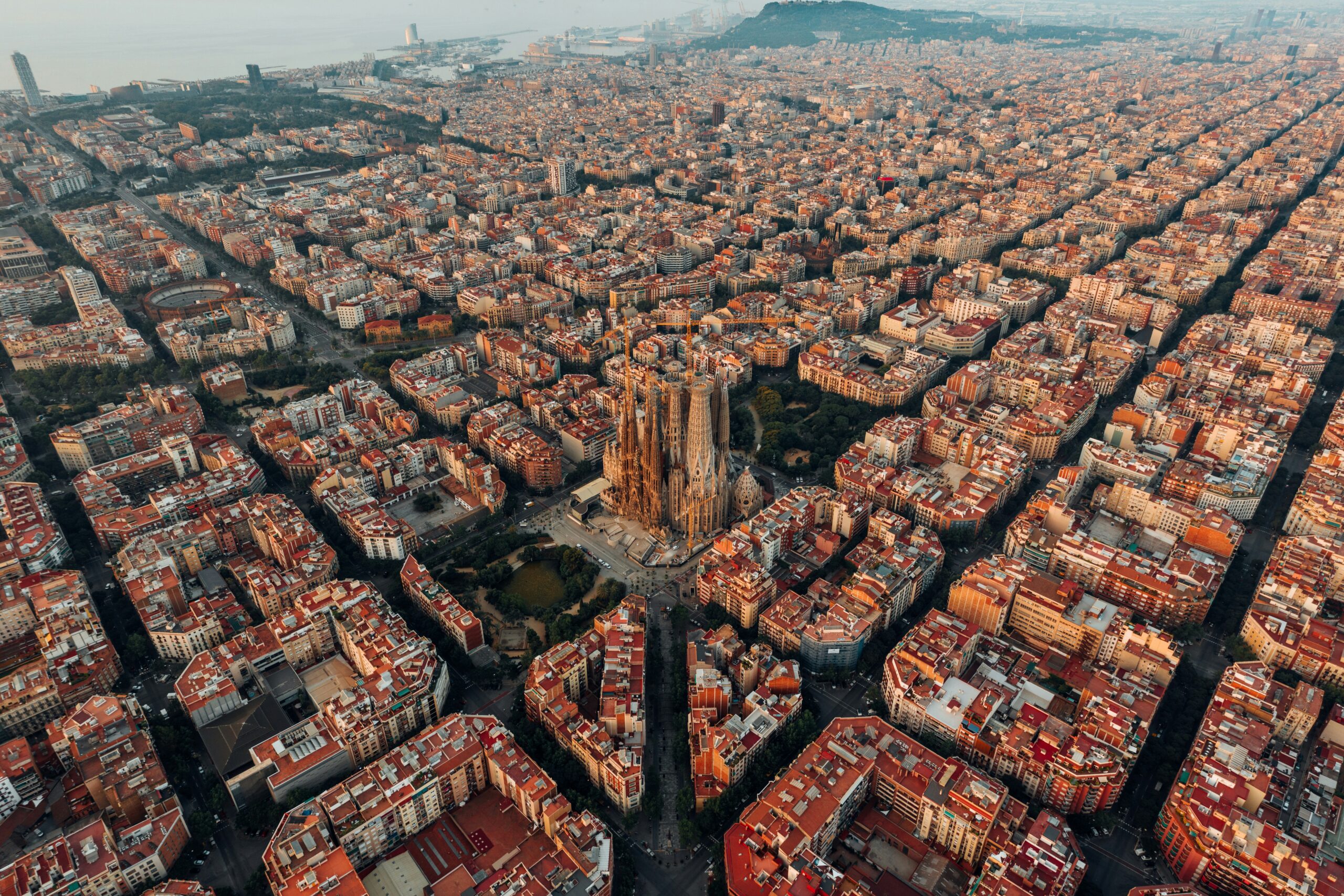


Barcelona is changing the way it promotes itself to visitors, moving away from attracting ever-growing tourist numbers towards a more selective model designed to influence who visits, why they come and where they spend their time.
At the heart of the new strategy is algorithmic recommendation technology similar to that used by streaming platforms such as Netflix. Rather than simply directing visitors towards Barcelona’s best-known attractions, the system will provide personalised recommendations based on individual interests, while also helping distribute tourists away from overcrowded hotspots.
The shift comes as Barcelona continues to grapple with the consequences of overtourism. Around 16 million tourists visit the Spanish city each year, approximately ten times its number of inhabitants, while Spain is set to overtake France as the world’s most visited country by 2040.
Tensions between visitors and residents have repeatedly surfaced in recent years, reaching particularly visible levels during the summers of 2024 and 2025, when protesters used water guns against tourists to express their frustration over mass tourism.
Barcelona has since introduced a series of measures aimed at reducing the pressure, including plans to phase out around 10,000 short-term rental licences by 2028 and double the tourist tax for overnight stays.
But the latest strategy goes beyond controlling tourist numbers. Instead, Barcelona wants to reshape the type of tourism it attracts, placing greater emphasis on culture, gastronomy and events rather than encouraging more visitors to come simply for its most famous landmarks.
“The message of the city now is: not one tourist more,” Barcelona’s commissioner for sustainable tourism, José Antonio Donaire, recently told The New York Times. “The city has decided to fix a flat horizon on a curve that otherwise rises infinitely. We don’t want to grow more. We want the tourists that the city already has. There were 15.7 million tourists in the city in 2025 — that’s the threshold. Sixteen million is the maximum.”
As part of the shift, the city’s tourism organisation has also changed its branding from Visit Barcelona to This Is Barcelona. Rather than explicitly encouraging people to visit, the new identity is intended to showcase the city’s character, culture and way of life.
“For the last 15 or 20 years we’ve only been talking about negative externalities of tourism, which are correct, but we have to also highlight the positive externalities and not take them for granted,” Mateu Hernández, CEO of Barcelona Turisme, told The Independent.
The new This Is Barcelona website will play an important role in that strategy. Its recommendation technology will offer personalised suggestions to potential visitors, while helping the tourism organisation manage flows around heavily visited areas. The focus will increasingly be on higher-quality, culture-based experiences, including exhibitions, concerts, gastronomy and other events.
“Come to Barcelona for a concert or an exhibition or an interesting restaurant, and then think on the rest. Come for something that is once in a lifetime and then plan a visit to a Gaudi or Gothic [building],” Hernández said.
The approach effectively marks a departure from the traditional destination-marketing model of maximising visitor numbers. Instead, Barcelona is seeking to attract travellers whose interests align with the experiences the city wants to promote, while using personalised recommendations to influence how they explore the destination.
Alongside recommendations for cultural attractions, restaurants and events, the This Is Barcelona platform also provides guidance on respectful behaviour and information about local traditions, reflecting a wider effort to make tourism more compatible with everyday life in the city.