


Flights are slowly returning to Bahrain as the Gulf’s airspace begins to reopen, but the recovery remains cautious, uneven and highly dependent on a fragile regional ceasefire.
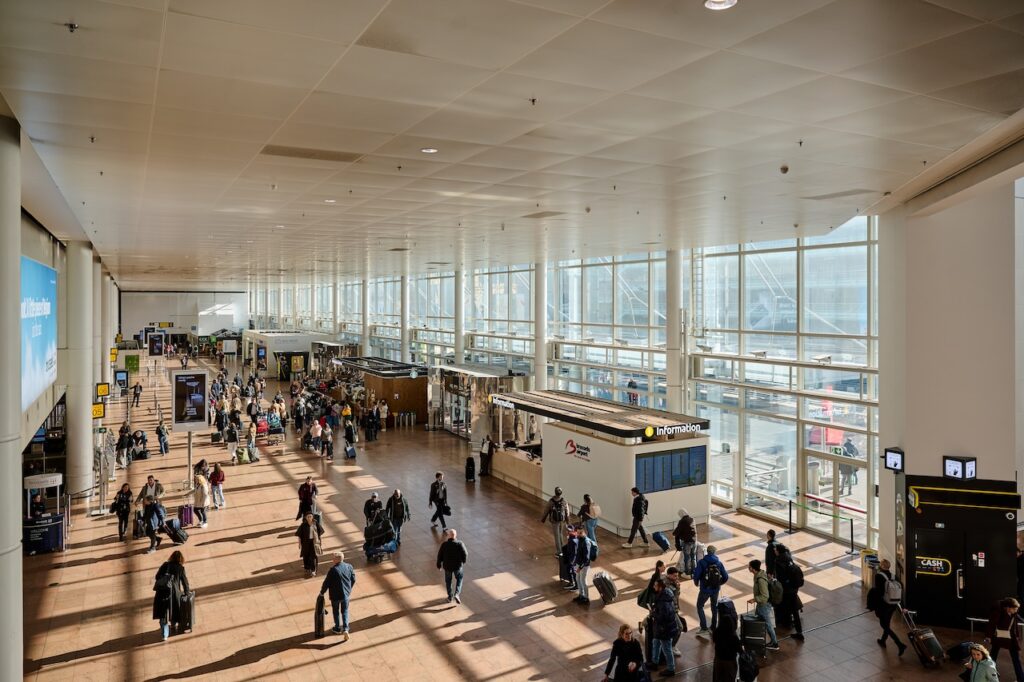
After a nearly total shutdown lasting almost 40 days, triggered by the Iran-linked conflict, Bahrain reopened its airspace on 8 April, allowing operations at Bahrain International Airport to resume in phases.
The restart is deliberately gradual, with Bahrain’s Civil Aviation Affairs (CAA) and the airlines prioritising safety and operational stability. Limited schedules have been added as routes are progressively reinstated across the Gulf.
Khalid Taqi, Chairman of the Gulf Air Group, said the airline was “pleased to resume limited operations at Bahrain International Airport and looks forward to progressively restoring its full network”.
Airport operations teams are rescheduling flights to accommodate slot availability, ensure crew duty limits are met and manage gate capacity. Ground handling resources are being aligned with each wave of returning flights.
During the suspension period, the CAA oversaw contingency measures, including the repositioning of empty aircraft, to enable the swift resumption of operations once the airspace reopened.
Airlines operating through Bahrain continue to face knock-on disruption, particularly on Gulf and South Asia routes that rely on tight turnarounds and short transfer windows. Even minor delays can have a knock-on effect on multiple flights, as was seen this morning when a Gulf Air service from Cairo to Dammam was cancelled.
Travellers are advised to check with their airline directly before heading to the airport, as schedules are still subject to last-minute changes.
Gulf Air's network from Bahrain International Airport. Book now: https://t.co/2DiQn6F7fT pic.twitter.com/YYlUkbXesl
— Gulf Air (@GulfAir) April 12, 2026
Gulf Air has confirmed that it is gradually resuming its flights from Bahrain International Airport, while continuing to operate a temporary network from King Fahd International Airport in Dammam. During the shutdown, the airline rerouted its operations through Saudi Arabia to maintain a minimum level of service.
The first Gulf Air aircraft returned to Bahrain on 8 April. Since then, the airline has restarted flights to a limited number of destinations, including London Heathrow, Riyadh, Jeddah, Dubai, Dhaka, Lahore, Islamabad, Nairobi and Istanbul, with a focus on high-demand routes.
Meanwhile, Gulf Air has maintained parallel operations from Dammam, continuing to serve destinations such as Athens, Cairo, Casablanca, Mumbai, Chennai, Kochi, Bangkok and Manila.
However, relying on Dammam is not without challenges. The King Fahd Causeway, the main road link between Bahrain and Saudi Arabia, has faced temporary closures and could see further disruption, according to the UK Foreign Office.
Although bookings from Bahrain have resumed, the airline is still offering full refunds for tickets issued up to 15 April in light of the ongoing uncertainty. Flight frequencies remain limited for now and are expected to increase gradually depending on operational conditions and the stability of regional airspace.
Bahrain has been directly impacted by the conflict, with Iranian missiles and drones targeting the country since hostilities began following the joint US-Israeli strike on Iran’s nuclear facilities. These attacks have prompted widespread airspace closures across the region for security reasons.
At least two people have been killed in separate incidents, including a strike on a residential building in the capital, Manama, according to Bahrain’s interior ministry.
While the gradual reopening marks a welcome step towards normality, the coming days will be critical in determining its success, given that the aviation sector remains acutely dependent on any escalation in regional tensions.