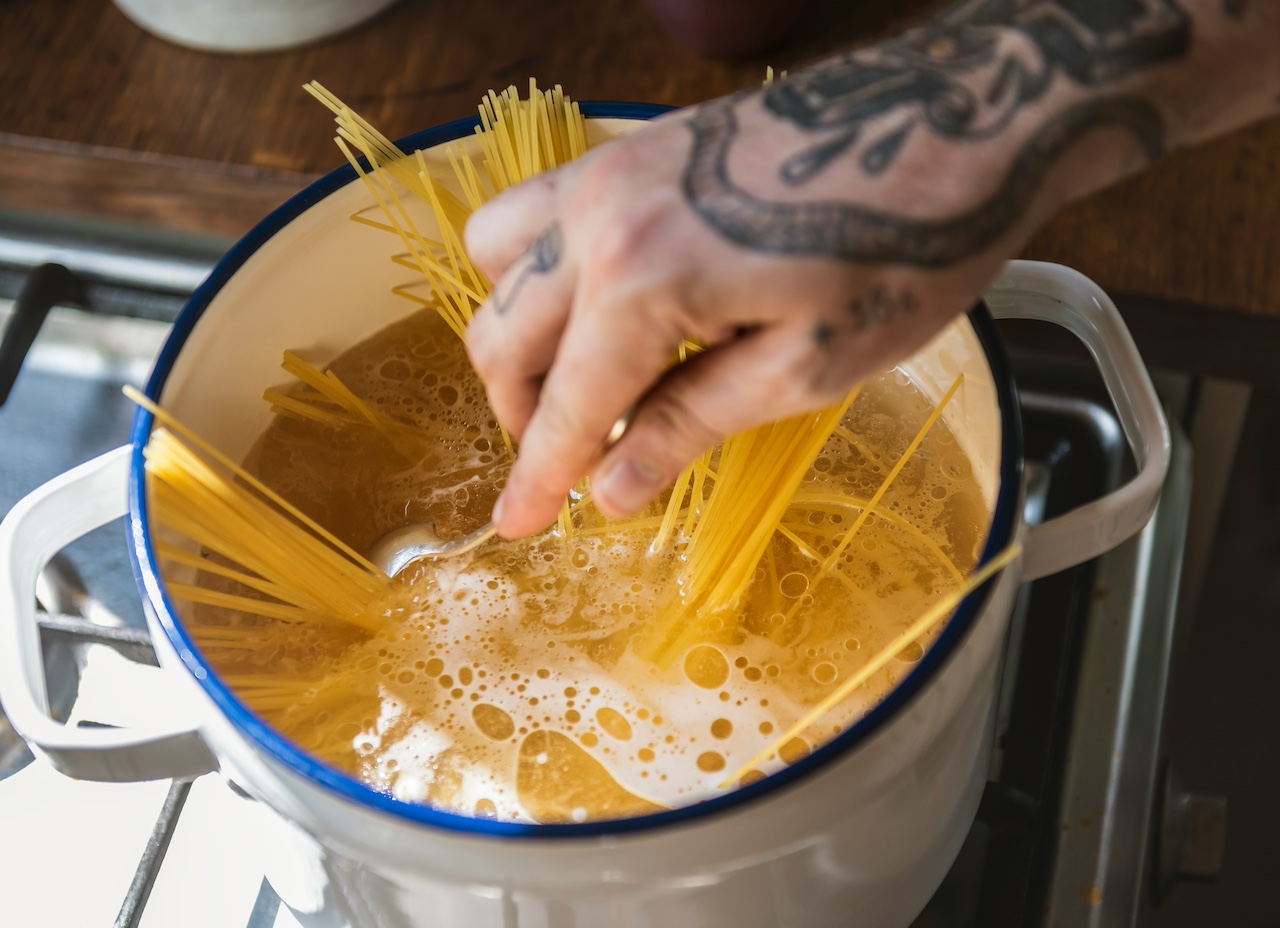



While cooking pasta could seem like an easy task, in reality, it requires quite a bit of precision. A new study looked into how long you should cook your spaghetti, how much salt you should use, and what the difference is between regular and gluten-free varieties.
How do you cook your pasta? Chances are, you aren’t taking matters seriously enough. A study by a group of researchers from Lund University in Sweden looked at the subject in a more scientific way and published their results in the journal Food Hydrocolloids.
In order to determine the effect of cooking time, salts, and gluten, the scientists used a combination of small-angle x-ray and neutron scattering with contrast variation to analyse pasta’s structure. Particularly, they used two types of spaghetti (regular No. 5 and gluten-free) produced by the Barilla company, both widely available at the supermarket.
@allrecipes A teaspoon just won’t cut it. #saltthewater #pastatiktok #therightway #italiancooking #noodlesrecipe ♬ Italian dance music style BGM(888630) – 2strings
Gluten-free versus regular pasta
The research indicates that preparing gluten-free spaghetti can be a lot trickier than cooking a regular pot of pasta. The explanation for that can be found in the gluten, which acts as a protective barrier.
“We were able to show that the gluten in regular spaghetti acts as a safety net that preserves the starch. The gluten-free pasta, which contains an artificial matrix, only works optimally under exactly the right cooking conditions – otherwise the structure easily falls apart,” says Andrea Scotti, senior lecturer in physical chemistry at Lund University.
Overall, the scientists found that the spaghetti was at its best when it had been boiled for 11 minutes. Adding seven grams of salt per litre of water showed the best results and meant that regular pasta was less prone to overcooking. The impact on gluten-free pasta was less clear.
“Our results show that regular pasta has higher tolerance, or better structural resistance, to less optimal cooking conditions such as being cooked for too long or too much salt being added to the water. So, cooking pasta with the right amount of salt is not just a matter of taste – it also affects the microstructure of the pasta and thus the whole dining experience,” says Andrea Scotti.
According to the researchers, cooking pasta can be considered a science. Respecting cooking times and adding enough – but not too much – salt to the water can increase one’s chances to successfully cook a pot of spaghetti. Those who prefer a gluten-free option in particular should carefully follow the instructions on the packaging in order to avoid a mushy bowl of pasta.