
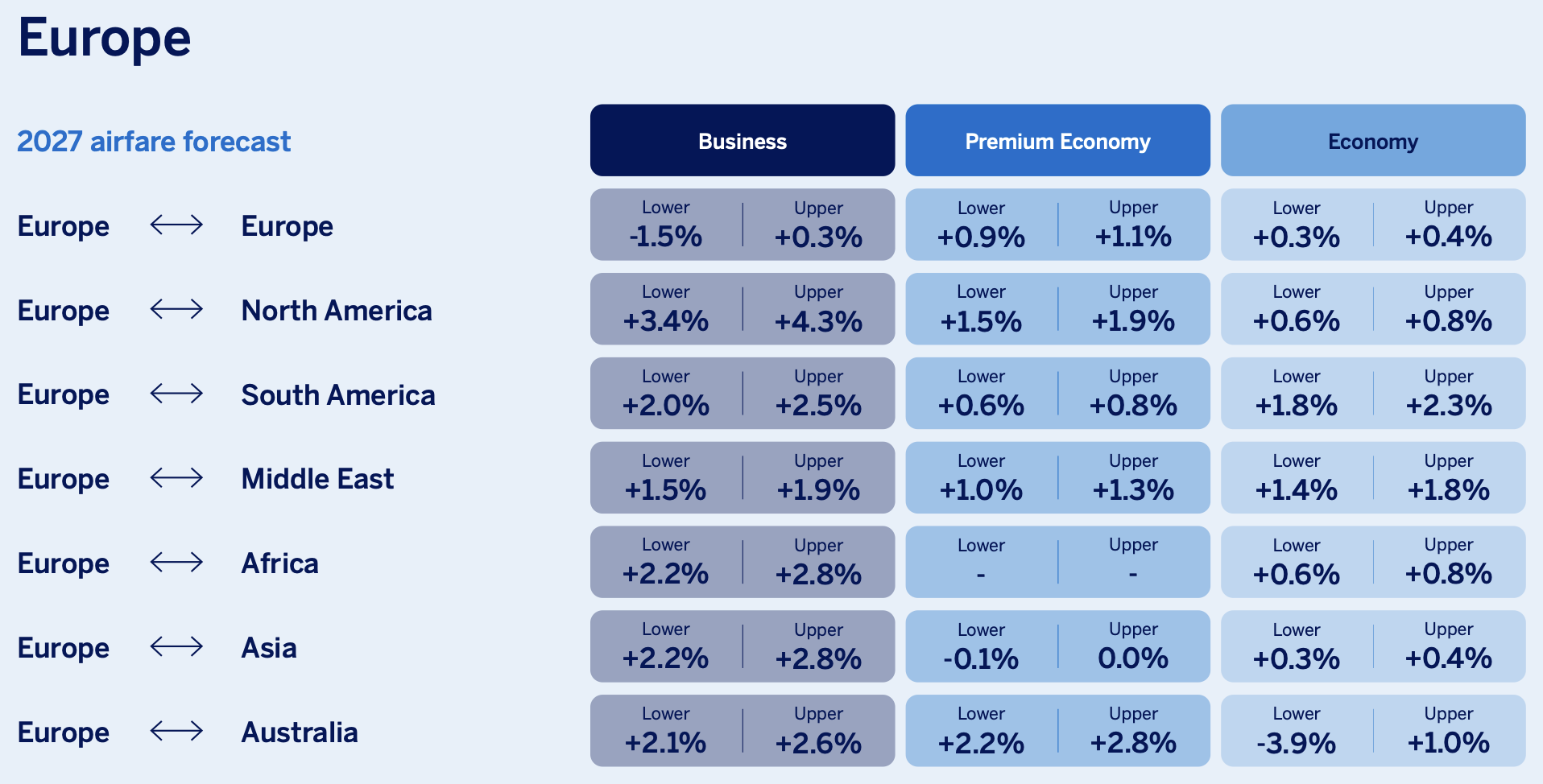
Economy fares on flights within Europe are expected to rise by just 0.3% to 0.4% in 2027, according to a new forecast from American Express Global Business Travel (Amex GBT). On a €200 ticket, that would amount to an extra 60 to 80 cents if the fare followed the European trend. The company expects weak economic growth in Europe to help keep ticket prices stable. Its outlook also points to a possible price drop for passengers flying business class within Europe, where fares could fall by as much as 1.5%.
The company’s annual Air Monitor report looks at major business travel routes and gives two estimates for each cabin. Which figure applies depends partly on inflation, the rate at which prices rise across the economy. The International Monetary Fund expects global inflation to reach 4.1% in 2027. Amex GBT suggests using its lower estimate if inflation stays within that forecast and its higher estimate if prices rise faster. Under the higher estimate, business class fares within Europe would rise by 0.3%. Premium economy, the cabin between economy and business class, shows a small increase in both cases, at 0.9% to 1.1%.
Where could long-haul fares rise most?
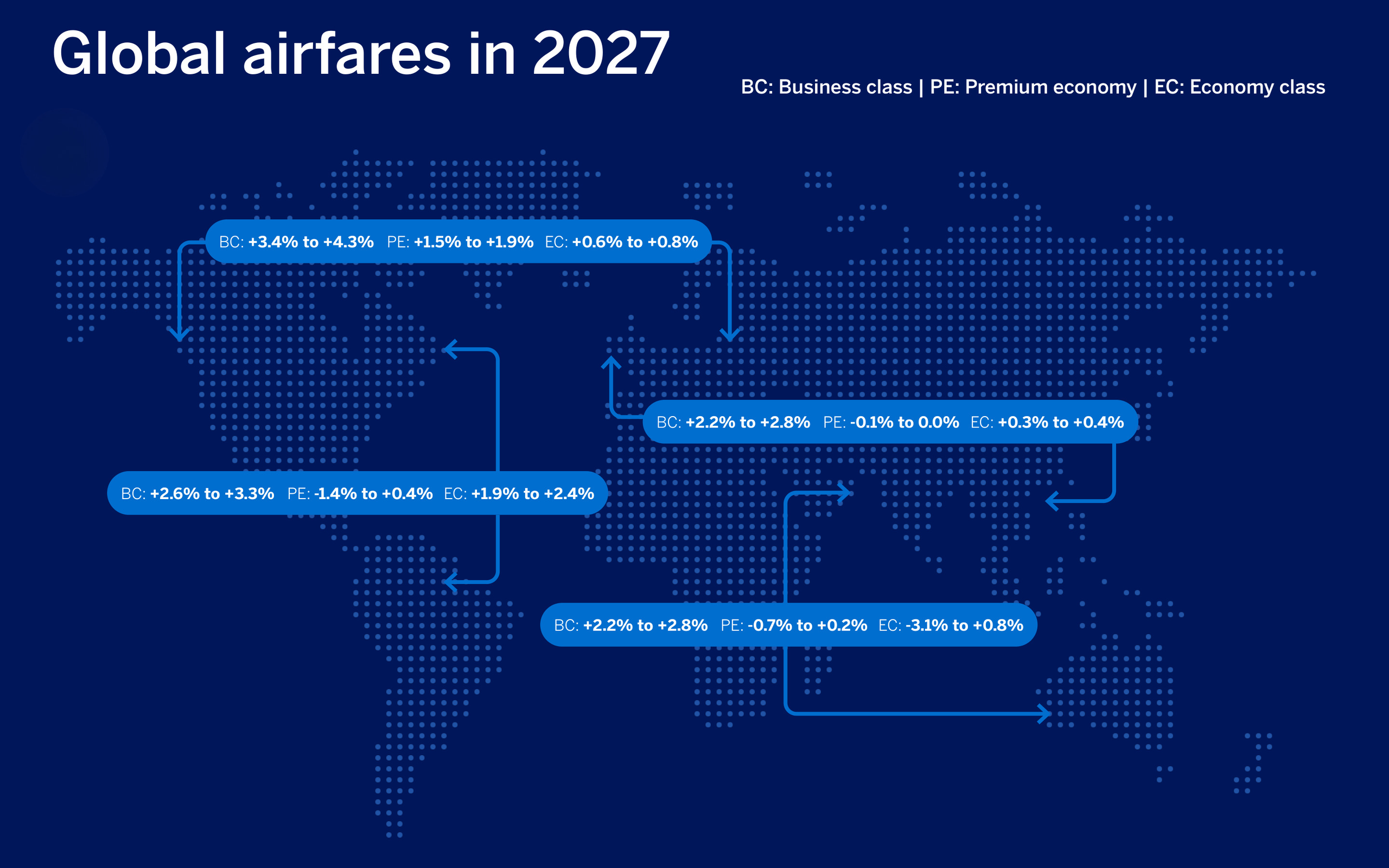
South America has the largest projected economy fare increase of the regions covered for flights from Europe. A traveller flying economy between the two regions could pay 1.8% to 2.3% more in 2027. For travel between Europe and the Middle East, the forecast puts the increase at 1.4% to 1.8%. At the other end of the range, economy fares between Europe and Asia are expected to rise by just 0.3% to 0.4%, the same increase as for flights within Europe. Australia has the widest gap between the two estimates. Economy fares between Europe and Australia could fall by 3.9% under the lower estimate or rise by 1% under the higher one.
On flights between Europe and North America, the size of the increase depends heavily on where passengers sit. Economy fares are forecast to rise by 0.6% to 0.8%, which would add €6 to €8 to a €1,000 return ticket. For passengers flying premium economy, the expected rise is 1.5% to 1.9%. Business class shows the steepest increase on these routes, at 3.4% to 4.3%. For comparison, a €3,000 business class return ticket would cost an extra €102 to €129 if its price rose in line with the forecast.
Why could fare increases slow in 2027?
Amex GBT recorded double-digit fare increases on many routes in 2026, as the conflict in the Middle East drove up jet fuel prices. Its analysts expect the impact of those fuel price spikes to ease in 2027, while demand for business travel holds up. That assumption helps explain why the company expects smaller fare increases next year. Fuel costs had prompted a warning from Ryanair chief executive Michael O’Leary in October, when he said many European airlines had yet to lock in prices for the fuel they would need from April 2027.
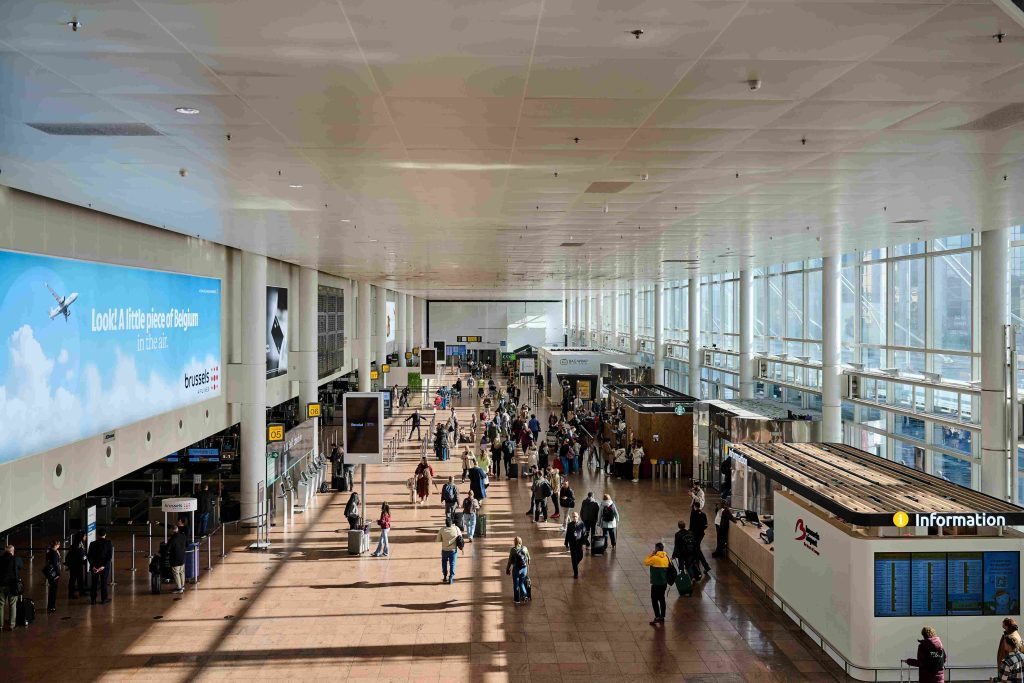
“Fares are still elevated, and that puts pressure on travel budgets,” said Sara Andell, director of consulting strategy at Amex GBT. She also pointed to the growing number of services airlines charge for separately, which can push up the cost of a trip even when the fare barely changes. One example is the Economy Basic fare introduced by Brussels Airlines on selected routes in 2026, including flights to Prague and Budapest. The fare includes one small personal item, such as a laptop bag or a backpack measuring up to 40 by 30 by 15 centimetres. A passenger taking a cabin suitcase for a weekend in Prague pays extra to bring it on board.