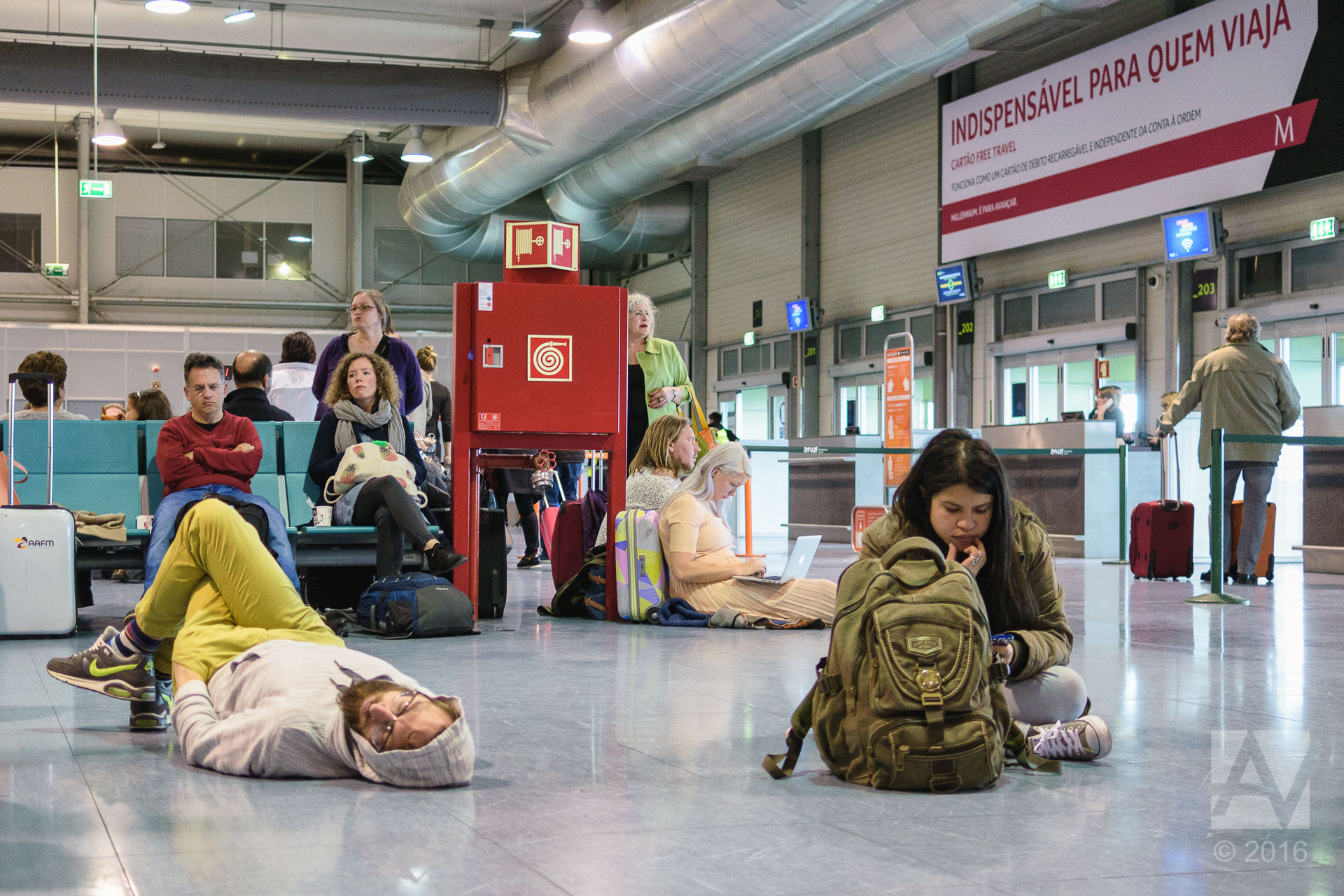



More than 300 flights were cancelled at Lisbon, Porto, Faro and Madeira airports on Wednesday 11 November as Storm Charles swept across the mainland and Madeira with heavy rain and strong winds. The government also closed schools and non-essential public services, and told people to stay at home.
Lisbon Humberto Delgado Airport was by far the most affected. Airlines had cancelled 288 of the 565 arrivals and departures scheduled there before operations began, and a further 22 were cancelled during the morning, ANA Aeroportos de Portugal said.
In Madeira, 20 of 80 scheduled flights were cancelled in advance, with two more cancelled during the day. Faro lost 14 of its 62 flights in advance and two more later. Porto, with 214 flights scheduled, recorded 12 advance cancellations and no further disruption.
Portugal’s weather service, the Instituto Português do Mar e da Atmosfera (IPMA), issued red and orange warnings for rain and wind across much of the mainland and Madeira. The red alert initially covered more than half of the country. By mid-afternoon, only the Algarve region remained on red, and that warning was later lifted.
IPMA recorded gusts of more than 120km/h in some areas. The storm had already hit Madeira on Tuesday with winds of 130km/h.
About 8,000 schools cancelled classes, while courts, monuments and non-essential public services closed. Streets were largely deserted. The Web Summit technology conference in Lisbon, attended by about 70,000 people, cancelled the day’s events.
Charles arrived only days after Storm Bruna, which IPMA named on 5 November. Bruna brought strong winds, heavy rain and rough seas, and caused dozens of flight cancellations in Madeira.
The scale of the response reflects lessons from January, when Storm Kristin hit central Portugal. Kristin brought down thousands of trees and caused widespread property damage, and the government faced harsh criticism for its weak response. Interior Minister Luís Neves rejected claims that the authorities had overreacted this time: “We have to stop being reactive. We can’t just respond when there’s a disaster.”
The UK Foreign Office (FCDO) warned of heavy rain, strong winds and dangerous coastal conditions across mainland Portugal, Madeira and Porto Santo, with the greatest risk on Wednesday. It said the weather “may cause flooding, landslides, falling trees and travel disruption”.
Travellers to Portugal should follow the advice of local authorities, check MeteoAlarm for the latest weather warnings and read official guidance on how to prepare for severe weather and stay safe.
The nationwide state of alert ended on Wednesday night and will not be extended.
ANA warned that the forecast conditions “may affect operations (departures and arrivals) in the coming days”. It advised passengers to confirm the status of their flight with their airline before going to the airport.
TAP Air Portugal said it had already adjusted its schedule in line with the forecasts and would keep the safety of passengers, crews and equipment at the top of its priorities.
TAP is letting passengers who bought their ticket by 10 November, and were due to fly by 11 November, rebook free of charge onto any flight up to 17 November, in the same cabin.