

Europeans are keeping holidays on the agenda this autumn and winter, with 76% of travellers surveyed planning an overnight trip between October 2026 and March 2027. The European Travel Commission’s (ETC) Wave 26 findings suggest Christmas visits, city breaks, and cultural getaways will help keep destinations busy through the colder months.
The latest Monitoring Sentiment for Intra-European Travel report puts intentions up 3% from last year, despite recent Booking.com warnings of a potential softening in the travel market. The online survey covered 6,000 people in ten European markets who had taken at least two overnight trips in the previous three years.
Polish consumers show the highest share intending to travel, at 87%. (It should perhaps be noted too that the ETC data was gathered in September 2026, before the recent mass shooting in Krakow, and that Polish respondents were the most likely (45%) to only avoid travel if it presented a direct security risk).
The next strongest intention to travel was among Spanish consumers at 82%, followed by Germany and the Netherlands at 79% each. These are travellers’ home markets, not a ranking of destinations. In terms of destinations, Southern Europe attracts 53% of planned visitors, while Western Europe accounts for 23%.
December is the favourite travel month, chosen by 23%. Visiting friends and family motivates 32% of December travellers, compared with an average of 10% during other travel months, the report reveals. Interest in February and March is also growing, and 56% of those planning to travel want two or more trips before the period ends.
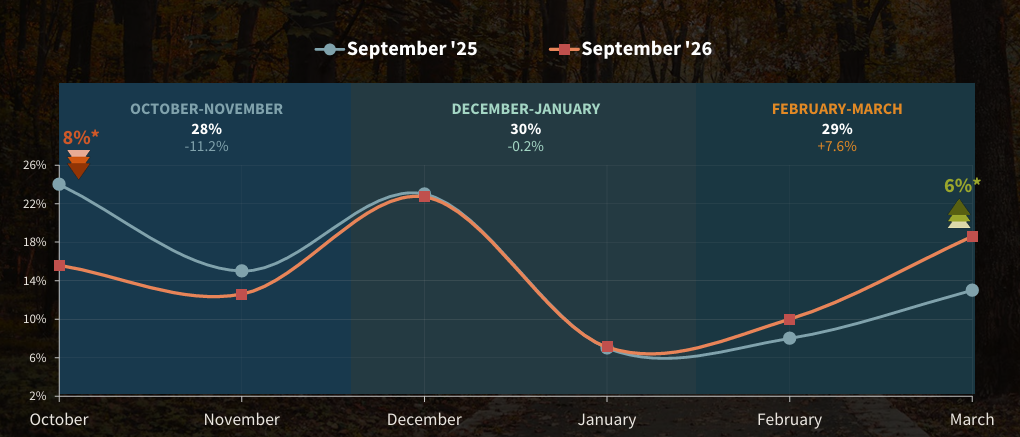
City breaks lead holiday preferences at 19%, followed by culture and heritage trips and sun-and-beach holidays, both at 18%. Confirming trends already reported by Travel Tomorrow, suggesting travellers want to do less while on vacation, there is also more appetite for quieter places: 44% favour less-popular destinations, with another 10% preferring remote or off-the-beaten-track locations.
ETC chief executive Eduardo Santander said in the commission’s press release that these trends “could be leveraged to reduce tourism congestion and create new opportunities for local businesses.” The findings arrive after the EU adopted its first Sustainable Tourism Strategy on 4 November, promoting better-managed visitor flows and year-round tourism.
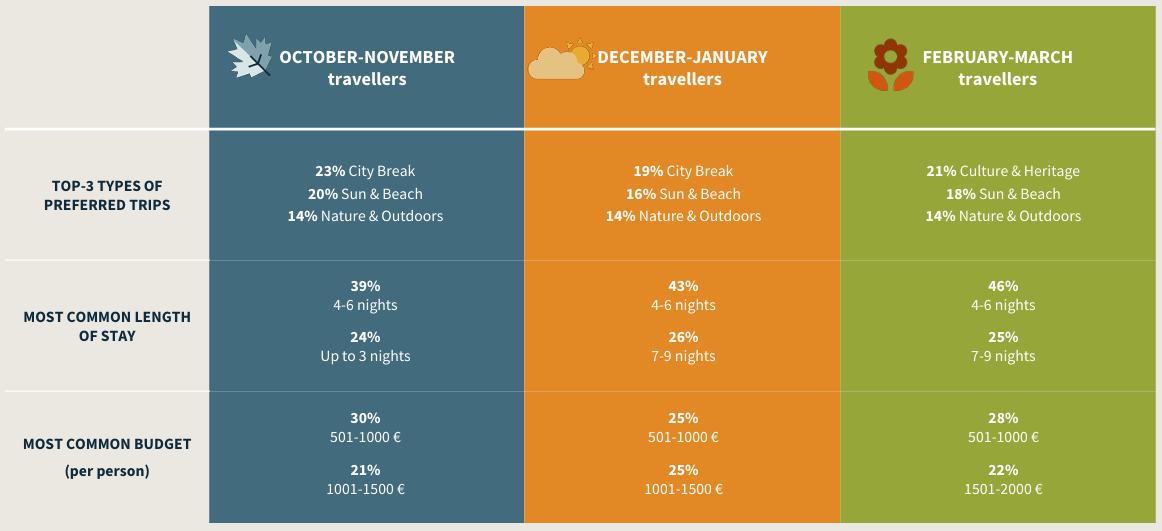
For travellers, price and reassurance still matter. Financial pressures concern 37%, while geopolitical instability worries 23%. Safety is the leading factor in choosing a destination, ahead of dependable seasonal weather and attractive deals. Some 49% budget €1,000–€2,500 per person; 43% plan stays of four to six nights.
There is room for plans to change: ETC says 55% have yet to book. Booking Holdings chief executive Glenn Fogel recently described “a bit of a softening” in demand during the BBC’s Big Boss Interview podcast, as reported by Travel Tomorrow, highlighting the distinction between enthusiasm and confirmed trips.
Earlier ETC figures, reported by Travel Tomorrow in July, showed European international arrivals rising 5% year on year and overnight stays increasing 4.8%. The latest survey offers an outlook for the coming months, rather than a measure of actual visitor growth.
Where travellers plan to go: country breakdown
| Travellers’ home market | Five leading foreign destinations |
| Austria | Germany 16%; Italy 14%; Spain 9%; Croatia 6%; Greece 4% |
| Belgium | France 20%; Spain 11%; Netherlands 8%; Italy 8%; Germany 6% |
| United Kingdom | Spain 12%; France 11%; Italy 9%; Greece 7%; Germany 6% |
| Netherlands | Spain 16%; Germany 14%; France 9%; Belgium 9%; Italy 7% |
| France | Italy 15%; Spain 11%; Portugal 7%; Greece 6%; UK 6% |
| Germany | Austria 11%; Spain 10%; Italy 8%; France 8%; Netherlands 7% |
| Italy | France 14%; Spain 12%; UK 7%; Austria 7%; Germany 7% |
| Poland | Italy 13%; Germany 9%; Spain 8%; Czechia 7%; Austria 4% |
| Spain | France 17%; Italy 13%; UK 10%; Germany 8%; Portugal 7% |
| Switzerland | France 14%; Italy 14%; Germany 12%; Austria 7%; Spain 7% |
Digital planning is now part of the picture too: 40% use AI for inspiration, planning or booking. Search engines and travel websites remain more widely used. For destinations, the message is straightforward: people want to get away, but cost, safety, and practical booking considerations still determine which plans prove firm.