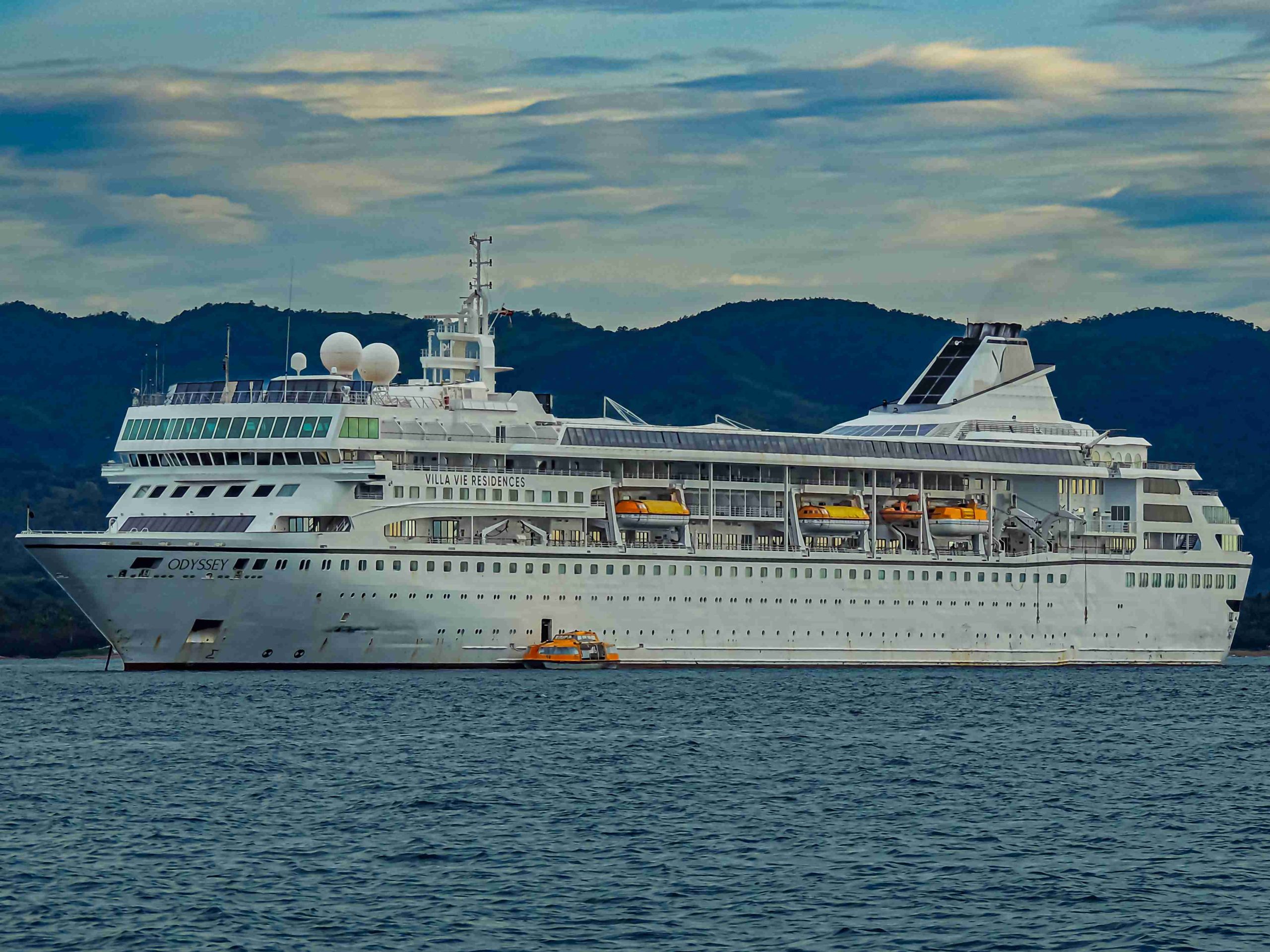



The worldwide spike in fuel costs due to the US-Israel war on Iran has some unexpected victims, with the news that resident passengers on board a never-ending luxury world cruise have been booted off the ship.
The Villa Vie Odyssey launched (late) back in 2024, promising guests permanent residencies, starting at a price of $119,999 (around €110,900). Some of the passengers sold up their homes and belongings to take up a life on the ocean wave. But now, amid the ongoing security crisis in the Middle East and a 90% surge in Brent crude oil prices for the year to late October 2026, that dream appears to be disappearing over the horizon, with passengers abruptly told to leave the ship in Cambodia by 2 pm on 26 October 2026.
The Telegraph had already reported guest complaints about short-notice itinerary cancellations, as well as plumbing and Wi-Fi issues on board, and some have now also criticised the lack of apology from the cruise firm for the sudden end to their residency.
Villa Vie estimates suggest the monthly fuel bill has risen 344% from $1,800 per cabin to $8,000. The cruise line has issued a statement explaining: “The company cannot simply pass increases of that scale on to residents, and the resulting shortfall has placed its current operating model under unsustainable financial pressure.”
Passenger and blogger Randy Cassingham has described the situation as temporary, reporting: “Unfortunately, we were unable to secure the fuel necessary to continue operations. As a result, the Odyssey will enter a temporary layup this afternoon, with crew remaining onboard to maintain the vessel and its essential systems.”
Villa Vie Residences too has indicated the lay-up could be an interim solution, continuing its statement as follows: “The company is working with residents to coordinate disembarkation and identify temporary living arrangements. Villa Vie Residences recognises that this is a difficult and disruptive period for residents, crew members, and employees, and is working to support those affected as plans develop.”
Despite the room for hope that the repeated use of the word “temporary” leaves, it is not clear at present whether the residential cruise will ever continue. Villa Vie executive chairman, Mikael Petterson, pointed out that the firm had been restricting sailing time for the vessel in a bid to save on fuel costs, with more and more time spent in ports, but he said the strategy had failed.
“Those measures have not been enough to offset the extraordinary increase in fuel costs, and we have been unable to continue carrying the resulting operating losses. Passing the full increase on to residents is not a realistic solution. Our focus now is on supporting residents, crew, and employees while we work toward restructuring and recapitalisation over the next 60 days. That work is ongoing, and no outcome is assured.”
It is notable that the final straw for the vessel’s operations has occurred in Cambodia, a nation without any domestic oil refineries and whose internal supply chains, delivery networks, and agriculture are entirely reliant on refined fuel imports from regional suppliers such as Singapore, Vietnam, Malaysia, and China—a situation that leaves the country highly vulnerable to global shipping disruptions and regional price surges.
With little end in sight to the Iranian fuel blockade in the Strait of Hormuz, the fate of the Villa Vie could serve as a stark warning to prospective cruise passengers about the security of their bookings. Air ticket prices, too, are forecast to continue to rise.