

A Dutch researcher has called on European authorities to push forward an electric revolution in air transport instead of focusing on current aviation’s switch to more sustainable operations.
Interviewed by Euronews, Maarten Steinbuch, Professor of Mechanical Engineering at Eindhoven University of Technology, said: “There is not enough attention yet to have a revolution in airspace electrification. So, it’s more an evolution and not yet a revolution.”
Steinbuch also pointed to the automotive industry as an example of how tight legislation around the transition to e-vehicles had forced game-changing environmental action. “In the electrification of passenger cars,” he said, “being strict on dates when manufacturers of cars effectively should have a sufficient number of models of electric cars available really helped.” The same strategy should apply to aircraft manufacturers, he said, arguing: “We need legislation saying that part of a fleet could be electrified in this or that year. Push that also with legislation.”
Steinbuch’s calls come amid a sustained hike in global jet fuel prices, and as rival start-ups around the world seek to develop the first generation of battery-powered passenger planes. Important players in the sector include Los Angeles-based Heart Aerospace, which aims to bring its ES-30 fixed-wing, 30-seat hybrid-electric regional airliner to market by 2031 (though Scandinavia’s SAS is still taking bookings for its first-ever electric and hydrogen flights using Heart and Airbus-partnered planes, which it says will happen by 2028).
As well as successful flights by various producers of personal electric vertical take-off and landing (eVTOL) aircraft, US aerospace firm BETA Technologies had successful trials across Scotland’s mail routes, including between Glasgow and Dundee, and in the skies over Aberdeen, Inverness, Orkney and Wick, earlier in 2026, and Loganair, the UK’s largest regional airline, aims to become the first commercial carrier in Europe to operate a fleet of electric planes by 2029, according to press materials.
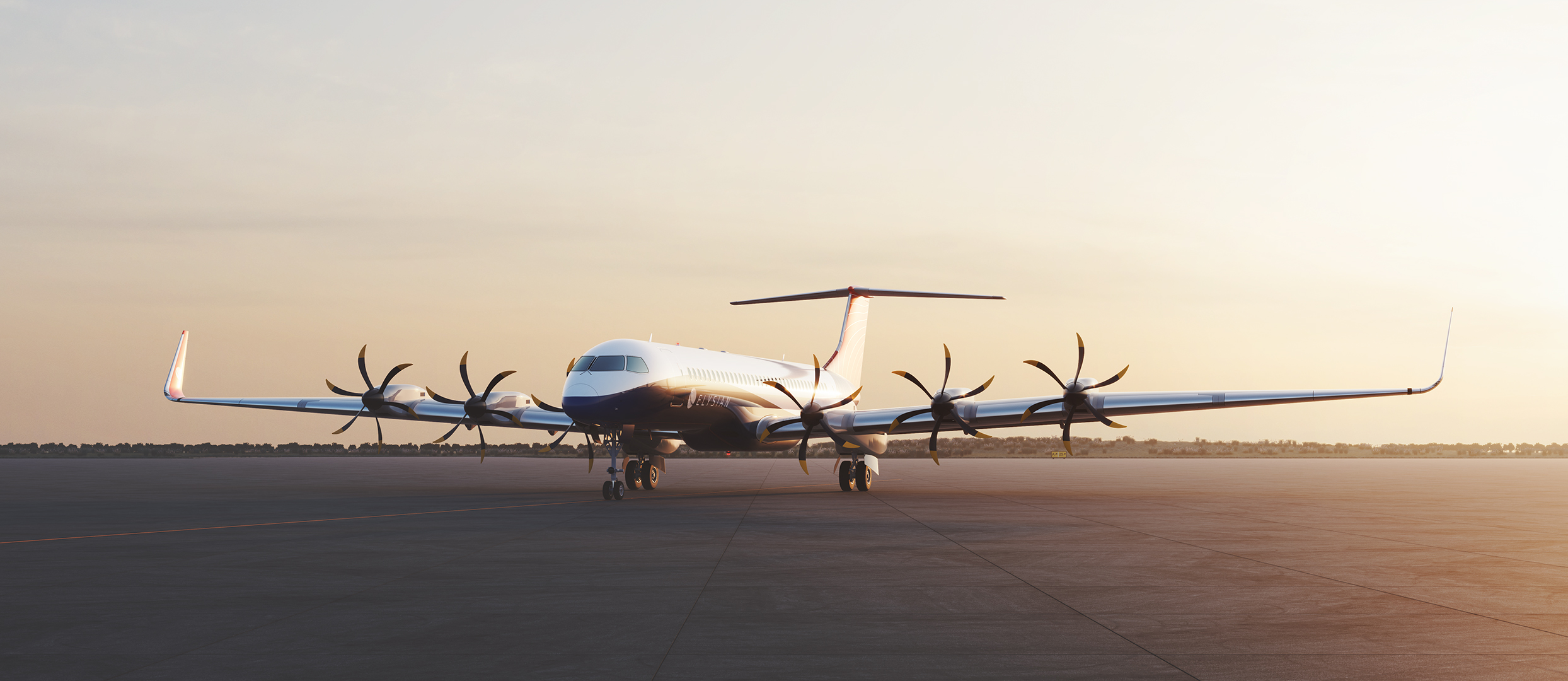
Europe could be said to be at the head of the field, with Dutch start-up Elysian Aircraft building what they claim is the planet’s first battery-powered passenger plane: the E9X, a six-engined, folding wingtip plane. It has 40 battery packs weighing 1000 kg each on each wing. Co-founder Daniel Jacobsen, speaking to Euronews, has said the aircraft is designed to carry “90 passengers for initially 800 km and eventually 1000 km,” a development he said would “reduce emissions to zero, from half the world’s flights.” He added that the invention would effectively “reduce total emissions from aerospace to 20%.”
Aviation is responsible for six per cent of global heating pollution, including CO₂ and other emissions, green campaign group Stay Grounded says, while research by Manchester Metropolitan University said in 2020 the figure is between three and four per cent. But despite global pressure to cut emissions, including from the UN’s International Civil Aviation Organization (ICAO), which has been advocating carbon-neutral growth since 2020, CO₂ emissions from international aviation have actually gone up since that date.
But Steinbuch says the electric air travel revolution will come when solid-state batteries with up to 500 watt-hours per kilogram are successfully developed—a time he said is coming soon, possibly by 2032—possibly sooner, if EU authorities get with the programme.