


During the China Marine Economy Expo in Shenzhen, China has presented what it considers to be the world’s first mass-produced civilian underwater vehicle. Jiaozi, as the mini submersible is called, can carry passengers up to 200 metres below the sea surface and is already being used commercially.
For a long time, deep-sea diving has been reserved for the ultra-rich and a handful of lucky scientists. However, as far as China is concerned, a trip aboard a submarine could soon be part of anyone’s holiday plans.
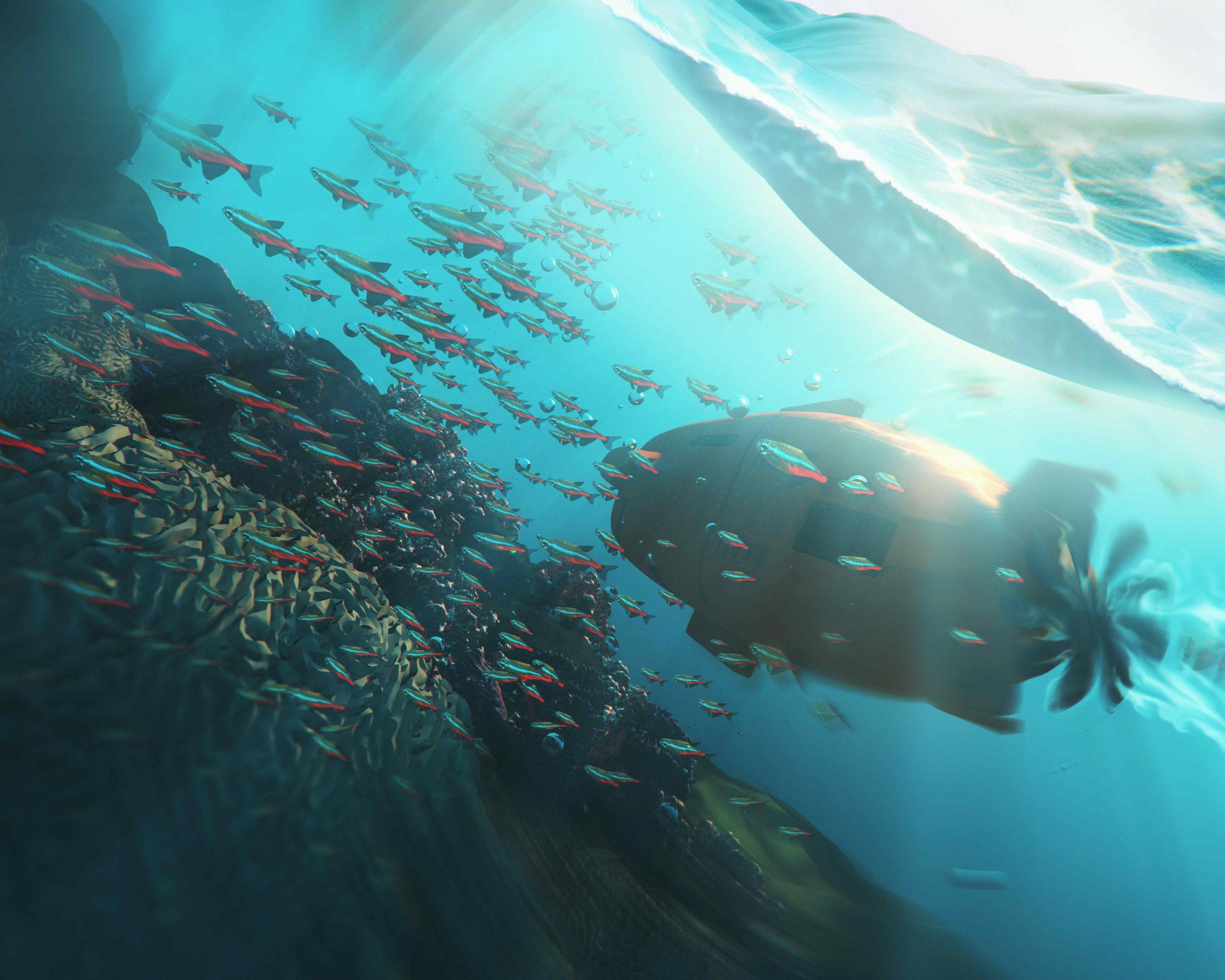
The tourist submarine called Jiaozi was officially presented during the China Marine Economy Expo in Shenzhen. Featuring a transparent panoramic dome to observe the ocean and a robotic arm to search the surroundings, the 5-tonne submarine can carry up to three passengers and a pilot up to 200 metres below the water surface. It features an automatic obstacle avoidance system, as well as a safety float system.
🎥China presenta su primer sumergible turístico tripulado de uso civil 🔸 El sumergible turístico «Jiaozihao» se exhibe en la Exposición de la Economía Marina de China 2026, en Shenzhen, como el primero de su tipo destinado al uso civil en el país, según los expositores. https://t.co/AJwS1SFYsr
— HispanTV (@Nexo_Latino) October 25, 2026
Measuring just 3.7 metres long, 2.7 metres wide and 2.73 metres high, the Jiaozi offers a compact underwater experience. However, passengers do not need any previous diving experience or specialised training. The completely electric submersible manages to keep the cabin under normal pressure, which means an underwater exploration suddenly becomes within arm’s reach of every curious tourist.
Contrary to many projects shown at exhibitions, the Jiaozi is not something of the future. According to the developers, testing began in 2024, and serial Jiaozi production of the submersible took off in 2025. The very first products have already entered service in resorts in China and Southeast Asia, including Indonesia.
The project passed the inspection of the Indonesian Ministry of Transportation and obtained an operating permit in October 2025, with some 100 submarines scheduled to go into service in tourist areas such as Bali and Lombok.
“Each country has different characteristics in terms of sea conditions, regulatory systems, and operational methods. Before entering the Indonesian market, we have made several technical adjustments and verification according to local requirements,” Jiang Zhidi, founder of Jiaozi’s manufacturer Chongqing Kunlian Machinery Manufacturing, told Indonesian news outlet Antara earlier in 2026.
#China’s manned sightseeing submersible "Jiaozi" underwent water testing in #Chongqing’s Wushan county on Wednesday. "Jiaozi" submarines, independently developed by a local company in Chongqing, are fueled by pure electric power. The submarines are also equipped with automatic obstacle avoidance and emergency surfacing systems, allowing tourists to enjoy underwater sightseeing without requiring specialized training. Currently, "Jiaozi" submersibles have been deployed in multiple popular resorts domestically and abroad, namely in China’s Chongqing and Hainan, and Indonesia’s Bali, with Indonesia having ordered nearly a hundred units from the Chongqing-based manufacturer.
— China Daily (@ChinaDaily) January 23, 2026
At the moment of writing, the first orders from Malaysia have started to come in.
During the expo, the manufacturer of the tourist submersible said it was able to produce up to 100 vehicles per year, which would allow for a quick expansion across the world. However, it hopes to be producing up to 2,000 submarines every three years in the future.
Although the Jiaozi is mainly aimed at the tourism sector, it could also be put to good use during underwater inspections, rescue work, and aquaculture work.
It is not the first time for China to venture into the tourist submarine world. The Rwandao Jiaolong 1 reached a depth of 40 meters in 2015, while 2021’s Tawo managed to carry 50 people to a depth of up to 60 meters. Moreover, a new tourist submersible capable of reaching depths of 1,000 metres could begin commercial operations by 2030.