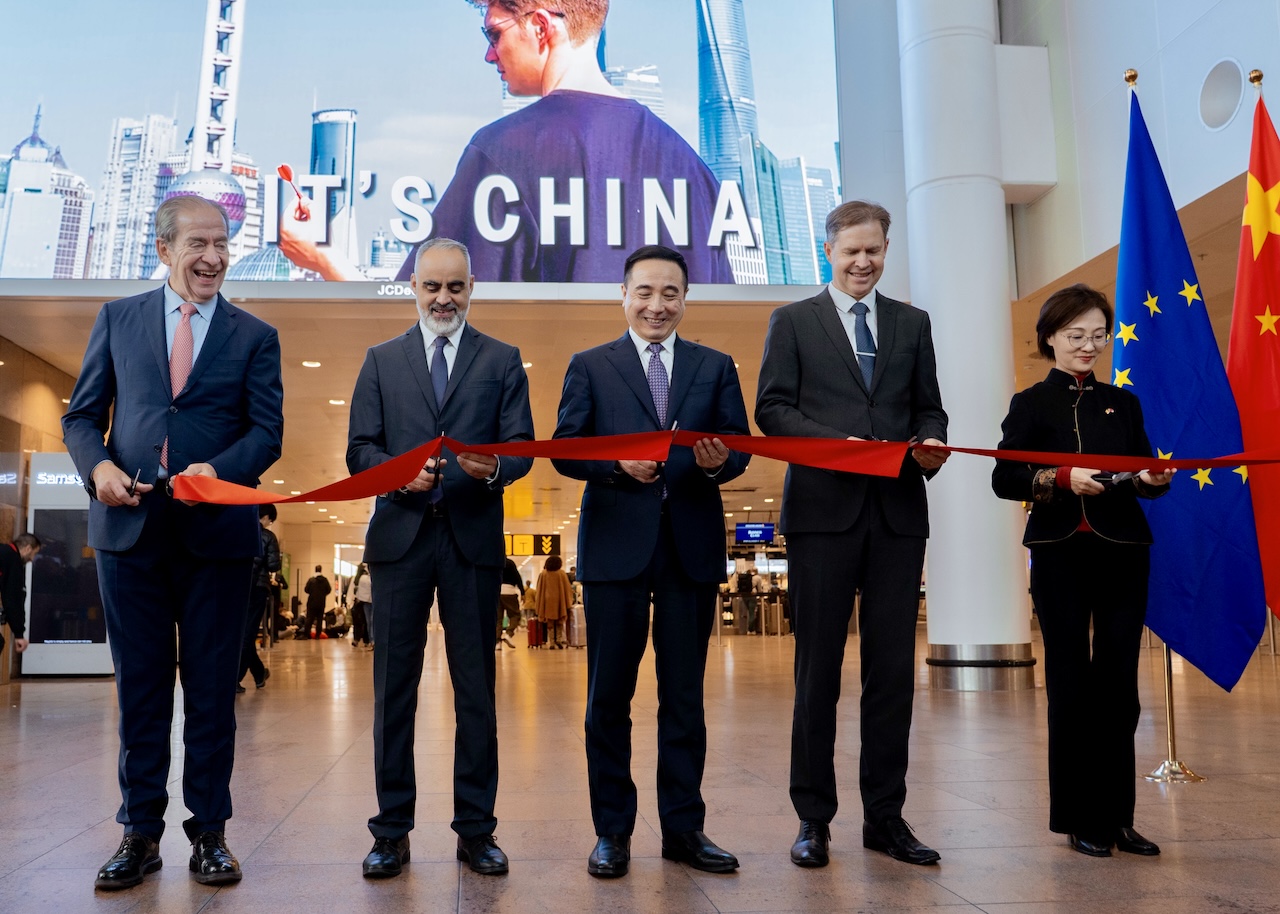



The Mission of China to the European Union launched a campaign at Brussels Airport on 27 October to promote visa-free travel to China, highlighting easier access for visitors from 25 EU member states.
The four-week campaign brings images of China to the airport’s departure areas. It aims to encourage European travellers to consider China for their next journey, with eligible ordinary passport holders able to visit for up to 30 days without applying for a visa.
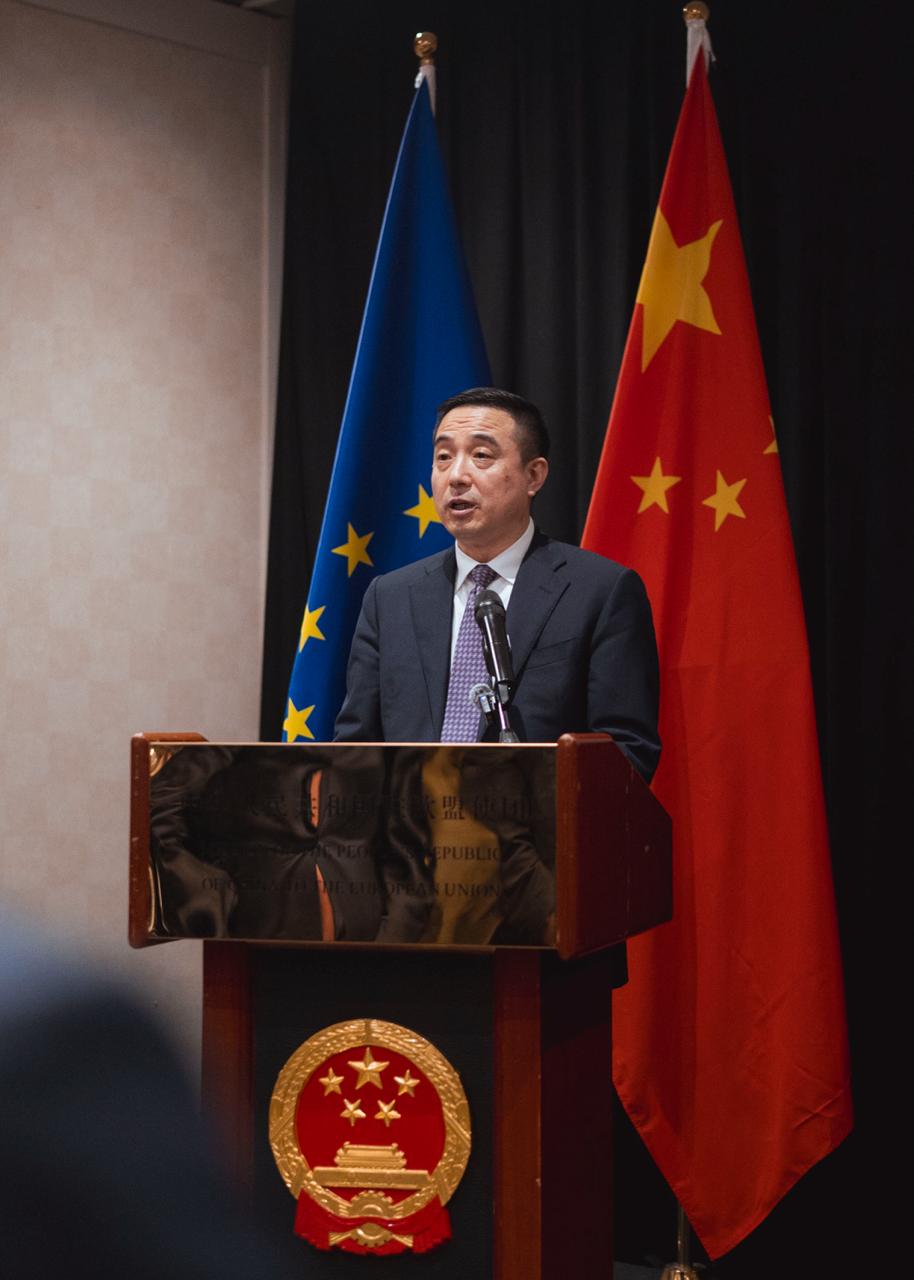
Ambassador Cai Run, Head of the Chinese Mission to the European Union, led the inauguration, with participants including Eduardo Santander, CEO of the European Travel Commission; Ondřej Dostál, Member of the European Parliament; Piet Steel, Chairman of the Europe-Asia Center; and Li Yan, Chargé d’Affaires ad interim of the Chinese Embassy in Belgium.
Making China more accessible to European visitors
The campaign puts visa facilitation at the centre of efforts to encourage travel and strengthen connections between China and Europe. For eligible visitors, the exemption removes both the visa application process and the associated visa fee, making it easier to plan a holiday, business visit or trip to see family and friends.
“Through this campaign, we hope to encourage more European travellers to discover China and experience its cultural heritage, diverse landscapes and hospitality. Easier travel creates more opportunities for people to meet, deepen mutual understanding and strengthen friendship between China and Europe” said Ambassador Cai Run, Head of the Chinese Mission to the European Union.
China began introducing its current unilateral visa-free initiative in December 2023, initially offering stays of up to 15 days to citizens of France, Germany, Italy, the Netherlands, Spain and Malaysia. The scheme subsequently expanded to additional countries, including Belgium in March 2024, and the permitted stay increased to 30 days in November 2024.
The policy formed part of China’s reopening to international travel following the pandemic. Alongside easier entry, authorities have introduced measures to improve the visitor experience, including more accessible payment options for international travellers.
Speaking at the inauguration, Eduardo Santander said he hoped China’s visa-free policy would encourage more Europeans to visit the country. A regular visitor himself, he highlighted the convenience of the arrangements and expressed hope that Europe would eventually be able to reciprocate by facilitating travel for Chinese visitors.
Which 25 EU countries benefit?
Under the current arrangements, citizens holding valid ordinary passports from the following EU member states can visit mainland China without a visa for stays of up to 30 days:
Austria, Belgium, Bulgaria, Croatia, Cyprus, Denmark, Estonia, Finland, France, Germany, Greece, Hungary, Ireland, Italy, Latvia, Luxembourg, Malta, the Netherlands, Poland, Portugal, Romania, Slovakia, Slovenia, Spain and Sweden.
This covers 25 of the EU’s 27 member states, with Czechia and Lithuania outside this particular scheme. The exemption for these 25 countries currently runs until 31 December 2026.
The permitted purposes include tourism, business, visits to family or friends, exchanges and transit. Eligible travellers do not need to submit a visa application or make an advance declaration to a Chinese embassy or consulate, although admission remains subject to border checks.
Travellers must hold an ordinary passport valid for their intended stay. Chinese authorities recommend carrying supporting documents such as accommodation reservations, flight tickets or invitation letters to demonstrate the purpose of the visit.
The exemption does not cover employment, formal study or journalistic assignments, for which the appropriate visa is required. Travellers planning to stay longer than 30 days must also apply for a suitable visa before departure.
Direct flights strengthen the travel offer
The airport campaign comes as Brussels’ connections with China have expanded, giving travellers more options for direct journeys. Cathay Pacific resumed flights between Brussels and Hong Kong in August 2025, while Hainan Airlines added Chongqing to the airport’s network later that year.
Air China further expanded the offer in March 2026 with direct services to Beijing and Chengdu. The additional routes provide access to different regions and onward connections, complementing the reduction in entry formalities.
“We need even more air connectivity to Tier 2 and Tier 3 cities,” Santander said, calling for stronger links between regional destinations in China and Europe. He highlighted his own visits to Harbin and Urumqi as examples of the opportunities to introduce European travellers to places beyond China’s best-known destinations.
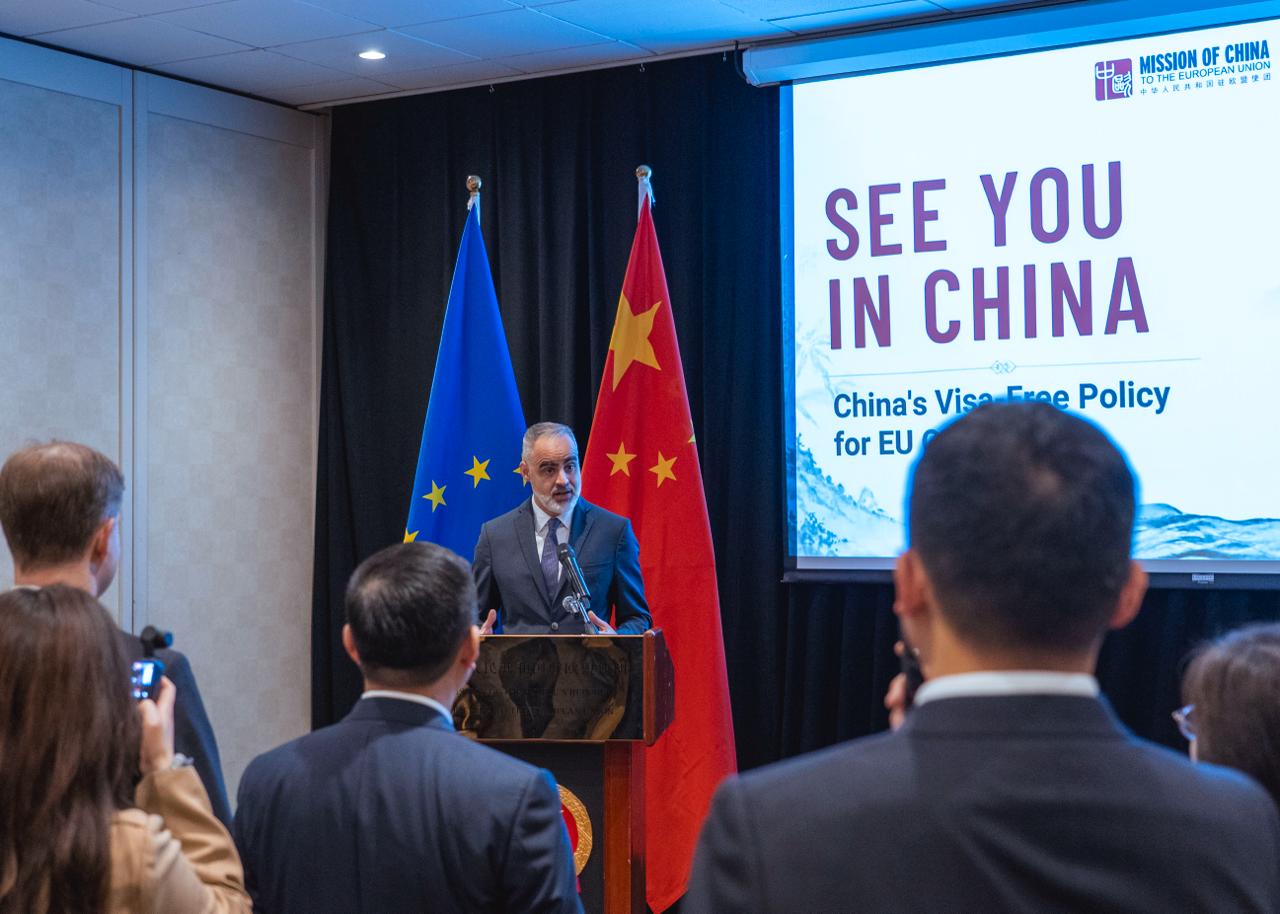
For the tourism sector, combining more direct flights with simpler entry procedures can help turn interest in a destination into bookings. Santander also stressed that tourism’s value should be measured through its benefits for local communities, rather than solely through arrivals, overnight stays or expenditure.
Building on cultural and people-to-people exchanges
The launch follows the 50th anniversary of diplomatic relations between China and the European Union in 2025, which provided a platform for cultural activities and exchanges involving young people, musicians and sports enthusiasts.
Recent initiatives in Brussels have included an exhibition showcasing Zhejiang’s culture and tourism offer, with live demonstrations of traditional craftsmanship, and the China-EU Table Tennis Friendship Tournament. Held in September 2026, the tournament brought Chinese and European players together in mixed teams, placing cooperation at the centre of the competition.
Santander described tourism as a catalyst for peace, understanding, economic development and poverty alleviation, emphasising the importance of people-to-people dialogue amid geopolitical tensions. He noted that the European Travel Commission has promoted Europe in China through its China chapter since 2011.
A proposal for another EU–China Tourism Year in 2028
Looking ahead, Santander proposed another EU–China Tourism Year in 2028, which would mark both the European Travel Commission’s 80th anniversary and a decade since the 2018 EU–China Tourism Year. He said he intended to raise the idea during a visit to Beijing early next year.
“I think our relationship matters and we have to explain that to our citizens, not only to our political elite or our industrial elite, but rather to our people,” Santander said.
The Brussels Airport campaign extends that focus on exchanges to a wider travelling audience, encouraging eligible visitors to experience China first-hand and build connections through travel.