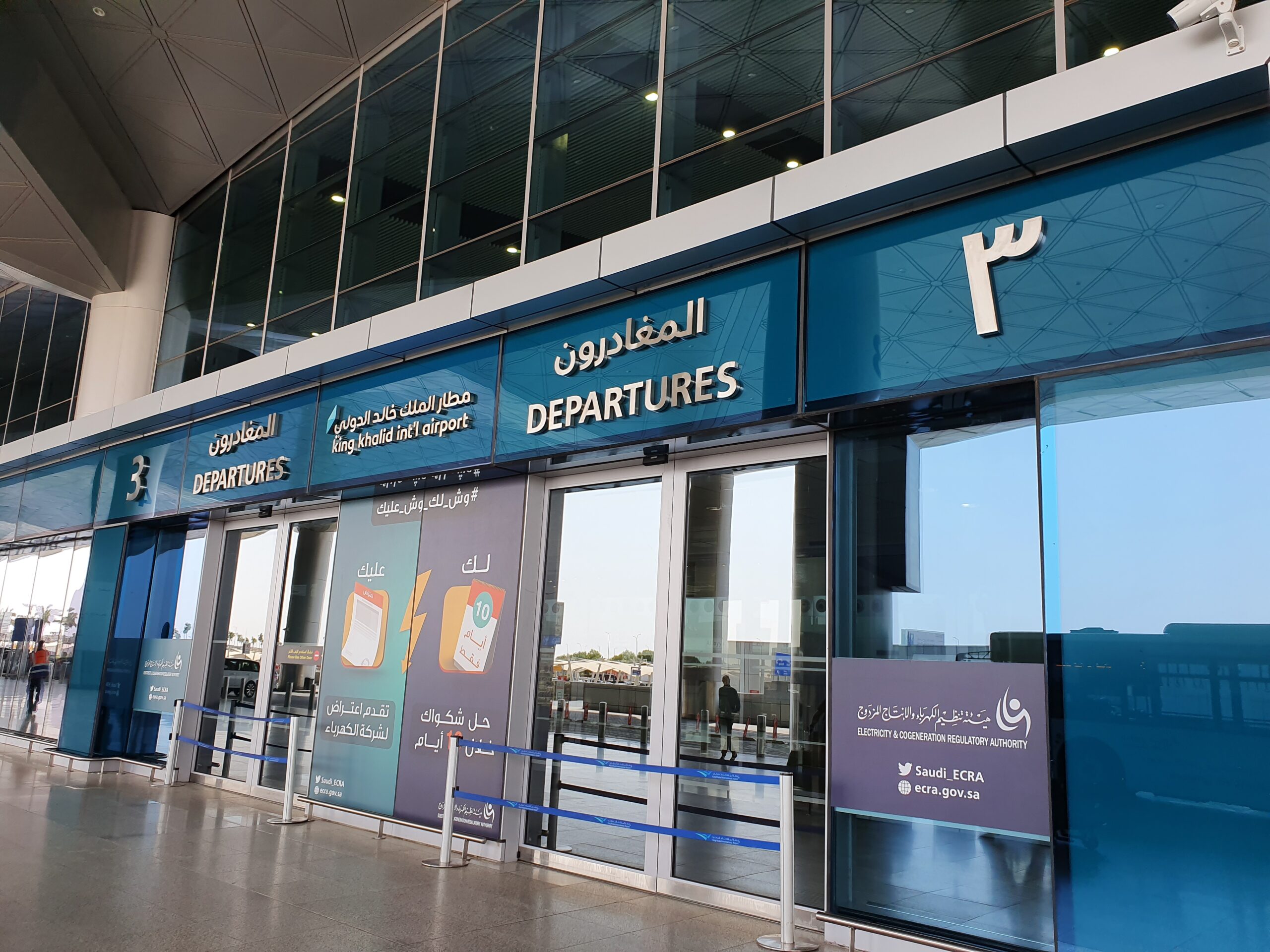



International operations have recommenced at Saudi Arabia’s main airport after a series of fatal attacks by Houthis in early October had forced the facility to close. Saudi authorities reopened King Khalid International Airport in Riyadh on Sunday 25 October 2026, despite ongoing strikes by the Yemeni rebels that have had to be intercepted.
Officials announced the renewal of international operations on Saturday in a statement advising travellers to “verify the status of their bookings and flights before heading to the airport.” Terminals 1 and 2 were functioning again on Sunday, ready to welcome international flights, with arrivals scheduled from Cairo, Dubai, and Paris. However, aviation tracker Flightradar24 indicated that most flights to Riyadh remained cancelled.
#VIDEO: Riyadh’s King Khalid International Airport resumed operations at Terminals 1 and 2 on Oct. 25, two weeks after the deadly Houthi attack. The reopening marks a step toward restoring airport services following the disruption. https://t.co/sjCssZVBBO
— Saudi Gazette (@Saudi_Gazette) October 25, 2026
Domestic flights had already begun again in the past week, after the facility closed on 10 October due to a Houthi cruise missile strike that hit a complex containing Terminals 3 and 4, killing 13 people and injuring over 300 others. The recent surge in Houthi rebel strikes has resulted in at least 22 deaths across different air hubs, at Abha International, Riyadh, and Dammam.
The attacks continue. Sunday morning saw an emergency “aerial threat” alert issued to Riyadh residents, and Saudi military spokesperson Major General Turki al-Malki confirmed, even as King Khalid airport reopened, that the kingdom’s air defences had already destroyed ballistic missiles targeting both the capital and southern regions the same day. The civil defence agency later revealed that two people had been injured in the south, and Saudi Press Agency images showed damage to buildings.
تنويه للمسافرين الكرام https://t.co/ICDmH20RSU
— مطار الملك خالد الدولي (@KKIASA) October 24, 2026
Meanwhile, Houthi spokesperson Yahya Saree issued a grim warning to carriers and the flying public. The rebels’ statement advised, “all international, regional and local airlines — as well as staff and travellers — against using King Khalid Airport in Riyadh, as it is unsafe.” They added that they still consider the Riyadh hub a “military target” and attempted to place the “responsibility” for any further civilian casualties on Saudi authorities.
#SaudiArabia: Read our latest travel advice for updated information about King Khalid Airport which continues to be targeted and ongoing threat from terrorism in Saudi Arabia (‘Warnings and insurance’ and ‘Safety and security’ pages): https://t.co/VGupD9Pa5S https://t.co/DGf4KCeHkD
— FCDO Travel Advice (@FCDOtravelGovUK) October 21, 2026
The Houthis are supplied with arms, intelligence, and training by Iran, which has long sought to expand its “Axis of Resistance” against the West and Israel, and to draw its powerful regional adversary, Saudi Arabia, into a costly conflict. By targeting the Saudi capital’s main air hub, they have impacted several economically significant international events hosted by the Saudis, including the Future Investment Initiative conference, which has been postponed until 2027, as well as the United Nations World Data Forum, the Second Saudi Statistical Forum, the Six Kings Slam tennis tournament, and the Saudi World Rally Championship.