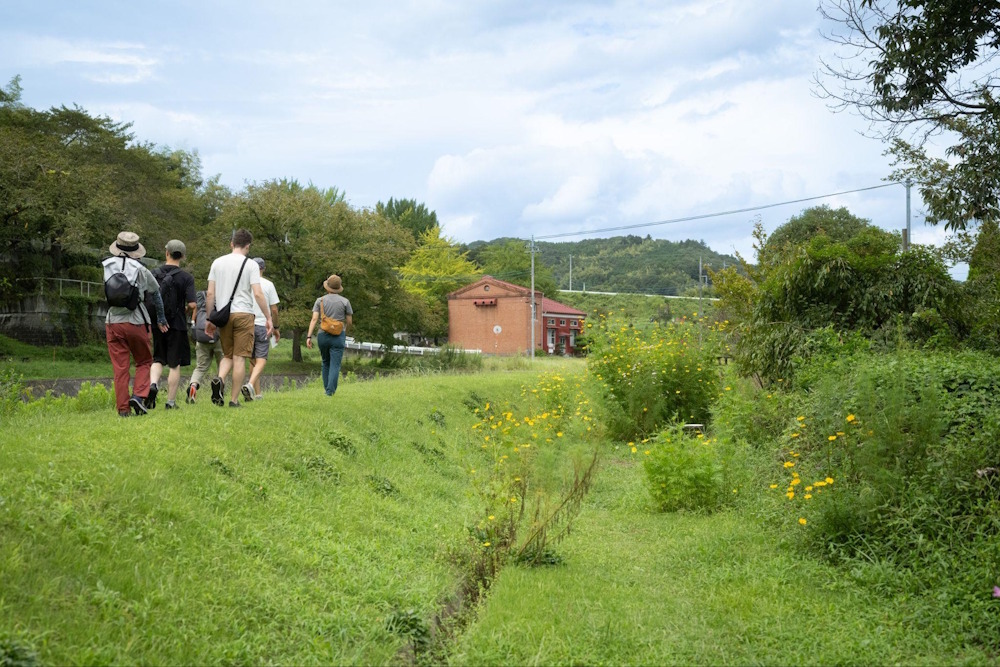


Japan’s longest loop trail, about an hour and a half from Tokyo, has fully opened, inviting hikers to discover some 350 km of routes through cities and towns, mountains and rural landscapes, valleys and coastlines, as well as cultural heritage sites.
The Hitachi-no-kuni Long Trail traverses northern Ibaraki Prefecture, connecting satoyama and communities. It has been seven years in the making, since the project was launched in 2019 by Ibaraki Prefecture. The Hitachinokuni Trail Club, a volunteer organisation of about 1,000 members, played a central role in developing it, restoring old and abandoned paths and opening new ones alongside existing mountain trails, hiking and cycling routes.
“The route has turned out to be one that allows people to experience the beauty of Ibaraki to the fullest,” Ibaraki Governor Kazuhiko Oigawa said at the opening ceremony in Hitachiomiya on 19 September.
The trail already appears to have captured walkers’ imaginations. In a 2025 poll by the Japan Long Trail Association, it was voted the trail people most wanted to walk among the organisation’s 29 member routes.
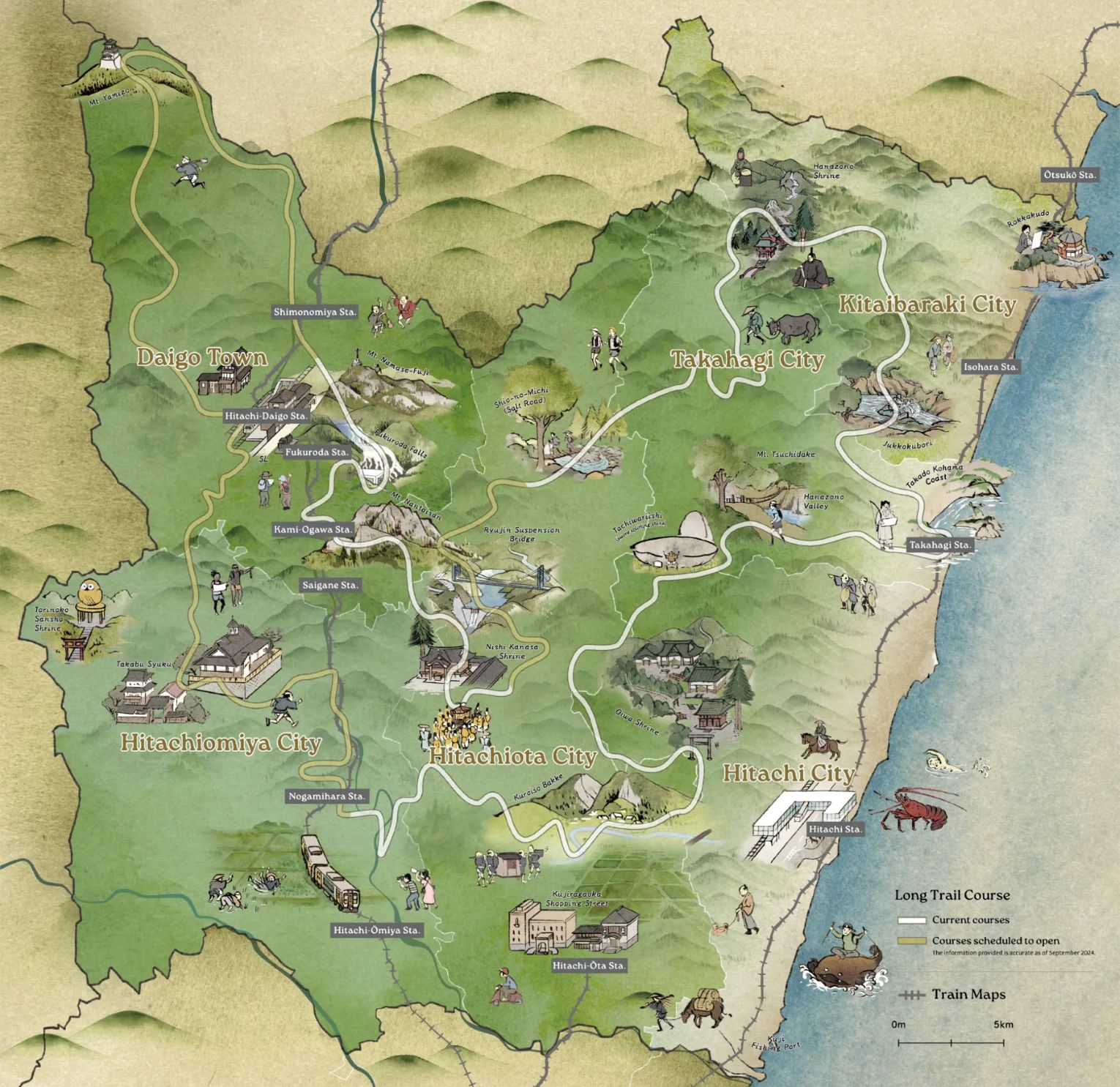
Definitely more than “simply hiking towards a destination”, as the official site promises visitors, the trail crosses a vast range of attractions. It connects Kitaibaraki, Takahagi, Hitachi, Hitachiota, Hitachiomiya and Daigo, passing through lush forests and satoyama landscapes, those traditional rural areas shaped over generations by the coexistence of people and nature, where mountains and woodland sit alongside rice fields, meadows, ponds, and villages.
As the trail is not very elevated and not overly affected by snowfall, much of it is walkable all year round.
Some sections are, however, more difficult, such as the Central Area in the Yamizo mountain range, on the northern edge of Daigo. Those who do hike it will be rewarded with magnificent views of Fukuroda Falls, the rocky peaks of Okukuji Nantaiyama, and Ryujinkyo Gorge.
The northeastern section offers peaks such as Eizomuro and Hanazono Yama but also stretches of coastline and beaches. It takes walkers through the region’s history on the ancient Salt Road and past the Edo-era Jukkokubori Canal.
In the southeastern area, open since 2024, the route begins in Hananuki Valley before climbing Mount Tsuchidake, past waterfalls and castle ruins, to reach the Kuji River.
Every section offers hikers another angle on Japan’s culture and history, and the communities that shaped them. Travellers can talk to locals, discover the region’s many faces, from space exploration to mythology and prayer, traditional crafts and fermentation culture, taste regional specialities, and revel in the surrounding nature.
The trail also highlights the difference between hiking and climbing. Whereas the end goal of climbing is to reach the top of a mountain, when hiking, the journey really is the goal.
Hikers might even get to feel a little like characters in Haruki Murakami’s Norwegian Wood, wandering for hours through mountains and woods with no great urgency about reaching anywhere in particular.
Long walks form an integral part of Japanese cultural and spiritual history and predate the modern enthusiasm for hiking as wellness tourism by centuries. From the Kumano Kodo pilgrimage network to the Shikoku pilgrimage, people have been walking such routes for more than 1,000 years.
There is obviously no obligation to undertake the entire 350 km in one go. The whole point is to take it slowly, each at their own pace, choosing whichever part best fits their interests and physical ability.
“Walking a long trail stimulates all five senses,” adventure racer and trail ambassador Yoki Tanaka said at the opening. “Even scenery that might pass unnoticed in everyday life can reveal something new when your perspective or pace changes.”