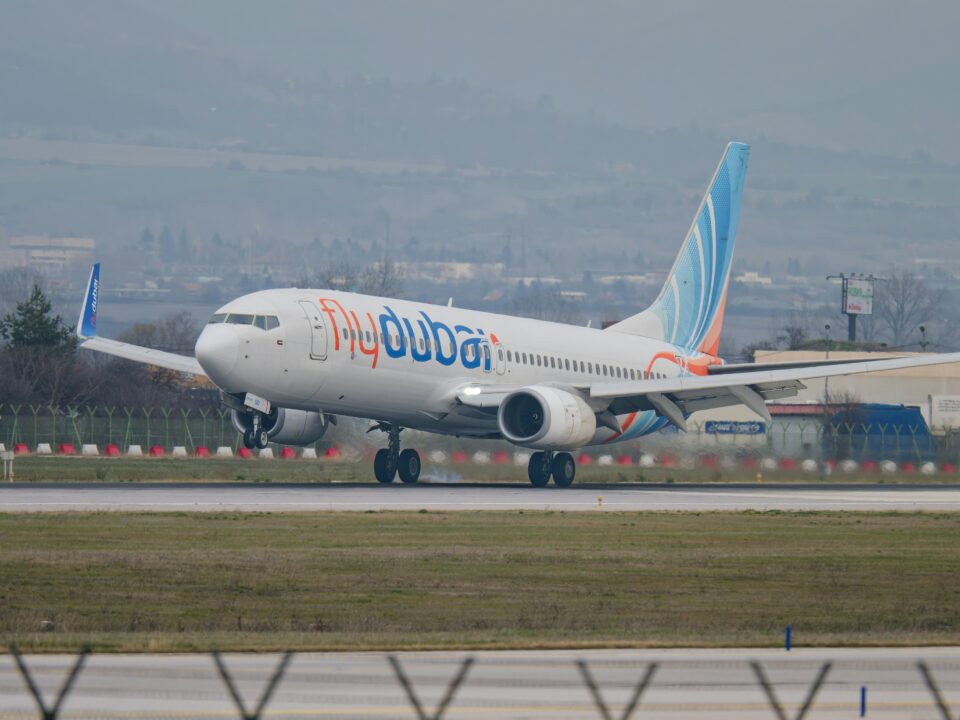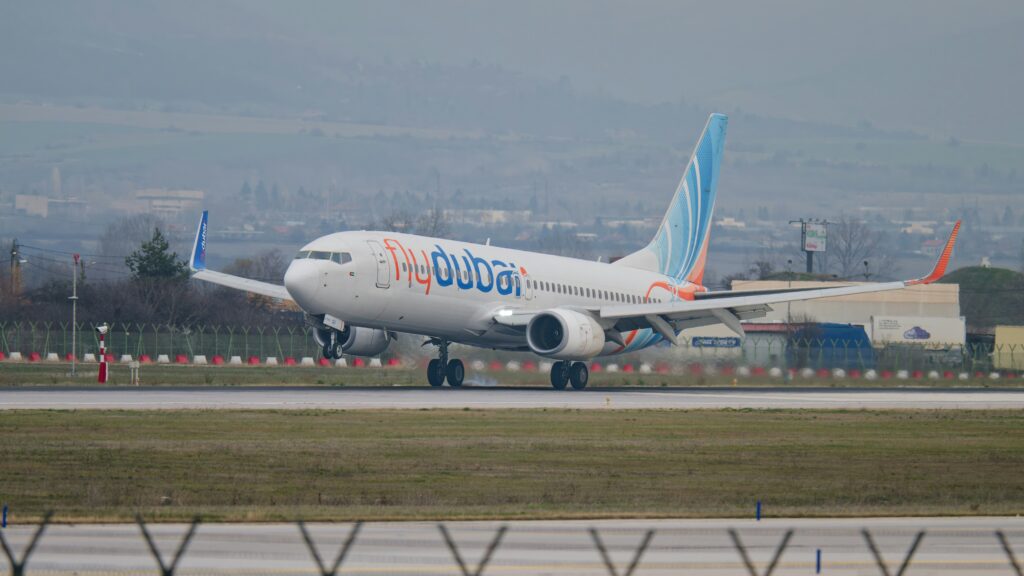



The narrowly avoided catastrophe aboard a flydubai flight last week, prevented by the extraordinary reaction and heroism of the captain and passengers, has exposed serious gaps in aviation security.
Hamam al-Hammami, the co-pilot accused of attacking the captain of Flight FZ1073 with an emergency axe, allegedly intended to bring down the aircraft carrying around 180 passengers and crew on its way from Dubai to Tel Aviv. Interrogation reports published over the weekend reveal that al-Hammami specifically planned to crash the plane into Ben Gurion International Airport or a Tel Aviv skyscraper.
According to the UAE Attorney General, Flydubai Flight 1073 co-pilot Hamam al-Hammami used the cockpit crash axe to attack the captain. The crash axe is emergency equipment stowed next to second observer seat directly behind the Captain’s seat in the cockpit. It is secured by two quick-release latches, and from the First Officer’s seat, its position provides relatively easy access (He just raises his left hand and quickly removes it, unlike the captain, who has to turn around). The image shows the axe’s position and vantage point from the First Officer’s side; a detail that may have been to the co-pilot’s advantage during the attack.
— Turbine Traveller (@Turbinetraveler) October 3, 2026
The captain survived the brutal attack and managed to open the cockpit door, allowing passengers to intervene and off-duty flydubai pilots to take control of the aircraft and make an emergency landing in Tabuk, Saudi Arabia. Al-Hammami was later transferred to Emirati authorities for questioning.
But as more details emerge, the incident increasingly appears to be the result not of one security failure, but of several.
A chain of missed warnings
Four clear failures have been identified.
Firstly, al-Hammami was already known to his first employer for his extremist views. He joined Oman Air in 2018. In 2024, after authorities discovered his interest in extremist websites and blogs, the state-owned airline banned him from flying, sent him on a deradicalisation programme and reassigned him to a desk job.
Separate reporting on his deleted social-media activity has since shown material praising former al-Qaeda leader Ayman al-Zawahiri, among other extremist content.
Yet Oman failed to flag him more in international security databases or revoke his pilot’s licence.
Secondly, there was another warning in Morocco. In 2025, al-Hammami underwent around three months of training with Royal Air Maroc but was ultimately not hired. The precise reasons have not been divulged by the airline.
Thirdly, when the Emirati airline hired him in 2026, it carried out a routine criminal background check but failed to contact Oman Air or verify his prior employment history. Emirati authorities are currently investigating the personnel involved in his recruitment.
🚨🇮🇱🇴🇲🇦🇪 The FlyDubai co-pilot is expected to face the DEATH PENALTY over his foiled hijacking attempt… Omani native Hamam al-Hammami worked for FlyDubai for about 8 months, and reportedly had "dreamed" of crashing a plane into Israel the whole time. He admitted specifically to wanting to crash Flight 1073 directly into Ben Gurion Airport, which handles approx. 80K-100K passengers per day. Make no mistake: had he been successful, this could have been a 9/11-level terrorist attack… Thank God he wasn’t. Now for justice to be served!!! Source: NY Post / Writer: Michael
— Mario Nawfal (@MarioNawfal) October 5, 2026
Finally, the fourth gap occurred in Israel. As an Omani national, al-Hammami should never have been cleared to operate flights into Israeli airspace: under Israeli regulations, foreign airlines are expected to deploy pilots originating from countries that maintain diplomatic relations with Israel.
Yet al-Hammami had flown to Ben Gurion Airport several times before the attack.
Israel’s Ministry of Transportation has come under fire for relying entirely on foreign airlines’ self-certified crew declarations, and has acknowledged that its existing procedures “do not address the threat from a pilot”.
Israeli media have since reported that al-Hammami was not an isolated case, with Channel 12 revealing that dozens of Omani pilots had flown into Israel in recent years despite the restriction.
Statement| UAE Following Incident Involving flydubai Flight to Tel Aviv https://t.co/9YN4vHVxNN
— MoFA وزارة الخارجية (@mofauae) October 1, 2026
Whose responsibility is it to stop such a threat before it reaches the cockpit?
Post-9/11 aviation security was designed largely to prevent external threats from entering the cockpit. It was far less prepared for the possibility that the threat might already be sitting inside it.
Security specialists argue that the answer lies largely in better vetting and information-sharing. Pilot licences remain primarily proof of technical qualification, while background checks and security procedures are handled nationally and vary considerably between jurisdictions.
Greater cooperation between airlines, regulators and intelligence services is therefore likely to be central to any response. That could include mandatory checks with previous employers, better systems for flagging serious security concerns internationally, continuous rather than one-off vetting, and clearer responsibility for screening foreign flight crews.
While no terrorist organisation has so far been linked to al-Hammami, and investigators are examining whether he acted alone, ongoing inquiries by Australian, Emirati and Israeli authorities are probing his background, including his studies in Australia and reported travel to Syria.
The co-pilot terrorist of the FlyDubai plane, Hamam al-Hammami spent five years in Australia on a student visa between 2014-19. It’ll be interesting to see if he was radicalised here and what mosques he attended https://t.co/HwvDAl8rS5
— Sandy Lanceley (@sandylanceley) October 4, 2026
Jihadist propagandists have already seized on the attack. A pro-al-Qaeda publication has praised the flydubai attacker and called for copycat attacks against American and Israeli aircraft, the New York Post reported.