



The Travel & Tourism Development Index 2026 shows travel and tourism development conditions are at their strongest since the Covid-19 pandemic. Yet while 92% of the 110 economies improved their score since 2024, destinations are facing a growing challenge.
On the occasion of Beyond Tourism Day in Geneva on 25 September 2026, the World Economic Forum and Zurich Insurance Group have published the Travel & Tourism Development Index (TTDI) 2026. Instead of focusing on visitor numbers, spending, and traveler satisfaction, the document aims to show how well economies across the world are set up for tourism to create lasting value for visitors, businesses, and local communities.
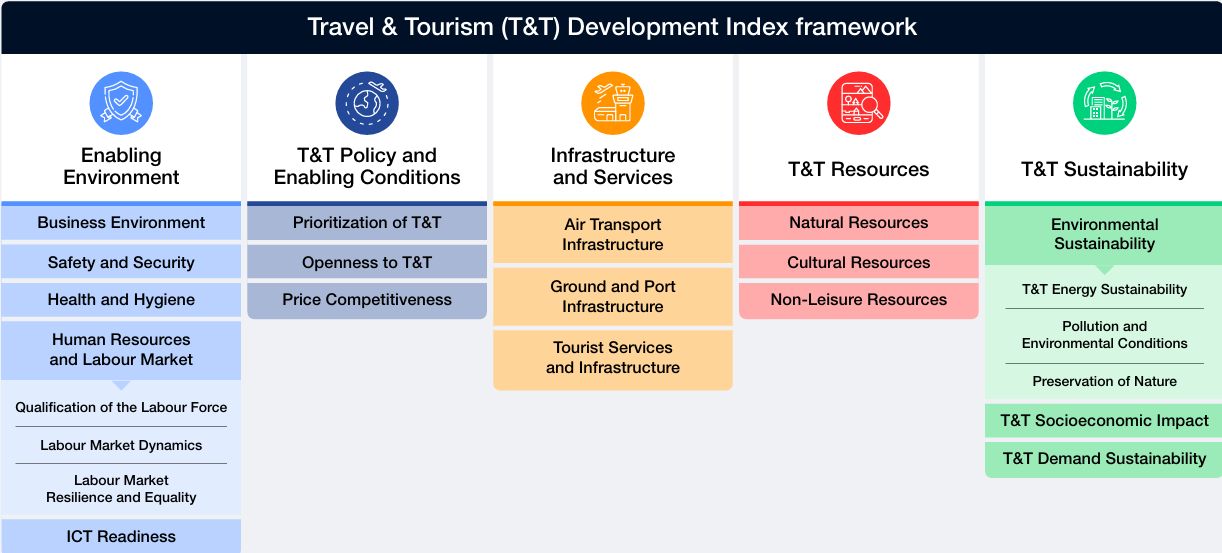
The 10th edition of the TTDI show travel and tourism development conditions are at their strongest since 2019. No less than 101 of the 110 destinations (92%) in the list have improved their overall score since 2024 with an average rise of 2.1%, compared to 54% and 0.2% respectively between 2021 and 2024. Gains in cultural attractions, tourism infrastructure and services, and air connectivity proved to be the most important drivers behind the numbers.
“The latest Travel & Tourism Development Index shows that the enabling conditions for travel and tourism are at their strongest since the pandemic, with 92% of economies improving since 2024. The next chapter is not simply about attracting more visitors, but it is going to be about creating greater value by investing in people, infrastructure and stronger public-private collaboration so tourism delivers lasting benefits for communities, businesses and destinations,” said Ramya Krishnaswamy, Head of Experience Economy and Cities, World Economic Forum.
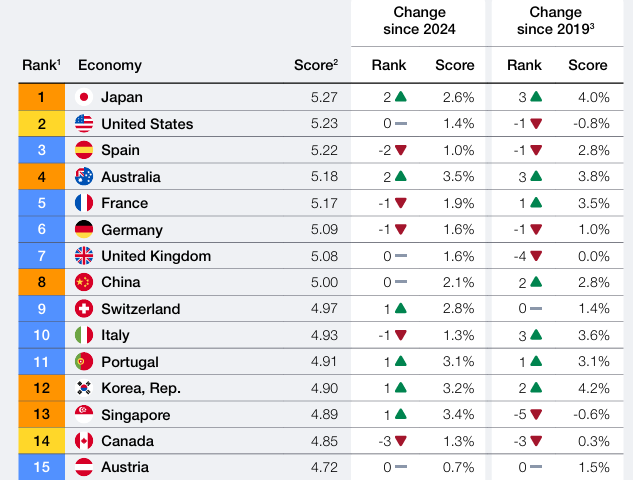
The strongest performers in 2026 were Japan, the United States, Spain, Australia, and France. Advanced economies were able to hold nine out of 10 positions – China being the sole exception – while Europe remains the highest-performing region overall with six economies in the top 10.
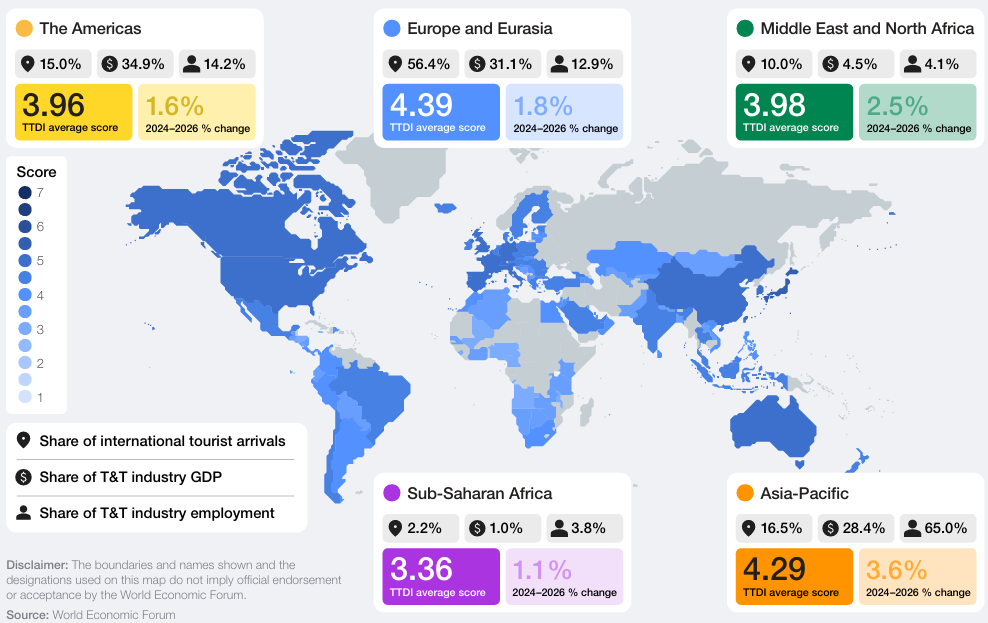
However, the fastest gains took place further down the ranking. Albania improved the most since 2024, lifting its score by 7.0%, followed by Vietnam (+6.3%) and Laos (+6.1%). Asia-Pacific holds seven of the 10 most-improved spots, with South-East Asia advancing faster than any other subregion.
Despite the global growth, the Travel & Tourism Development Index also shows the challenges being increasingly faced by the tourism industry in a climate of global economic and geopolitical concerns. Since 2024, travel has become less affordable across 75% of the economies – with travelling to, staying in, and operating within a destination becoming more expensive and even outpacing inflation.
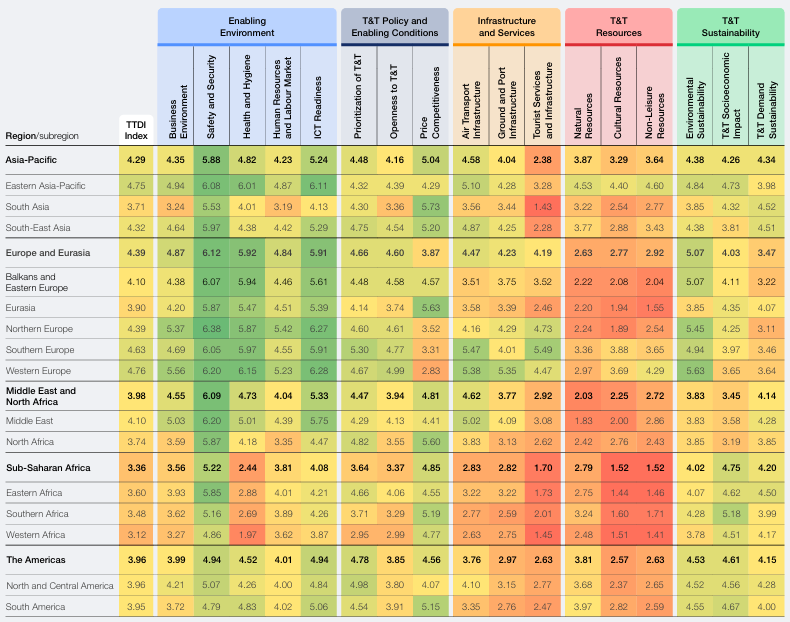
Moreover, tourism investment failed to keep pace with rising demand, an investment gap that is expected to persist until 2033. Labour shortages have threatened further growth and benefits for local communities have weakened.
“The best destinations are still those with the most to see. But today, it is also about whether they can absorb a shock and keep going, when flights are grounded, when a heatwave hits, when the systems people rely on go down. We see it across the industry: the places that plan for disruption recover faster and maintain travellers’ trust. That’s not just good risk management. It’s how you stay competitive,” said Cara Morton, CEO Global Businesses and Operations, Zurich Insurance Group.
Looking towards the future and beyond
To help global economies respond to these challenges, the index identifies five priorities for governments, destination authorities and businesses to build a more resilient travel and tourism industry. The report stresses that none of them works in isolation, as destinations cannot compete on value without the people to deliver it, manage growth without the trust of residents, or protect access without coordination between airlines, hotels, regulators and destination managers.
Among the priorities is the need to spread demand more widely across source markets, different types of travellers and throughout the year, reducing dependence on individual markets or seasons. Destinations should also remain open, visible and accessible by ensuring transport, information and digital systems can continue operating when disruption occurs.
The report further argues that destinations should compete on value rather than price, focusing on service quality, trusted experiences and long-term investment. At the same time, tourism should generate and communicate tangible benefits for local communities, while addressing pressures on residents.
Finally, the index highlights workforce capacity as a key priority, calling for greater investment in skills, employee retention, productivity and coordination across the sector.
The report was launched during the World Economic Forum’s inaugural Beyond Tourism Day in Geneva. The event brings together senior leaders from business, government, and civil society under the theme ‘Resilient Growth. Renewed Impact’. Discussions focused on strengthening competitiveness and resilience through workforce readiness, technology and innovation, investment, and scalable solutions.
The Beyond Tourism Day mainly aimed to provide a platform to carry the conversation from Geneva to a broader global discussion on how travel and tourism can strengthen economic resilience, create quality jobs and opportunities, and deliver greater value to communities and destinations. The broader global discussion took place during World Tourism Day on 27 September under the theme ‘Digital Agenda and Artificial Intelligence to Redesign Tourism’.