


The United States pressure on Iranian aviation continues, with 27 Iranian airlines under sanctions from the US Treasury since early September 2026, and threats from Washington that service providers to the affected carriers will lose access to the US financial system. US Treasury Secretary Scott Bessent had predicted that all global Iranian airline operations would cease as a result, from as early as Wednesday, 23 September.
Iranian airlines began cancelling international services as the US anticipated on Wednesday, as the latest wave of sanctions reached airports, fuel suppliers, ground handlers, and ticketing businesses outside Iran. The first tangible disruption fell on two of Iran’s most important regional links. Iranian aviation officials said Baghdad and Muscat would stop accepting Iranian-operated flights from midnight, prompting cancellations from Tehran.
A Varesh Airlines flight from Tehran to Dushanbe, capital of Tajikistan, had to return to IKA Airport in Tehran after neighbouring countries between Iran and Tajikistan had denied passage of this Iranian passenger plane.
— Arya Yadegaar (@AryJeayBackup) September 24, 2026
The Iranian plane then attempted to use an alternative… pic.twitter.com/kNM5uMX56P
However, at the time of writing, flights to Baghdad and Muscat have been halted, while services to China and parts of the wider network continue, leaving passengers to face a fast-changing patchwork of cancellations, rerouting, and higher costs.
Talks are still under way about redirecting some Baghdad-bound services to Najaf, a key gateway for religious travel, while negotiations continue over Oman. Iraq and Oman had not publicly detailed the full scope or duration of the restrictions when the changes were announced.
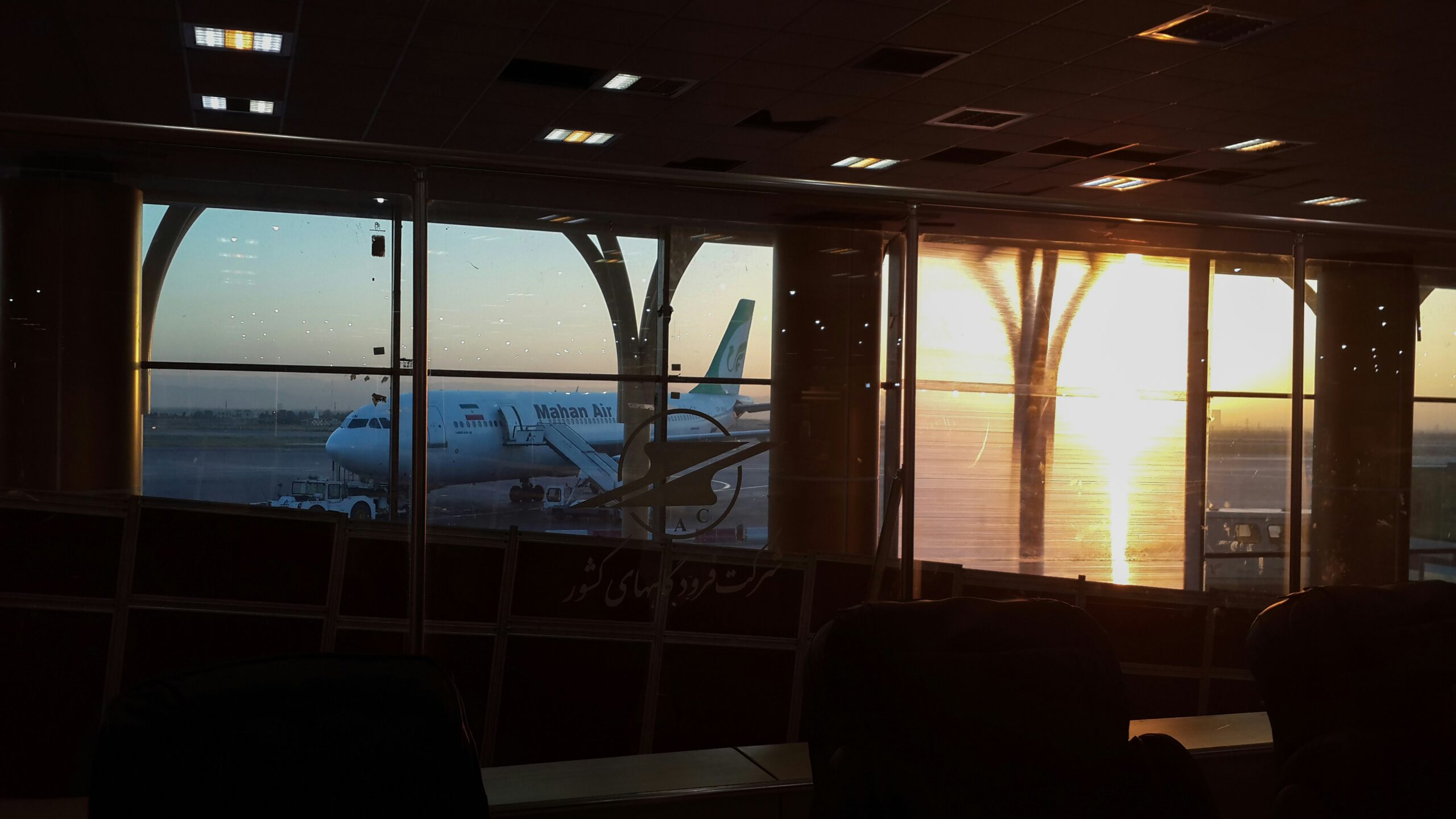
The picture is not yet the blanket grounding Bessent envisioned. Same-day reporting indicated that Iranian services to Qatar, Georgia and Azerbaijan had also been suspended, while at least one Mahan Air flight reached Guangzhou and other China services remained scheduled. Some Istanbul flights were still listed, although the timetable was unstable and individual departures had been cancelled. The result is a fragmented network in which availability can change by route, airport, and service provider.
How the restrictions work
Washington is not closing foreign airspace. Instead, it is using the reach of the US financial system to deter the commercial support an airline needs after landing. Fuel, airport access, ground handling, maintenance, ticket sales, and payments can all become pressure points if providers believe continued dealings with a sanctioned carrier could jeopardise their access to dollar transactions.
The US Treasury’s 8 September action designated 36 aviation-linked targets, including 27 Iranian airlines, as well as warning foreign firms about assisting sanctioned carriers. It also suspended three Iran-related aviation authorisations, while saying safety-related requests could still be considered individually. The Treasury claims the sector has been used to move weapons, personnel, and illicit cargo. Iran and China reject Washington’s unilateral sanctions framework.
U.S. Treasury Secretary Scott Bessent:
— Open Source Intel (@Osint613) September 23, 2026
"With Operation Economic Outcast, we are squeezing the Iranians like they've never seen. Today, 80-90% of external flights from Iran got shut down as the economic pressure continues to mount." pic.twitter.com/qgNBAza68e
What it means for travellers
For passengers, the immediate uncertainty is perhaps even more disruptive than a single formal ban: a flight may be listed but become unworkable if an airport, fuel contractor, or sales agent withdraws support. Travellers should expect short-notice changes, limited rebooking options and greater reliance on foreign carriers or overland connections through neighbouring countries.
The inconvenience is especially acute on routes tied to pilgrimages, family visits, and medical travel. Najaf could potentially handle some Iraq-bound demand, but a diversion does not solve every onward journey. If more airports decline Iranian carriers, passengers could be pushed towards hubs such as Doha, Dubai, and Istanbul, increasing connection times and fares. Iranian airlines also face deeper maintenance and fleet pressures after years of restrictions on aircraft, parts, and technical support.
A fluid regional map
Compliance will vary. China has publicly opposed the measures, and continued flights there demonstrate the limits of Washington’s ability to impose an immediate worldwide stop. Iraq’s links with Iran and Najaf’s pilgrimage economy may encourage efforts to preserve some connectivity, while decisions by Gulf, Turkish, South Asian and Caucasus airports will determine how much of the remaining network survives.
China has declared that Iranian airline flights to China will keep operating, while expressing its opposition to the unfair US sanctions imposed on Iran. pic.twitter.com/DxasTwq5BE
— IRNA News Agency ☫ (@IrnaEnglish) September 23, 2026
Travellers booked on Iranian carriers should verify their flight directly with the airline and departure airport immediately before travel, avoid relying on a single connection, and check ticket-change and refund conditions. Because sanctions compliance decisions can change quickly, schedules displayed by agents or aggregators may lag behind operational reality.