


A major air traffic control failure across the northeastern United States has prompted calls for billions of dollars in new aviation investment, after thousands of passengers faced delays, cancellations, and diversions.
Transportation Secretary Sean Duffy said the administration intends to ask Congress for a further $30 billion (over €26 billion) for air traffic control and airport upgrades. The proposal would allocate about $10 billion to ageing towers and facilities, $10 billion to telecommunications and other control technology, and $10 billion to airport infrastructure, Reuters reported.
“The problem I have is I don't have the money to do all the things that I need to do that America expects me to do, to make sure this crap never happens again.”
— Fox News (@FoxNews) September 22, 2026
Transportation Secretary Sean Duffy warns that widespread flight delays will continue until Congress provides critical… pic.twitter.com/umLo7vSwtW
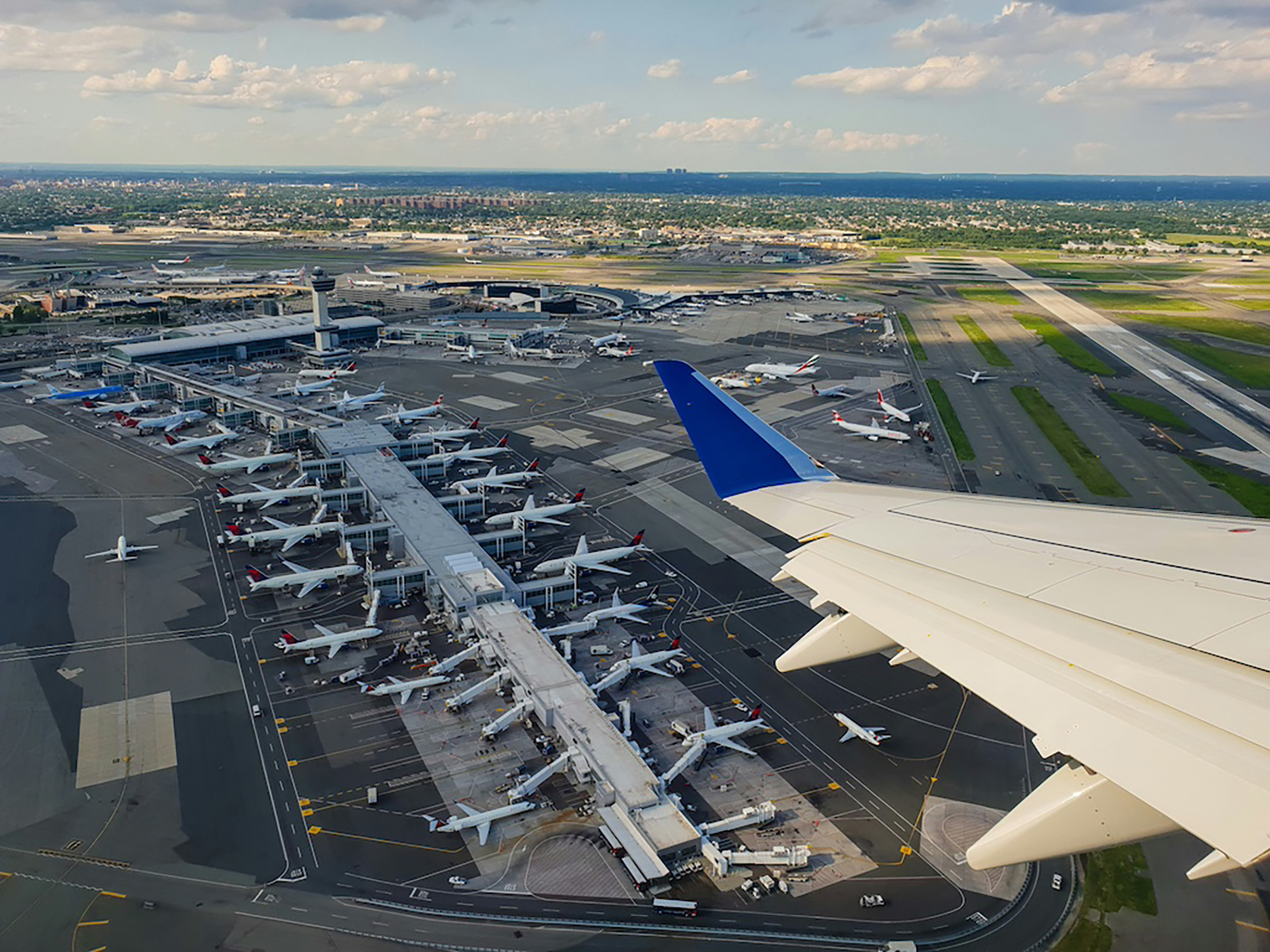
The announcement came a day after a telecommunications outage disrupted traffic around New York and Philadelphia. Simple Flying reported that roughly 9,500 US flights were delayed or cancelled and more than 100 were diverted, with Newark, New York JFK, LaGuardia, and Philadelphia among the airports affected. Newark alone recorded more than 600 cancellations.
The disruption reportedly began with a primary circuit failure at Philadelphia TRACON, which manages traffic in the region. When controllers moved to a backup connection, a fibre-optic cable in New Jersey had also been severed during construction. Communications were restored after about eight hours, but the knock-on effects continued across airline networks.
UPDATE: The telecom lines have been repaired, and all airport operations in the Northeast are resuming.
— Secretary Sean Duffy (@SecDuffy) September 21, 2026
It will take some time to clear all existing delays, so please check with your airline for the latest information. https://t.co/cqFWKQr0ar
The latest request is additional to the $12.5 billion approved by Congress in 2025 for the Federal Aviation Administration’s modernisation programme. Of that earlier package, $9 billion was directed to systems and $3.5 billion to facilities. If the new bid succeeds, combined federal investment in air traffic control and airport renewal would reach about $42.5 billion.
Plans include replacing copper telecommunications lines, radios, radars, and voice switches, while expanding digital surveillance and information displays. The FAA has also started limited use of SMART, a software platform drawing on around 200 data streams to anticipate congestion, weather effects, and capacity constraints. Administrator Bryan Bedford said the platform, combined with hardware upgrades, could help reduce delays and keep US airspace safe and available.
Our airspace is getting SMARTer ✈️
— Secretary Sean Duffy (@SecDuffy) September 22, 2026
SMART – or Strategic Management of Airspace Routes & Trajectories – is our new AI tool:
✅ Pulls 200 data streams into 1 platform
✅ Prevents delays & cancellations before they happen
✅ Reduces stress on air traffic controllers
This is the… pic.twitter.com/aHAHfZZB60
However, the eventual price remains uncertain. A government review cited by media sources found that the FAA lacks a comprehensive estimate for the programme’s full lifecycle cost. Telecommunications spending has already risen from $4.75 billion to $5.91 billion, while a second phase of systems work is estimated at a further $10.2 billion, excluding facilities.
For travellers, the episode demonstrates how one damaged link can ripple through several major hubs and continue affecting schedules after repairs are completed. The long-term outlook includes FAA forecasts that commercial flights will increase by more than 40% by 2046, but recent events raise the stakes for Congress: modernisation is no longer only a capacity-building project, but an immediate reliability issue for airlines, airports, and passengers.