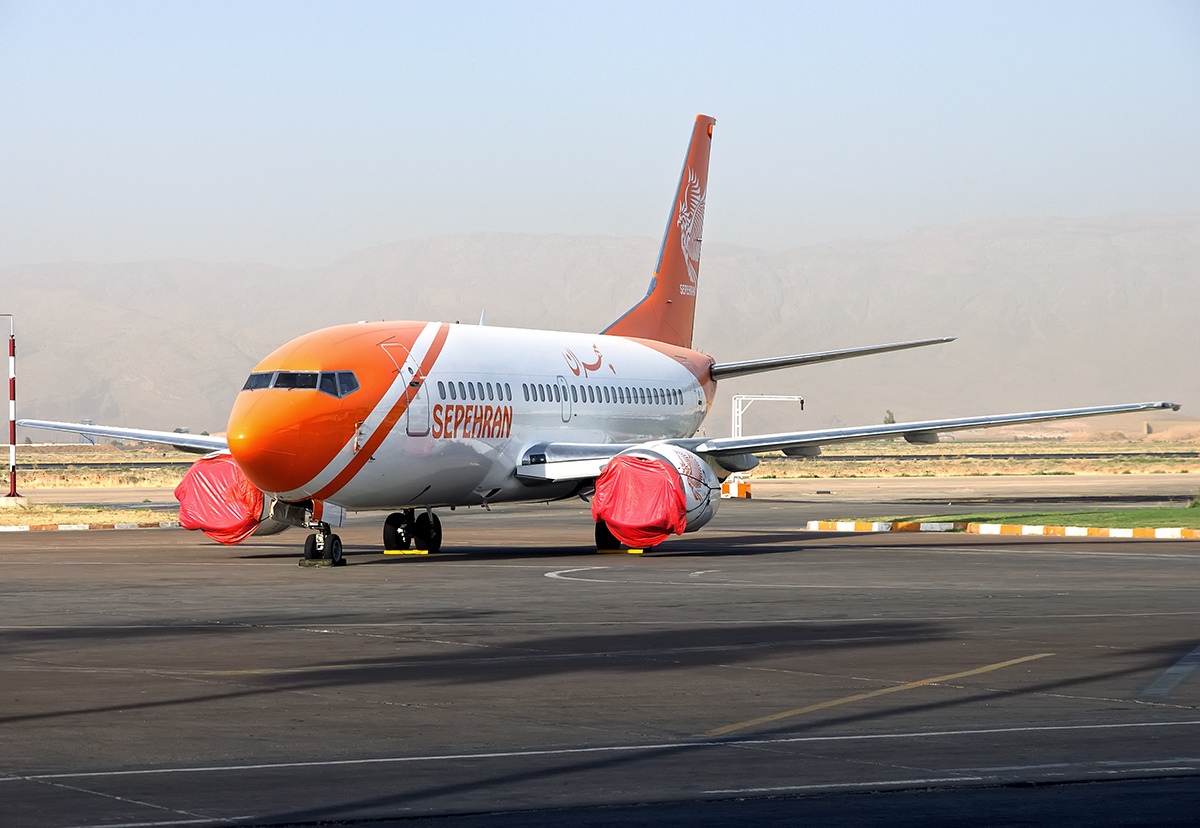


A Sepehran Airlines Boeing 737 made an emergency return to Mashhad in Iran after experiencing severe vibrations shortly after take-off. The aircraft was operating a domestic flight from Mashhad to Kermanshah on Tuesday, 15 September 2026. Early reports suggest that a tyre on the main landing gear burst or became detached during departure. The pilots returned to Mashhad, where the aircraft landed safely and no injuries were reported.
The precise sequence of events has not yet been officially established. Several reports said the tyre problem was followed by an engine malfunction or damage to an engine. However, it remains unclear whether the two technical problems were directly connected. Aviation authorities are reportedly investigating the incident, but no preliminary technical findings have been published.
Footage recorded inside the aircraft showed the cabin shaking heavily during the emergency. Several overhead compartments opened, causing passengers’ belongings to fall onto seats and into the aisle. Sections of the interior ceiling also became detached, leaving parts of the area above the cabin panels exposed. Passengers could be heard shouting, crying and reciting prayers as the aircraft continued to shake.
Some reports described the Boeing 737 as “falling apart”, but the available footage appears to show damage to interior cabin fittings. These panels cover systems and equipment located above the passenger cabin but are not the aircraft’s main load-bearing structure. Their detachment can still create a risk to passengers, particularly when panels and baggage fall onto occupied seats. The footage alone does not establish whether the aircraft suffered structural damage elsewhere.
Firefighters, medical teams and other emergency personnel were reportedly placed on standby at Mashhad Airport before the aircraft returned. The runway was temporarily closed so that the landing and a subsequent safety assessment could take place. It reopened later the same day, according to reports citing the government of Iran’s Razavi Khorasan province. Despite the visible cabin damage and the fear among passengers, everyone was able to leave the aircraft safely.
WATCH: Cabin ceiling falls apart onboard a Sepehran Airlines Boeing 737 after a tire reportedly burst shortly after takeoff from Mashhad Airport causing engine damage and severe vibrations. pic.twitter.com/R7RP1AwZYX
— Breaking Aviation News & Videos (@aviationbrk) September 15, 2026
Hassan Jafari, a spokesperson for Sepehran Airlines, confirmed to Iran’s Fars news agency that nobody had been injured. The passengers were subsequently transferred to another flight to complete their journey to Kermanshah. The airline has not publicly provided a detailed explanation of the tyre problem or the reported engine malfunction. The aircraft’s flight number and registration were also not consistently identified in the initial reports.
The incident occurred around three weeks after another Sepehran Airlines Boeing 737 was involved in an emergency at Mashhad Airport. On 25 August 2026, a Boeing 737-500 arriving from Tehran left the runway after landing and came to a stop with its nose landing gear collapsed. All 127 people on board were evacuated and no injuries were reported. Iran’s Civil Aviation Organisation opened an investigation into that event.
There is currently no evidence that the two incidents had the same cause. The August event happened after landing, while the latest emergency reportedly began with a tyre problem during departure. Their occurrence at the same airport within a short period nevertheless places additional attention on the airline and the outcome of the investigations. Until technical findings are released, it is not possible to determine whether maintenance, aircraft condition or another factor contributed to either event.
Sepehran Airlines is based in Mashhad and operates domestic and regional international services. According to the airline’s official fleet information, it has 12 Boeing 737 aircraft. Its fleet consists of Boeing 737-300s and 737-500s, which belong to the older 737 Classic generation. The age or model of an aircraft does not by itself show that it is unsafe, provided it is maintained and operated in accordance with applicable requirements.