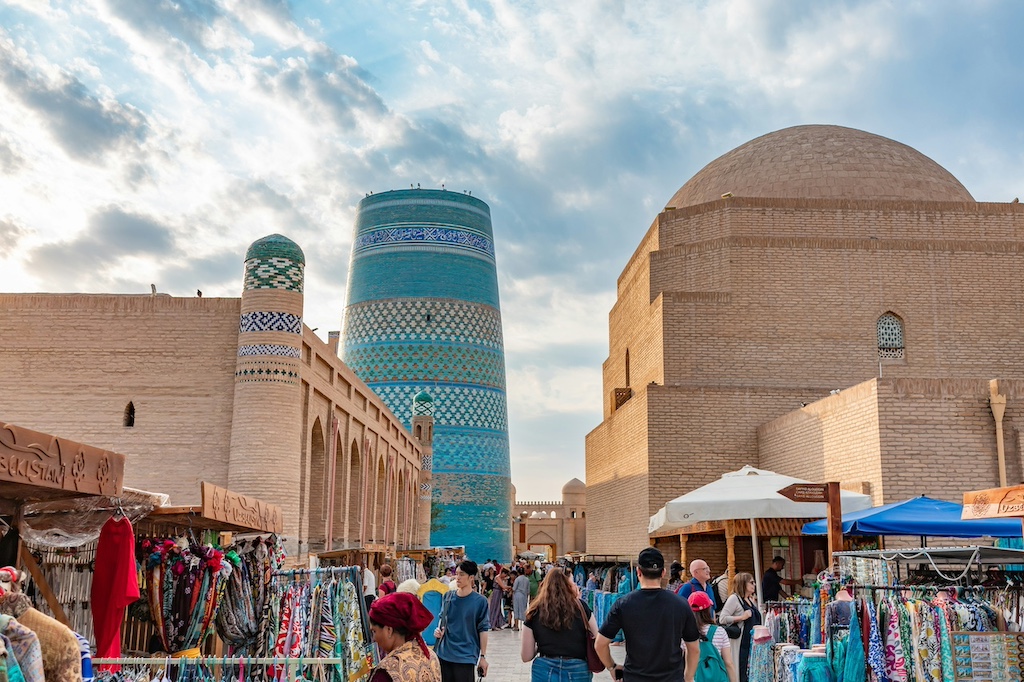



Uzbekistan is reporting strong growth in tourism and exports for the first eight months of 2026, as the former Soviet Central Asian republic continues to pursue a long-term strategy to reach 20 million international visitors before the end of the decade.
The Uzbekistan Tourism Committee has released figures showing international arrivals rose by 21.1% to reach 9.1 million foreign visitors between January and August 2026, compared with the same period the previous year. At the same time, service exports increased by 53.5%, reaching $4.6 billion (€3.98 billion).
The Uzbek approach to growing its travel and tourism sector has included an ambition to double the number of four- and five-star hotels and create a total stock of 95,000 rooms. Between January and July, 705 accommodation providers began operating, taking the current total to over 7,440 registered accommodation facilities with capacity for 202,000 guests.
Under an array of master plans worth approximately 950 billion soums this year, infrastructure developments to support the growth include upgrades to roads and internal transport links, such as the May launch of the new Jaloliddin Manguberdi high-speed service between Tashkent and Khiva, which cut the 14-hour journey time in half. Improved air connectivity and streamlined visa procedures are also key.
Meanwhile, a corporate and events proposition that includes medical, sports and other MICE expansions is being supported by a tax scheme allowing organisers of qualifying conferences, forums and exhibitions to recover 50% of thevalue-added tax (VAT) paid on eligible expenses. At the same time, the country, located at the crossroads of the ancient Silk Road, is diversifying its offer through architecture, ecotourism, ethnographic exploration, gastronomy and pilgrimages.
The result, according to Oybek Hakimov, adviser to the chairman of Uzbekistan’s Tourism Committee, who spoke to Euronews, is an increase in trip length and spending per tourist, from $197 (€171) in 2017 to $503 (€436) this year. Travellers are also going “beyond the classic route of Tashkent, Samarkand, Bukhara and Khiva,” Hakimov said.
The Fergana Valley, Kashkadarya, Surkhandarya, Muynak and Nukus are all destinations enjoying new interest, including from long-haul source markets such as China and Malaysia, from where arrivals more than doubled, and Japan, which sent 50% more visitors than during the same period last year. Arrivals from Germany increased by 25%, while those from France and the United Kingdom rose by 21%, according to the Tourism Committee.
Showcasing Uzbekistan’s ambitions at a Brussels press event earlier this year, Ambassador Gayrat Fazilov said: “Uzbekistan has for centuries served as a bridge between civilizations, cultures and trade routes. Today, this historical legacy is being transformed into a modern and highly attractive tourism destination.”