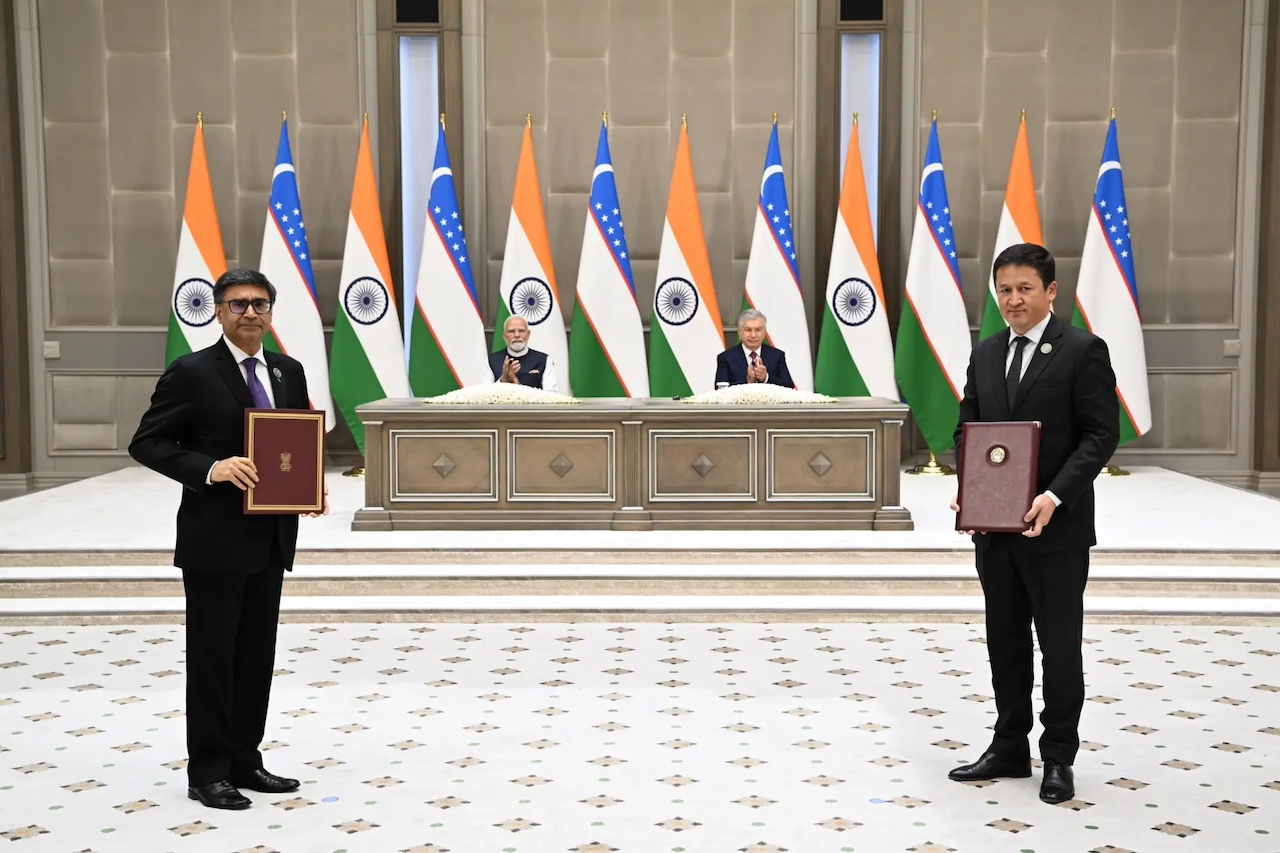



Uzbekistan and India have signed a Tourism Cooperation Programme for 2026–2028 and announced a 30-day visa-free regime, in a move expected to significantly increase travel between the two countries.
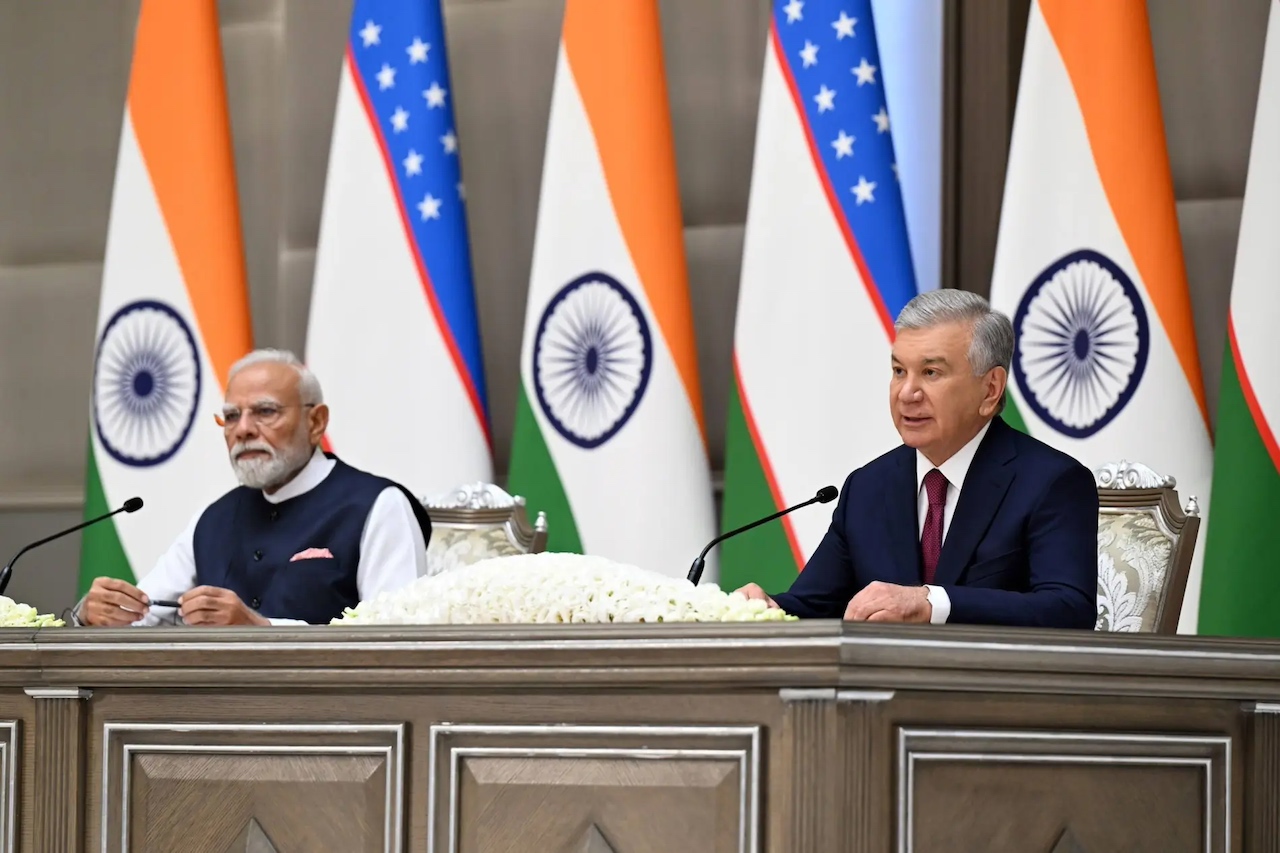
The programme was signed following high-level talks in Tashkent between Uzbek President Shavkat Mirziyoyev and Indian Prime Minister Narendra Modi, as part of a broader strengthening of bilateral relations between the two countries.
According to Uzbekistan’s Tourism Committee, the agreement is aimed at expanding tourist exchanges, strengthening cooperation between tourism stakeholders and developing new joint projects over the next three years.
The two countries are also planning reciprocal cultural weeks, film festivals and other tourism-related events, alongside the development of new joint tourist routes.
30-day visa-free travel
One of the most significant announcements for the tourism sector is the introduction of a 30-day visa-free regime for Indian citizens travelling to Uzbekistan.
The measure is expected to remove an important barrier to travel from one of the world’s largest outbound tourism markets and support Uzbekistan’s efforts to diversify its international visitor base beyond neighbouring Central Asian countries.
Indian travellers will be able to enter Uzbekistan without obtaining a visa for stays of up to 30 days. As the measure has only just been announced, travellers are advised to verify its implementation date and final entry requirements before travelling.
Connectivity between the two countries is already relatively strong, with 14 direct flights operating each week.
Travel could also become easier on the ground following an agreement between India’s NPCI International Payments Limited and Uzbekistan’s National Interbank Processing Centre. Once implemented, the system is expected to allow Indian visitors to use UPI-enabled payment applications while travelling in Uzbekistan.
India remains a relatively small but promising market
Despite the growing connectivity between the two countries, India currently represents a relatively modest share of Uzbekistan’s international arrivals, leaving considerable room for growth.
Uzbekistan welcomed 6,5 million international visitors during the first six months of 2026, an increase of 24.9% compared with the same period last year.
India accounted for 26,450 arrivals between January and June, placing it behind Uzbekistan’s major regional markets such as Kyrgyzstan, Kazakhstan and Tajikistan, as well as Russia and China.
The combination of visa-free access, direct air connectivity, easier digital payments and increased tourism promotion could therefore help accelerate arrivals from India over the coming years.
Cultural connections between the two countries are also expanding. Uzbekistan is home to institutions including the Lal Bahadur Shastri Centre for Indian Culture and the Mahatma Gandhi Centre for Indian Studies, while yoga has become increasingly popular in the country. A nationwide Yoga Festival was organised across Uzbekistan in June 2026.
Uzbekistan was a proud participant in the first ever World Yogasana Championship held in Ahmedabad earlier this year. Some of the medalists were also present today. They came back with great memories of India and the Championship.
— Narendra Modi (@narendramodi) August 30, 2026
I commend the Yoga Federation of Uzbekistan for… https://t.co/KH2x72emSj pic.twitter.com/kQqHa9LCjo
Part of a wider strategic partnership
Tourism formed part of a much broader package of agreements reached during Modi’s state visit to Tashkent, during which India and Uzbekistan upgraded their relationship to a Comprehensive Strategic Partnership.
The two governments have set a target of increasing bilateral trade to $5 billion (€4.29 billion) by 2030, after trade grew by 33% last year to $1.3 billion (€1.12 billion).
Cooperation is also being expanded across critical minerals, energy, defence, education, digital infrastructure and transport. A new foreign minister-level mechanism is expected to oversee implementation of the expanded partnership.
The strengthening of relations could also generate additional business and MICE travel between the two countries, alongside the anticipated increase in leisure and cultural tourism.
List of outcomes (16 in total) : PM @narendramodi’s State Visit to Uzbekistan ⬇️
— Randhir Jaiswal (@MEAIndia) August 30, 2026
🇮🇳 🇺🇿 pic.twitter.com/spN96sEHEy
Uzbekistan targets 20 million visitors by 2030
The agreement with India comes as Uzbekistan accelerates an ambitious strategy to establish tourism as one of the country’s major economic sectors.
The Central Asian country is targeting 20 million international visitors annually by 2030, while aiming to increase tourism’s contribution to GDP from 3.5% to 7% and generate more than $6 billion in annual tourism exports.
As Travel Tomorrow reported, following a tourism promotion event at the Embassy of Uzbekistan in Brussels earlier this year, authorities are simultaneously investing in accommodation, transport infrastructure and new tourism products.
Uzbekistan is implementing dozens of tourism master plans and expanding its offer beyond the historic Silk Road destinations of Samarkand, Bukhara and Khiva. Ecotourism, gastronomy, pilgrimage, medical, sports and MICE tourism are among the segments being developed to attract a broader range of international visitors and reduce seasonality.
The latest visitor figures indicate that the strategy is gaining momentum. International arrivals grew by almost 25% during the first half of 2026, putting the country on a strong trajectory towards its longer-term tourism ambitions.
Greater access to the Indian market could now provide another source of growth. With visa requirements being removed, 14 weekly flights already connecting the two countries and a formal three-year tourism cooperation programme in place, Uzbekistan and India are laying the foundations for significantly stronger two-way tourism flows.