


Elon Musk has unveiled plans for an advanced semiconductor fabrication facility that will be the largest building in the world, if it goes ahead. A press release claims the project “will bridge the divide between current global chip supply and the compute demand of the future.”
Hailed as “the most epic chip-building effort in the world,” the facility will be built in Grimes County, Texas. Vast in ambition and size, the “vertically integrated factory” will provide over nine million square metres of manufacturing space and host manufacturing, packaging, and testing processes.
Bringing these aspects together in one location will, the press release claimed, allow rapid improvements and deployment of chips optimized for products such as Tesla’s Optimus robots and “self-driving” Cybercabs, alongside those headed for SpaceX’s data centres in space.
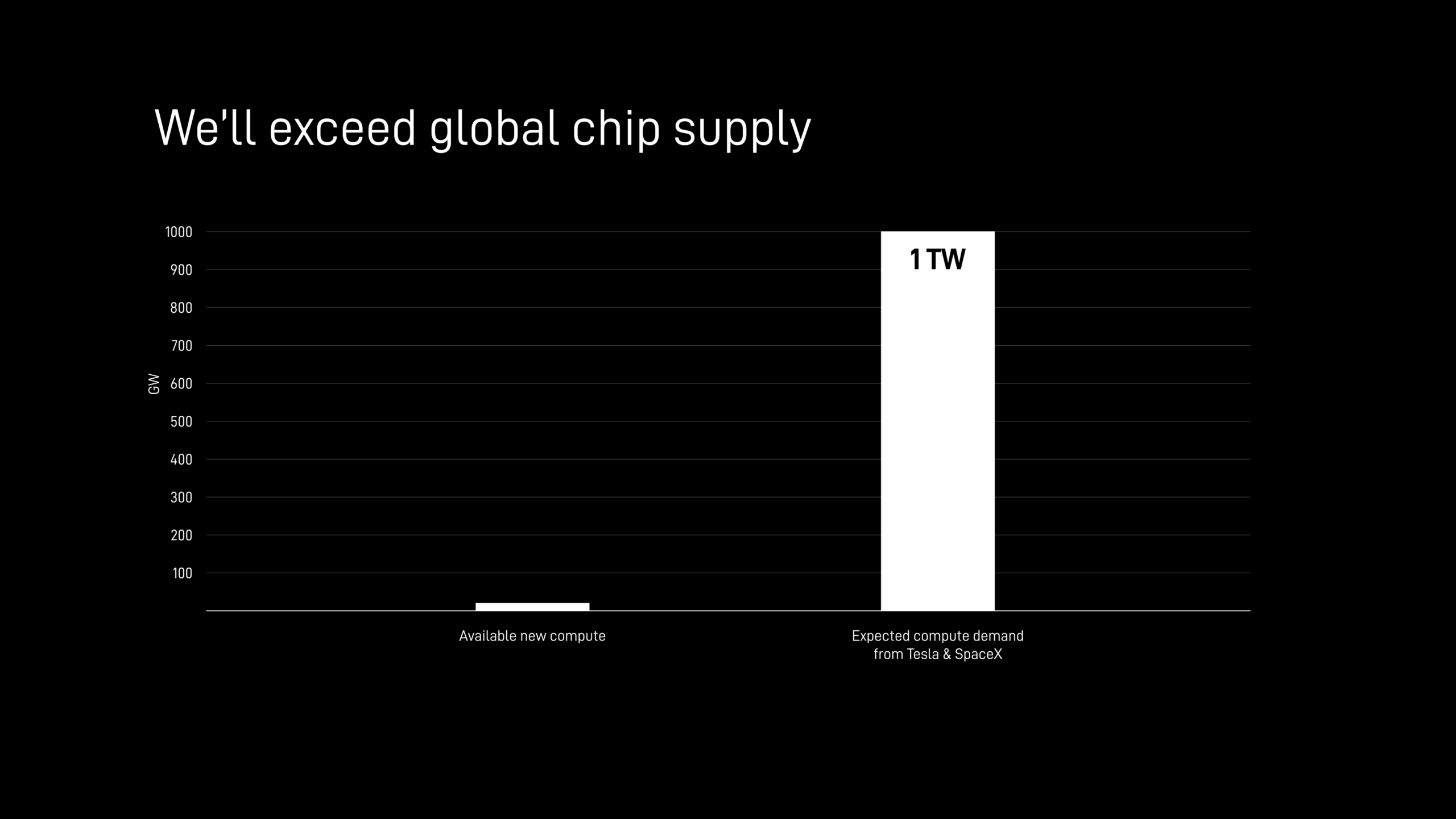
The facility is required because, combined, SpaceX and Tesla are projected to require in excess of one terawatt (TW) of processing capacity or “compute,” which outstrips current global supply. At the same time as announcing the move, Musk explained “this looming gulf between supply and demand is at the core of Terafab’s necessity” and expressed appreciation for his current chip suppliers, encouraging them “to expand production whenever possible.”
Advanced chips are argued to be more and more essential to today’s economy, as AI systems, satellites, secure communications, and advanced manufacturing all rely on them. Musk’s press release notes that “much of the world’s semiconductor production remains concentrated overseas, and the United States has recognized the importance of rebuilding advanced manufacturing capacity domestically. Terafab aligns with that broader national effort by expanding high-end manufacturing capacity in Texas.”
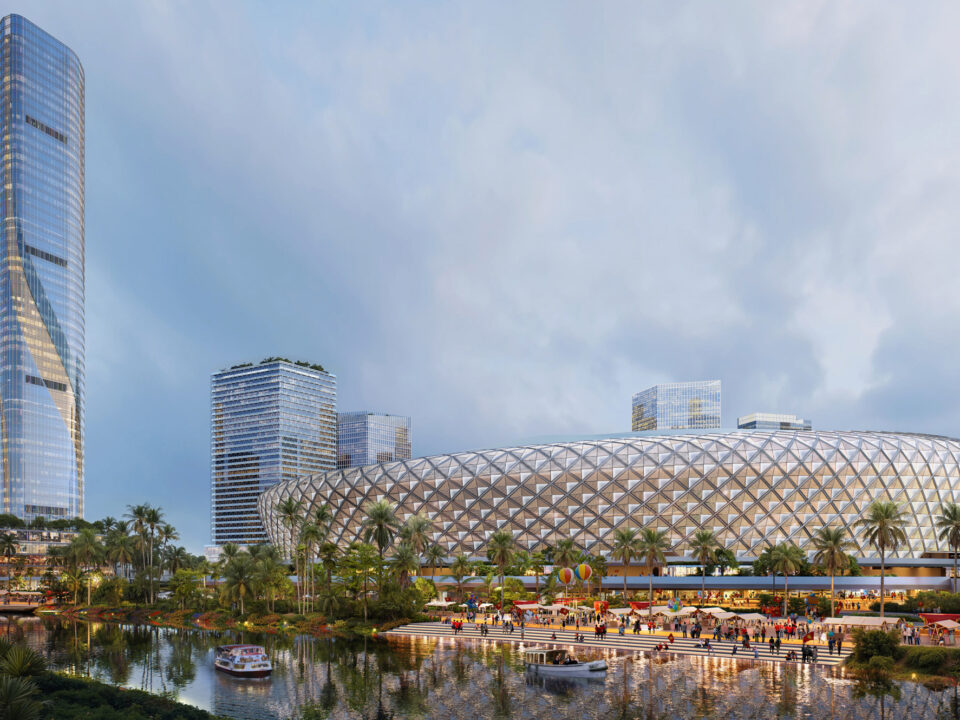
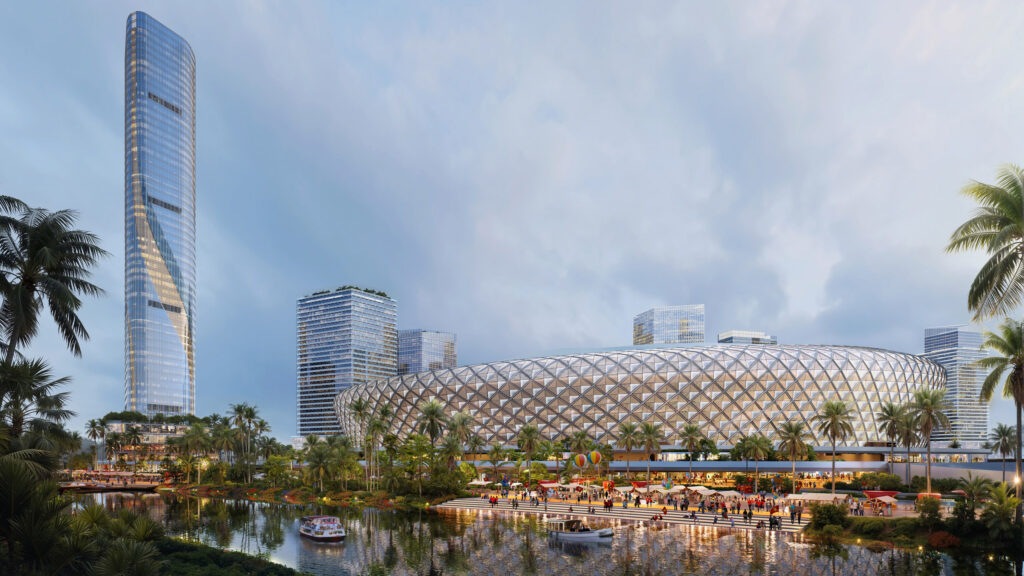
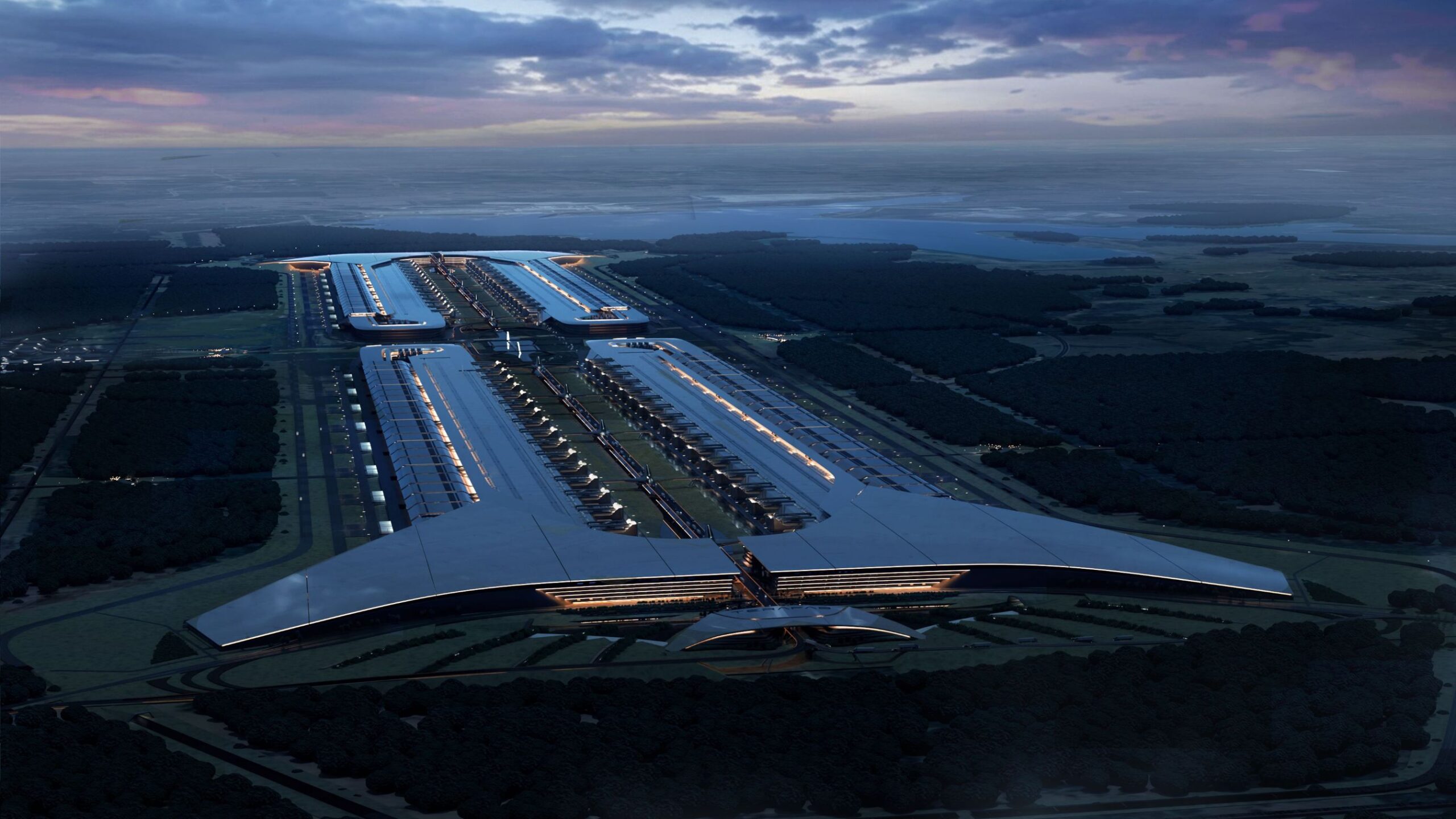
Grimes is located in southeastern Texas, a place where historically, slave ownership was high, lynchings were common, and the population declined during the 20th century, when the county remained rural and agricultural. The facility will be built in the Gibbons Creek Reservoir area, on the former site of a steam electricity station. AI-produced renderings reveal two symmetrical U-shaped buildings ending in wing-like roofs, with a service road through the middle.
Terafab Texas will be the largest and most valuable building on Earth by far.
— Elon Musk (@elonmusk) August 6, 2026
And it will be stunningly beautiful. pic.twitter.com/4NweOqTL7y
The confirmation of the plans on 6 August 2026 came two months after Grimes County lawmakers agreed a full property tax abatement package and €30 million state grant to secure trillionaire Musk’s investment. That is reported to represent an estimated $55 billion (over €47.6 billion) initially, and could reach more than twice that. Some predict the factory will employ between 1,800 and 3,000 people.
But critics say those jobs are unlikely to be filled by local hires, and the project, and its wider sector, bring major sustainability challenges. There are growing environmental concerns about how resource-intensive semi-conductor chip manufacturing is, relying on massive amounts of ultrapure water, fossil-fuel-generated energy to power tools and climate and humidity control, as well as processes that involve fluorinated greenhouse gases, like nitrogen trifluoride (NF3), which has a global warming potential 17,000 times greater than CO2.
Terafab approximate size comparison between Giga Texas, the Pentagon, Apple Park, and the Mall of America.
— Nic Cruz Patane (@niccruzpatane) August 6, 2026
There has never been a building this large. Elon Musk says it will be the most valuable building by far. pic.twitter.com/GCmpfeduJn
According to a paper published at 2021’s IEEE International Symposium on High-Performance Computer Architecture, the semiconductor manufacturing sector alone is responsible for around 50 megatons of CO2 emissions annually.
On top of that, Musk’s controversial personal brand is already making itself felt locally. Business owners in Anderson, 10 minutes from the Gibbons Creek site, expressed fear about telling news station ABC13 Houston their true feelings about the project, saying their opinions would drive customers away. Patty Schroeder, who moved in from Houston, told ABC she appreciates the location’s “peace and quiet” and “wide open spaces” and said: “change is coming.”