


US transportation security is being reshaped by new checkpoint rules, technology, privatisation moves, and revised security zones—changes that will alter how the TSA performs its national role.
Created after the 11 September 2001 attacks on New York and Washington, the TSA brought a fragmented private screening system under federal control through the Aviation and Transportation Security Act. Moved from the Department of Transportation to the Department of Homeland Security in 2003, it expanded from baggage checks to airport entry and exit screening and national security standards.
Now, under a multi-million-dollar Horizon 25 Strategy announced in August 2026, an overhaul is underway, to modernise checkpoints, improve the passenger experience, and strengthen border controls.
The transformation includes job cuts. In April 2026, President Donald Trump proposed reducing the 60,000-strong workforce by 9,400 and the annual operating budget by $1.5 billion, or about 20%. The plan is widely seen as a step towards re-privatised screening, already used at about 20 airports, including Kansas City, San Francisco and Sarasota, Florida.
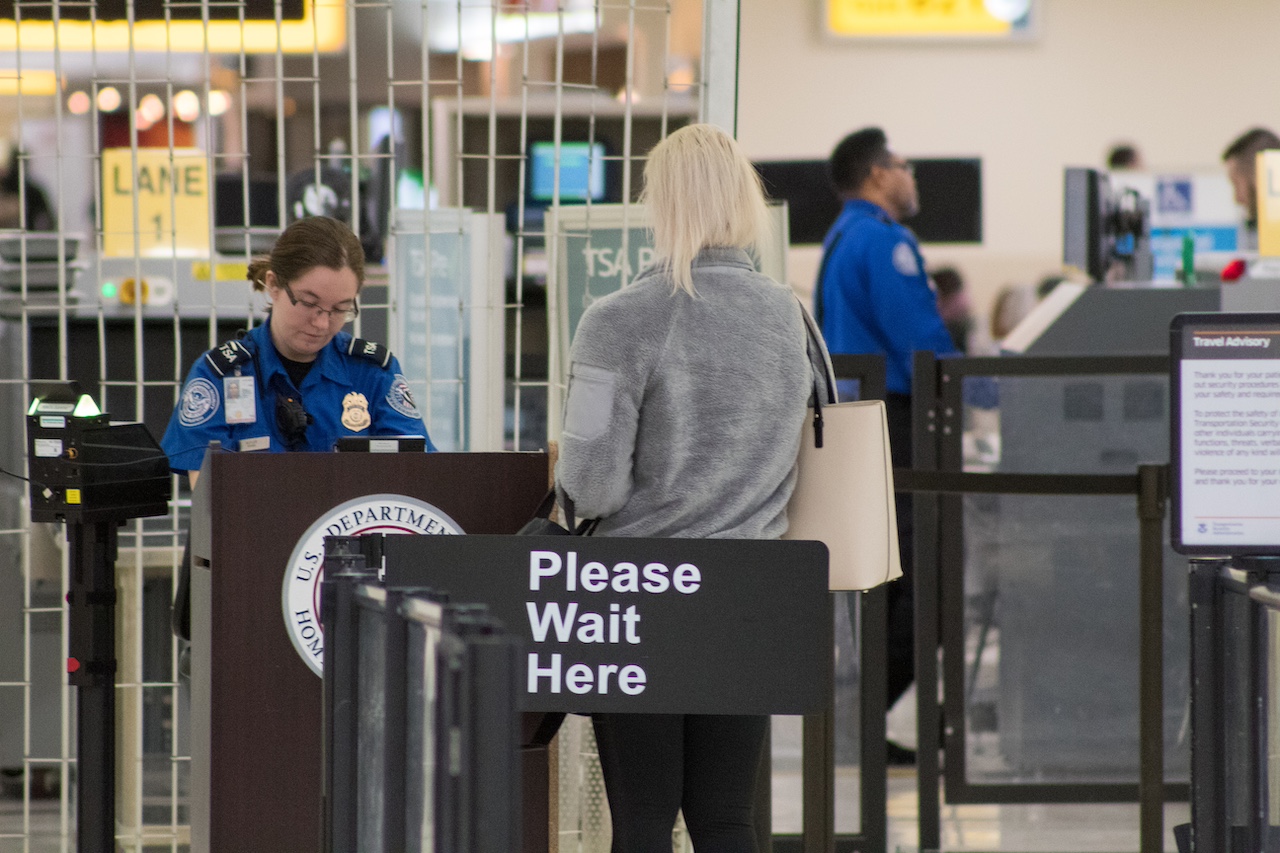
With a workforce already strained by periods without pay during federal budget freezes, the American Federation of Government Employees TSA Council 100 says requiring officers to stand on duty shows “disregard” for their “rights and safety” by denying basic ergonomic support. Critics question whether such pressure is part of a war of attrition on federal workers who walked off the job when wages stopped.
Such a drive to privatisation can work only if providers can handle more than the current 900 million passengers and two billion bags a year, with passenger volumes still rising. One answer is the rollout of smart automation intended to shorten screening times and expand capacity even as privatisation and working conditions unsettle the workforce.
🚨BREAKING: The Trump admin is taking CHAIRS away from TSA officers checking IDs at airports. ⁰⁰Republicans are dedicated to making life as miserable as possible for federal workers.⁰⁰Give them back their damn chairs. pic.twitter.com/ZZ4rbwJ6TO
— Homeland Dems (@HomelandDems) September 29, 2026
The TSA has deployed about 1,162 Computed Tomography scanners, which produce detailed 3D images of baggage, across 296 airports under its Checkpoint Property Screening System. Industry experts put the five-year cost at $500 million to $700 million. In addition, about 1,200 Advanced Imaging Technology units operate at nearly 400 airports.
Passenger identification is also changing through REAL ID, facial-image comparisons at e-gates and CAT-2 credential authentication, now used to vet travellers at about 350 airports.
TSA Administrator David P. Cummins has hailed the developments at the TSA as part of work to “constantly work to stay ahead of evolving threats and deliver a Golden Age of Travel. Through the Horizon 25 Strategy, we will build a TSA that is agile, resilient, and ready for tomorrow’s challenges.”
One practical challenge is adapting passenger habits. Launched in February 2026, ConfirmID verifies travellers who reach checkpoints without a REAL ID-compliant licence, providing a safety net rather than denying immediate access. A more futuristic test is counter-unmanned aircraft technology, designed to reduce security alerts and delays as drones increasingly enter airport airspace.
For passengers, if the border technology and ID verification are accessible and reliable, the travel experience could improve, driven by smoother, faster transit through checkpoints.
United Airlines and TSA just launched a new airport security system that will do a biometric scan of your face to get you through security
— Wall Street Apes (@WallStreetApes) September 4, 2026
This technology has been installed at the Newark Airport in New Jersey
Instead of having an officer check your ID, you can opt into the… pic.twitter.com/5LXNtZgmPZ
The overhaul also includes two passenger-friendly measures introduced in 2026. Gateside Visitor Access, availableat 13 airports, lets non-flyers accompany or meet passengers at the gate. “Serve with Honor” offers the military community expedited screening through dedicated PreCheck lanes near major installations and has proved highly popular.
Yet these crowd-pleasing measures coincide with an erosion of passenger protections strengthened under President Biden; critics say the Trump administration has eased pressure on airlines over service standards and compensation. The stakes extend well beyond shorter queues: Horizon 25 must prove that leaner staffing, private operators, and biometric systems can absorb rising demand without weakening security, workers’ welfare, or public trust. Its success will be measured not only in minutes saved, but in whether travellers feel both protected and fairly treated.