



Artificial intelligence is becoming an increasingly important part of the travel decision process, with 69% of travellers saying AI-generated summaries provide enough information to make decisions without further research. The figure comes from Amadeus’ “Travel Dreams 2026” report, which explores how technology is reshaping the way destinations compete for visitors. As AI tools become more common during trip planning, destination management organisations (DMOs) need to understand how travellers discover, compare and select places to visit. The shift means destinations need to adapt to a new environment where digital information plays a larger role in influencing travel choices.
AI is becoming part of several stages of the travel journey, from inspiration and research to decision-making and experiences during the trip. According to the report, 42% of travellers use AI during planning and research, while 36% use it for inspiration and discovering new places. Another 35% use AI while travelling, for example to find information or recommendations during their stay. The use of travel chatbots has also tripled in five years, increasing from 6% to 18%. A traveller planning a city trip, for example, may now ask an AI assistant to create an itinerary based on interests such as local food, museums or sustainable activities instead of comparing multiple websites individually.
This change in travel behaviour creates a new challenge for destinations, as information needs to be structured in a way that can be understood by both people and AI systems. If a destination is not clearly represented in AI-generated answers, it risks being overlooked when travellers are deciding where to go. Amadeus highlights that destinations need to look beyond traditional search engine optimisation (SEO) and also consider generative engine optimisation (GEO). While SEO helps websites appear in search engine results, GEO focuses on making information easier for AI systems to understand and use in generated responses. For example, a destination promoting itself as a hiking location needs to clearly communicate information about trails, accessibility, seasons and local experiences to improve its chances of being recommended by AI tools.
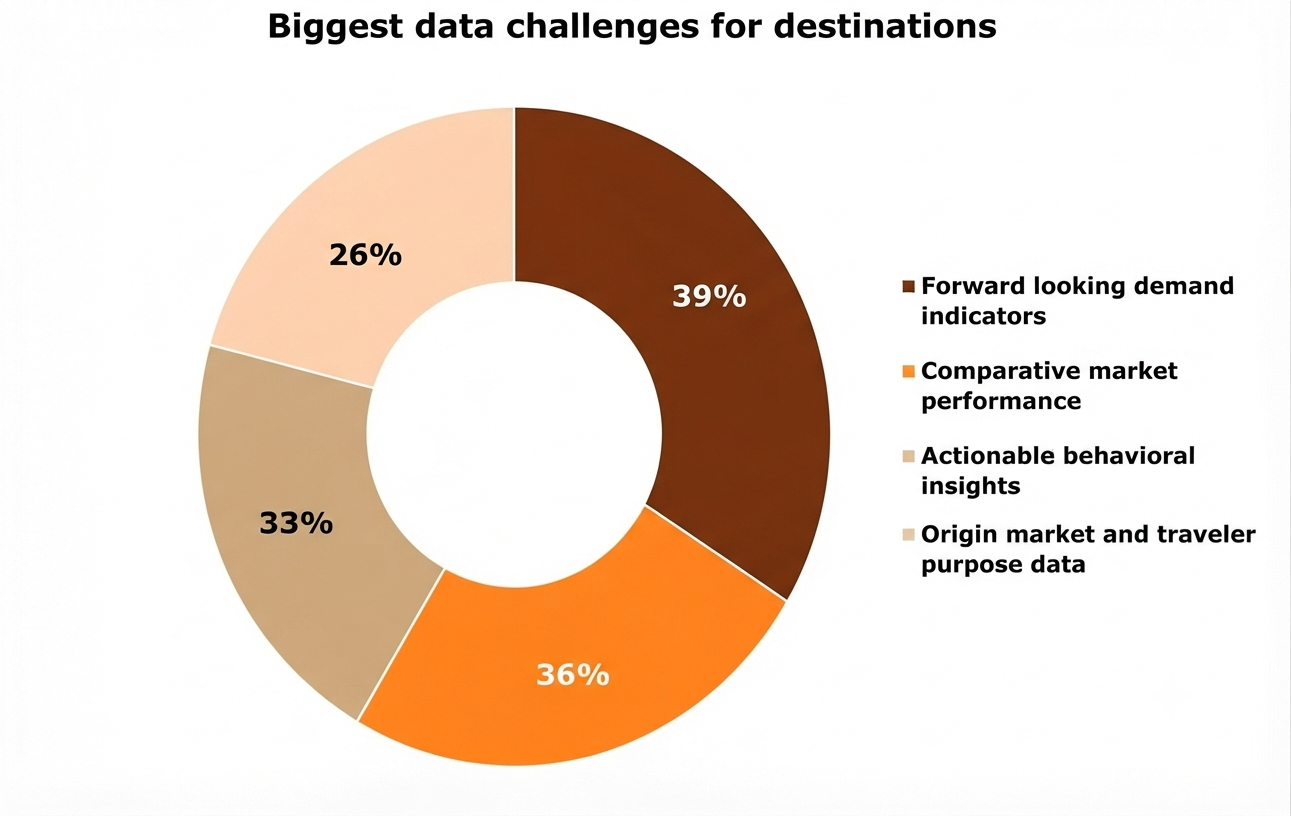
The report also highlights the growing importance of data in helping destinations make better decisions. In a more unpredictable global environment, DMOs need to move beyond analysing past tourism figures and start using forward-looking information to anticipate future demand. The biggest data challenges for destinations include access to forward-looking demand indicators, mentioned by 39% of DMOs, followed by comparative market performance data at 36% and actionable behavioural insights at 33%. Access to this information allows destinations to identify emerging markets, adjust investments and prepare strategies before changes in demand become visible. Abu Dhabi explained in the report that it analyses traveller profiles across key source markets, including preferred travel periods, accommodation choices and visitor motivations, to support its marketing and product development decisions.
Beyond technology and data, the report shows that travellers are increasingly choosing destinations based on the experiences and emotions they want to gain from a trip. After returning from a journey, 41% of travellers say they value a refreshed mind and calmer state of mind the most, while 18% mention a clearer and lighter sense of self. During the decision process, travellers are mainly motivated by freedom, space and open itineraries (29%), connection with local culture (24%), discovery and exploration (22%) and ease with reduced decision-making (17%). This indicates that destinations can no longer focus only on attractions, but also need to communicate the personal benefits and experiences they offer.
Personalisation is becoming another important factor in destination competitiveness, with travellers increasingly expecting experiences that match their individual needs. According to Amadeus, 74% of travellers consider personalisation important when planning their trips, while many are willing to pay more for experiences that save time, reduce complexity or create emotional value. For DMOs, this means developing different experiences for different types of visitors instead of promoting one general offer to everyone. A family travelling with children, a couple looking for wellness experiences and a solo traveller interested in local culture may all visit the same destination but search for different activities. By understanding these motivations, destinations can create more flexible itineraries and better connect visitors with experiences that match their interests.
The changing expectations of travellers are also transforming the role of DMOs, which are moving from destination promoters to experience architects. Destinations increasingly need to coordinate visitor flows, strengthen cooperation between public and private partners and create tourism models that benefit both visitors and local communities. According to Sol Freixa, Vice President Commercial, Destinations at Amadeus, travellers are looking for more than simply checking landmarks off a list and want experiences that offer connection, discovery and personal growth. This means DMOs are becoming responsible for shaping the overall visitor journey, from the first moment of inspiration to the experience on the ground. Their future role will be to bring together technology, knowledge and local partnerships to create destinations that remain attractive in a changing travel environment.