

Though cats have long been regarded in Japan as symbols of good fortune and protection, Hello Kitty’s creator probably never imagined her cartoon cat character would become such a global sensation that she’d end up as the theme of a hotel where you can check in… but not stay.
Conceived by Yuko Shimizu in 1974, Hello Kitty is now the face of a growing trend in immersive attractions that blur the line between museums, exhibitions and themed entertainment. At Hotel Floria Tokyo, visitors collect a “room key”, explore elaborately designed hotel suites inspired by Sanrio characters and take photographs throughout the venue without spending the night, rather like a museum tour, but staged as a hotel and built around characters dear to Sanrio fans worldwide.
The latest Sanrio-themed hotel opened in Tokyo’s Shinjuku-ku ward. It is currently hosting the Hotel Floria Tokyo-Sanrio Characters Exhibition at the Tokyu Kabukicho Tower. The show should run until May 2027.
“Set in a hotel filled with the characters’ dreams, each room and installation allows visitors to discover their distinctive personalities and charm,” a Hotel Floria Tokyo spokesperson told Euronews Travel.
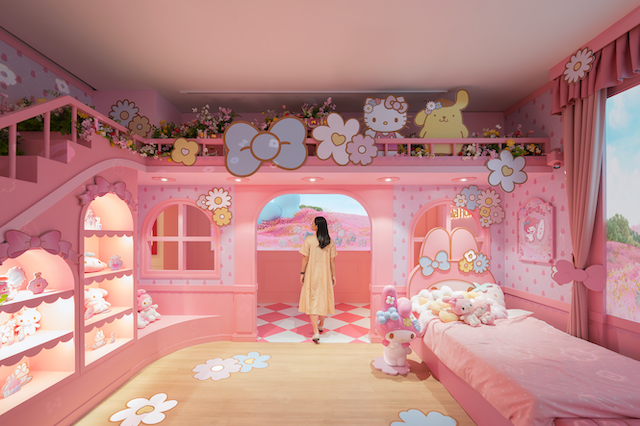
The concept was born in Seoul, created by Korean digital design and art company D’strict. This iteration has 11 themed rooms, each designed around a different character created by Japanese entertainment company Sanrio, including Hello Kitty, My Melody, Kuromi, Pompopurin, and Cinnamoroll.
After the obligatory check-in, visitors receive a character-themed Luc-Key entry pass. Rather than selecting their favourite character, each guest is assigned one at random, a neat marketing touch for anyone hoping to walk away with their favourite.
Each room allows visitors to enter the imagined “private” world of one of the Sanrio characters through carefully reimagined settings. Guests are invited to step into their everyday surroundings and explore them for themselves.
“Beyond taking photographs, guests can walk through, explore and experience these worlds for themselves”, Hotel Floria says. “This creates the feeling of becoming part of the story.”
The idea is to attract both adults and children, according to Hotel Floria Tokyo, allowing adults to “reconnect with fond childhood memories and a sense of nostalgia, while children can enjoy discovering them for the first time”.
Beyond the rooms, the grounds include a garden, a pond, an art gallery, a dedicated Photo Zone and even an indoor beach.
The team is especially proud of the Beach Zone. “Rather than merely viewing the dreamlike scenery imagined by the Sanrio characters, visitors can walk through it and experience it with all their senses. This is what makes the Beach Zone so special,” organisers told Euronews, adding: “As they walk across real sand, the visuals, sound and sensation beneath their feet naturally come together as one seamless experience.”
Hotel Floria is the latest example of how Japan has transformed one of its best-known cultural exports into a travel experience. Beyond merchandise, Hello Kitty has inspired themed cafés, airport installations, exhibitions and, until recently, her own bullet train.
Considering Japan’s long-standing love affair with cats, the concept may not be quite as surprising as it first appears. From the maneki-neko, the beckoning cat found at the entrance of shops and restaurants across the country, to Hello Kitty herself, Japanese people have a deep affection for their feline companions.
A recent example of that devotion is the appearance of quirky yellow road signs warning drivers to beware of cats darting into the road. Installed not by the authorities but by local communities and individuals, the signs have taken social media by storm.