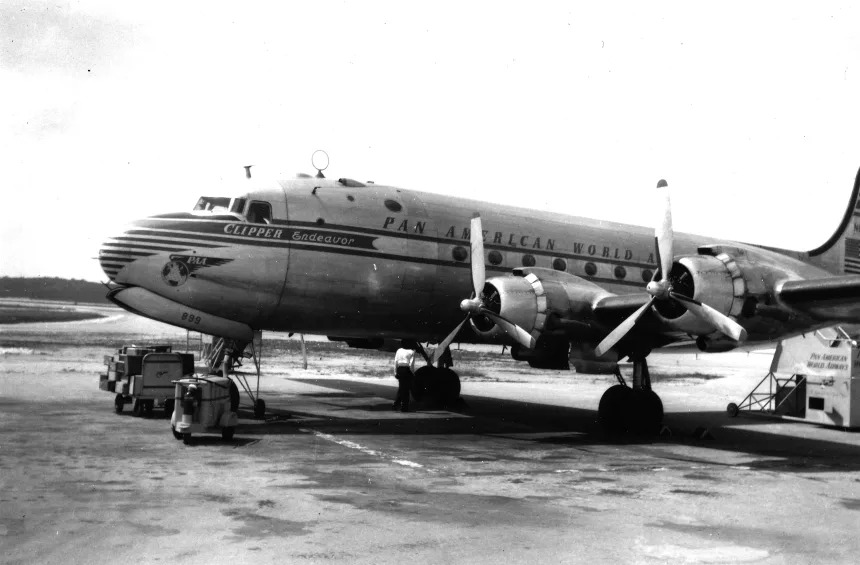



The wreckage of a Pan American World Airways aircraft that crashed into the Atlantic Ocean off Puerto Rico in 1952 has been found 74 years after the disaster, bringing closure to one of aviation’s most significant safety-related accidents.
The remains of the Douglas DC-4, known as the Clipper Endeavor, were discovered approximately 2,000 feet (610 metres) below the surface off Puerto Rico’s northern coast by a team led by the Air/Sea Heritage Foundation in partnership with deep-sea exploration company Deep Sea Vision and Discovery Channel’s Expedition Unknown. The wreckage was found on 2 June after years of archival research and underwater searches.
@tmz 🚨✈️ FOUND AT LAST! Pan Am Flight 526A's wreckage has been found 74 years after the crash tragic 1952 crash.
♬ original sound – TMZ
The aircraft was operating Pan Am Flight 526A from San Juan to New York on 11 April 1952 when it suffered the failure of both right-side engines shortly after take-off. The crew attempted a controlled water landing, but the aircraft sank within minutes. Although all 69 passengers and crew initially survived the impact, only 17 people were ultimately rescued, while 52 lost their lives. Thirty-nine victims were never recovered.
According to reports, the tragedy exposed shortcomings in passenger safety procedures at a time when pre-flight safety briefings were not routinely provided. Investigators later concluded that confusion during the evacuation, difficulties using flotation equipment and a lack of safety information contributed to the high death toll. The accident became a catalyst for major aviation reforms, including mandatory pre-flight safety demonstrations and improvements to emergency flotation equipment.
“Every time you step onboard an airplane today, you are safer because of what happened to Clipper Endeavor and her passengers three-quarters of a century ago,” said Expedition Unknown host Josh Gates.
Russ Matthews, president of the Air/Sea Heritage Foundation, began investigating the crash in 2019 after learning about a luggage tag from the flight that had washed ashore in Florida. Working with researchers, historians and underwater exploration specialists, the team narrowed the search area using historical records, crash reports and old maps.
“We are all stunned and elated by this discovery, yet also humbled to remember what happened in that place so long ago,” said Matthews.
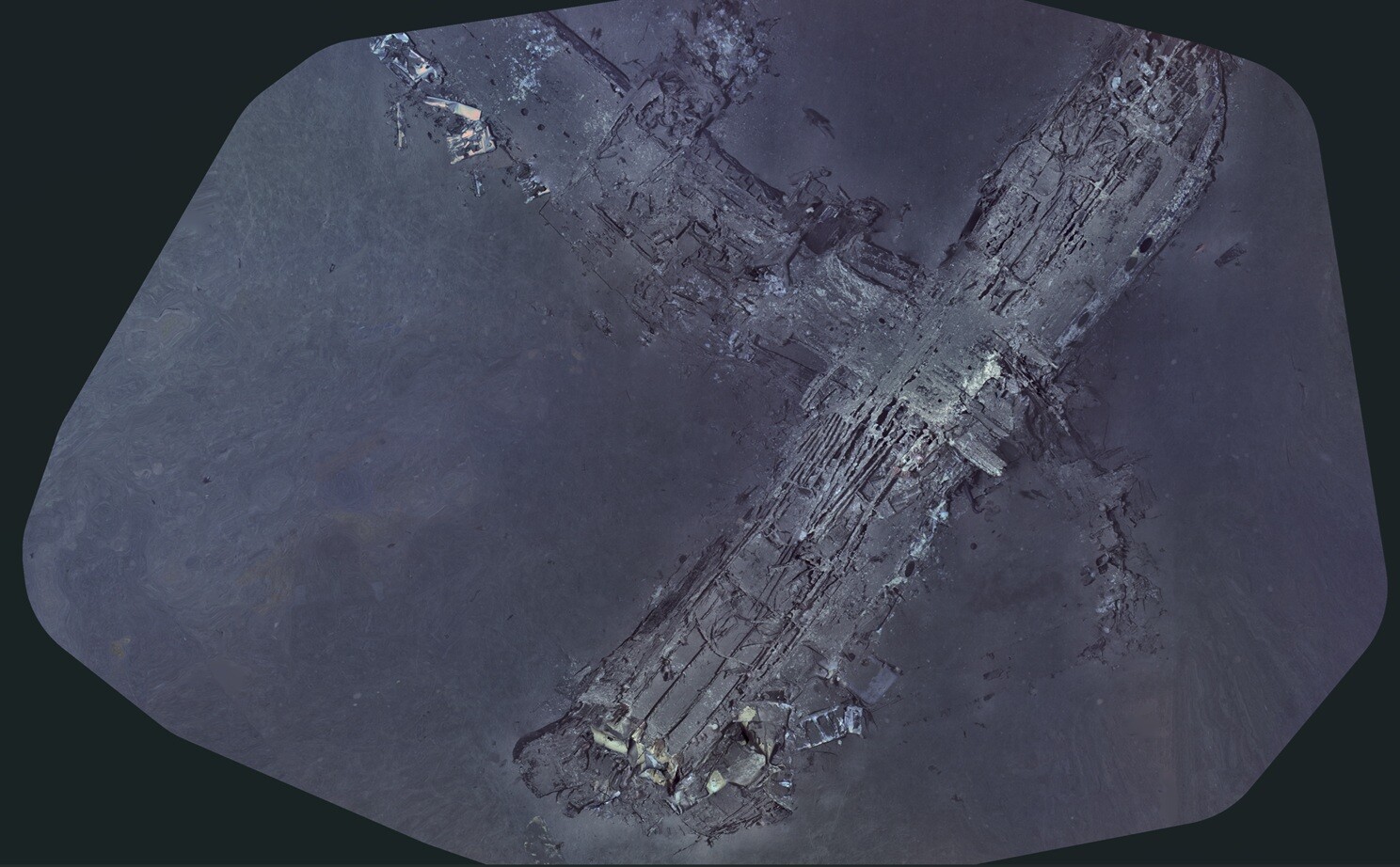
The breakthrough came with the use of an autonomous sonar-equipped underwater vehicle operated by Deep Sea Vision. Images from the seabed revealed parts of the aircraft split into two sections, including landing gear, an engine and the distinctive Pan Am logo, which remained visible despite spending 74 years underwater.
The discovery will be featured in an upcoming episode of Expedition Unknown this Autumn, closing one of the longest-running searches for a missing commercial aircraft in US waters.