


The Renew Europe political group has called on the European Union to recognise tourism as a strategic pillar of its competitiveness agenda, arguing in a new position paper that one of Europe’s largest economic sectors should no longer be treated as an “afterthought”.
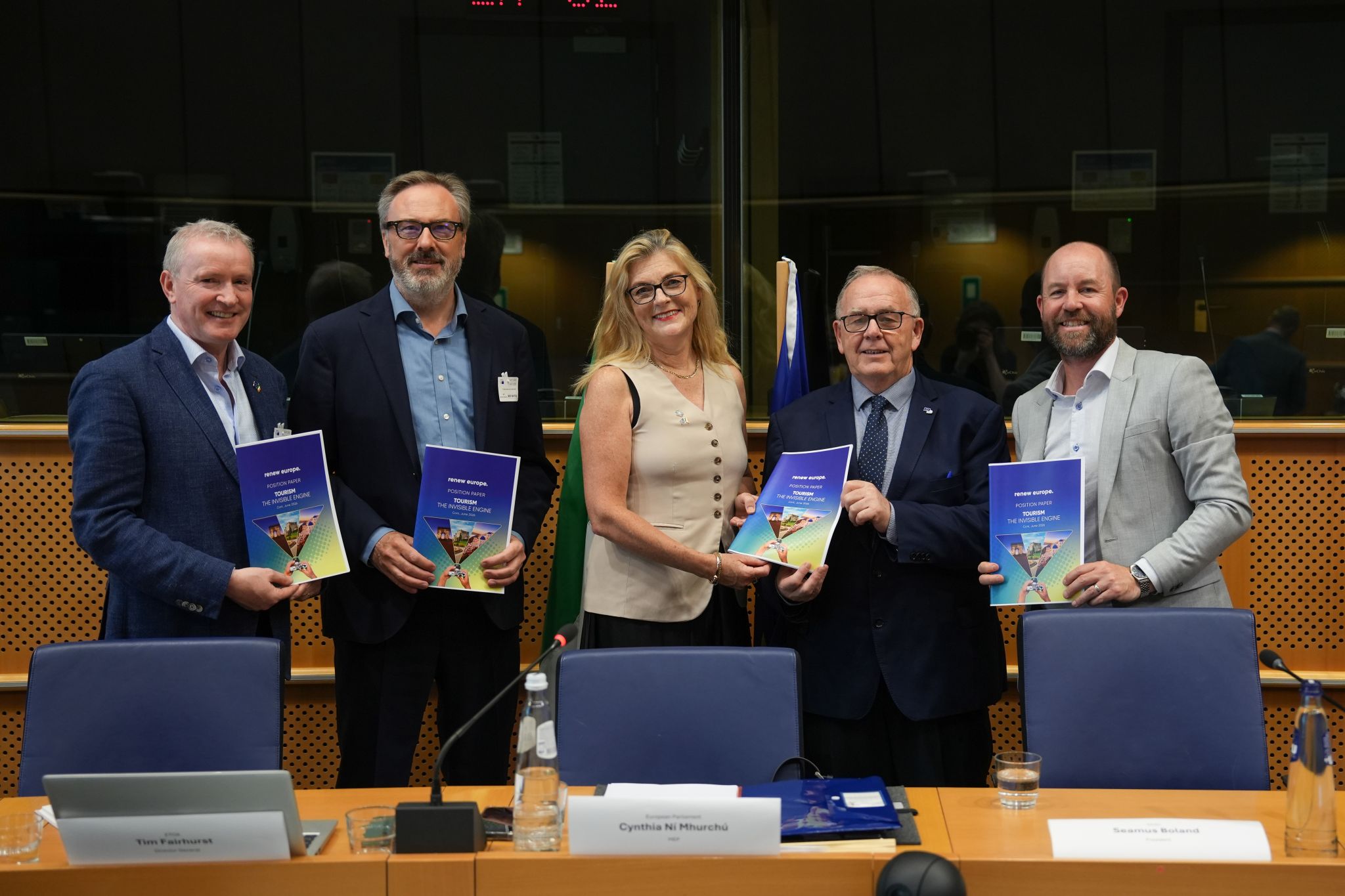
Titled Tourism: The Invisible Engine, the paper was presented by Irish Renew MEP Cynthia Ní Mhurchú, who has emerged as one of the European Parliament’s leading voices on tourism and serves on the Transport and Tourism (TRAN) Committee. It argues that tourism must become a central pillar of the EU’s competitiveness agenda as the European Commission prepares its forthcoming Strategy for Sustainable Tourism and negotiations begin on the next Multiannual Financial Framework (MFF).
“Tourism is one of Europe’s largest export ecosystems and a cornerstone of our competitiveness. It creates opportunities in every region, supports thousands of SMEs and connects our cultural and natural heritage with global markets,” Ní Mhurchú said.
“Europe cannot afford to treat tourism as an afterthought. It must become an integral part of our competitiveness agenda and our long-term economic strategy.”
Tourism as a strategic economic sector
Renew Europe argues that tourism remains one of the European Union’s greatest economic strengths but continues to receive insufficient political attention despite its contribution to jobs, exports and regional development.
According to figures from the World Travel & Tourism Council (WTTC), cited in the paper, the travel and tourism sector employed 40.7 million people across the EU in 2025 and contributed 2.6% of the bloc’s GDP. By 2035, the sector is expected to create an additional 2.5 million jobs, accounting for one in every seven new jobs generated in the European Union.
To better reflect tourism’s economic importance, the group proposes stronger coordination across all European Commission departments with tourism-related responsibilities, a more prominent role for the Tourism Unit within the Directorate-General for Mobility and Transport (DG MOVE), greater investment in tourism research and innovation, and the creation of a dedicated tourism budget line in the next Multiannual Financial Framework to support small and medium-sized enterprises.
Ní Mhurchú said tourism “deserves a seat at Europe’s top table” because it is “a driver of competitiveness, innovation, regional development and employment.”
A roadmap for sustainable tourism
The position paper sets out a broad vision for the Commission’s future Sustainable Tourism Strategy, covering governance, sustainability, skills, digitalisation, connectivity and destination management.
Among its recommendations are stronger protection of Europe’s cultural heritage, greater promotion of lesser-known destinations to ease pressure on overcrowded tourism hotspots, increased investment in rural and inland tourism, and improved accessibility for travellers with disabilities. It also advocates expanding support for tourism research through Horizon Europe and strengthening professional training via Erasmus+.
Labour shortages also feature prominently
Renew Europe calls for an EU-wide strategy to upskill and reskill tourism workers, strengthen apprenticeships, encourage closer cooperation between businesses and education providers, improve working conditions and make careers in tourism more attractive, particularly for young people. The paper also highlights the importance of gender equality, lifelong learning and mobility opportunities across the sector.
Embracing digital transformation
Digitalisation is another central pillar of the proposals. The paper argues that artificial intelligence, predictive analytics and other digital tools can improve visitor experiences, help destinations manage tourism flows more efficiently and reduce administrative burdens for travellers.
Renew Europe also supports the continued digitalisation of the Schengen Area, including the Entry/Exit System (EES), the future Digital Travel Application and further digitalisation of Schengen visas. It proposes integrating practical tourism information into the Single Digital Gateway while ensuring that new technologies complement rather than replace authentic cultural experiences.
The group also wants the European Union to strengthen its global tourism identity through initiatives such as Destination Europe, increased promotion of Visit Europe and the development of new thematic tourism routes highlighting Europe’s cultural, historical and industrial heritage.
Supporting specialised tourism
A significant part of the position paper focuses on specialised tourism, which Renew Europe sees as an important driver of regional development and territorial cohesion.
The paper calls for stronger European support for cultural, gastronomic, wine, brewing, cycling, cruise, business, rural, health and wellness tourism, arguing that these sectors can help diversify local economies, reduce seasonality and distribute visitors more evenly across Europe. It also advocates dedicated EU support for thematic tourism networks connecting destinations across borders.
Health and wellness tourism receives particular attention, with Renew Europe encouraging the Commission to promote European spa destinations, support investment in sustainable wellness infrastructure and increase research funding into preventive healthcare tourism, particularly as Europe’s population continues to age.
The paper also highlights the importance of supporting islands, coastal regions and inland waterways, strengthening rural tourism, improving sustainable transport links and investing in cycling tourism, which it describes as one of Europe’s strategic tourism sectors.
The position paper was presented during a discussion bringing together representatives from across the European tourism industry. Participants focused on identifying practical priorities that could be advanced during Ireland’s upcoming Presidency of the Council of the European Union before being carried forward by the subsequent Presidency Trio.