

The European Parliament has approved revised air passenger rights rules that preserve compensation for flight delays of at least three hours and introduce clearer rules on cabin luggage, ticket pricing, family seating, protections for vulnerable passengers, and reimbursement procedures.
The Parliament voted on Tuesday to approve changes to EU air passenger rights legislation following years of negotiations with member states. The agreement was backed by 646 members of the European Parliament, with 12 voting against and three abstaining, according to reports on the vote.
Roberta Metsola, President of the European Parliament, said the agreement “will strengthen the rights of air passengers across Europe” and “bring greater transparency and predictability for both consumers and airlines, without creating unnecessary bureaucracy for our industry. Parliament fought hard to make travel fairer and procedures clearer, and this is what we have delivered.”
Landed! 🇪🇺✈️
— Roberta Metsola (@EP_President) July 7, 2026
The new agreement on air passenger rights has just been voted by an overwhelming majority in @Europarl_EN.
This brings greater certainty to the aviation sector, stronger passenger rights, and easier travel across Europe.
Proud of the work done by all MEPs,… pic.twitter.com/JnxaRGmiXU
Under the revised rules, passengers will continue to be entitled to compensation when a flight is delayed by at least three hours, cancelled less than 14 days before departure, or when boarding is denied. Compensation will remain linked to flight distance, with payments of €250 for flights up to 1,500 km, €400 for flights between 1,500 km and 3,500 km, and €600 for longer journeys.
Airlines may avoid compensation where disruption is caused by extraordinary circumstances outside their control, such as severe weather, natural disasters, war, unruly passengers or certain strikes affecting airport, air navigation or groundhandling services.
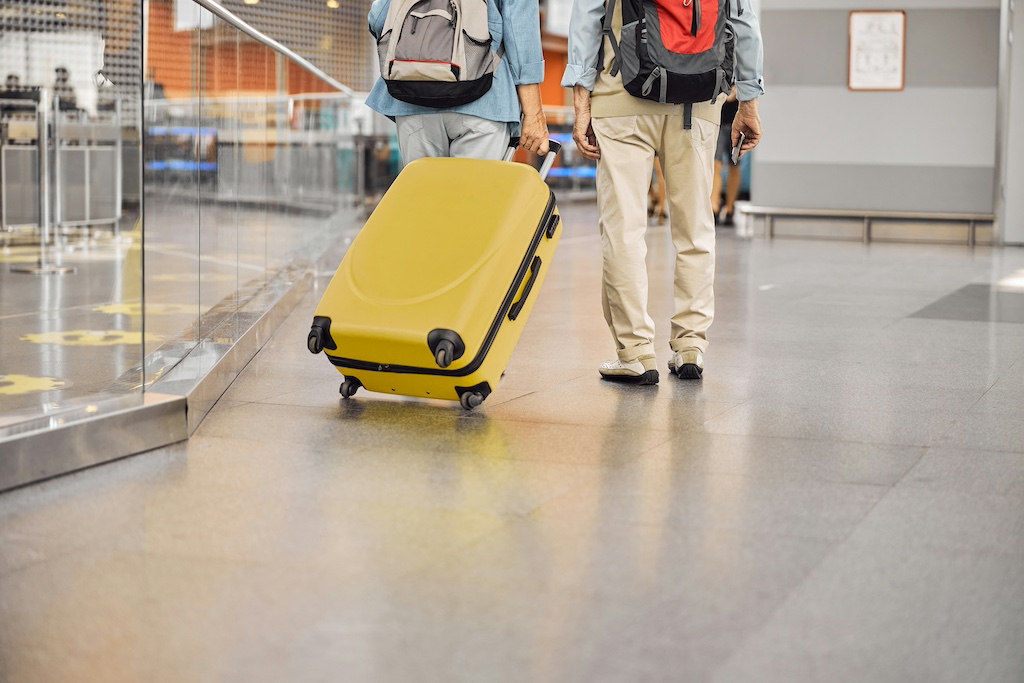
The update also addresses baggage and ticket-price transparency. Passengers will have the right to bring one personal item on board without an additional fee, while airlines, intermediaries and search portals will have to display fares that include carry-on luggage at the start of the booking process. Airlines may still offer lower fares to travellers who voluntarily choose to fly without hand luggage.
✈️European Parliament achieves upgrade to air passenger rights:
— TRAN Committee Press (@EP_Transport) July 7, 2026
✔️Securing existing compensation after 3h delay
✔️Clearer procedure for compensation claims
✔️Price transparency and comparability of air tickets
More 👉 https://t.co/z9rJoeOK3v pic.twitter.com/jpZ0SbhzBu
For travellers affected by delays or cancellations, airlines will be required to provide electronic information on how to claim compensation within four days of the end of the journey. Passengers will have nine months to submit a compensation request, and airlines will have 30 days to pay or explain why compensation is not due. The rules state that passengers should not be required to create a user account or use a specific app to receive this information.
The agreement includes additional protections for families and passengers with reduced mobility. Airlines will have to seat children under 14 next to an accompanying adult without an extra fee. Similar adjacent seating rights will apply to passengers with disabilities or reduced mobility and to pregnant passengers. Passengers with disabilities or reduced mobility will also have rights to compensation, rerouting and assistance if they miss a flight because airport assistance failed to get them to the gate on time.
Airlines will also be prohibited from charging extra fees for correcting spelling errors in passenger names or for providing a printed boarding pass when a passenger has already checked in. Passengers will have the right to receive a digital boarding pass at check-in without having to request it separately or use a specific app.
Apostolos Tzitzikostas, European Commissioner for Sustainable Transport and Tourism, welcomed the vote, describing the agreement as “the first major reform of EU air passenger rights in more than two decades”. He said the new rules strengthen the rights of passengers with disabilities and reduced mobility, make it easier to claim compensation, ensure parents can sit next to their young children at no extra cost, increase transparency on fees and pricing, and put an end to unfair “no-show” practices.
He added that the agreement demonstrates what can be achieved when the European Commission, the European Parliament and the member states work together after years of negotiations to modernise the EU’s air passenger rights framework.