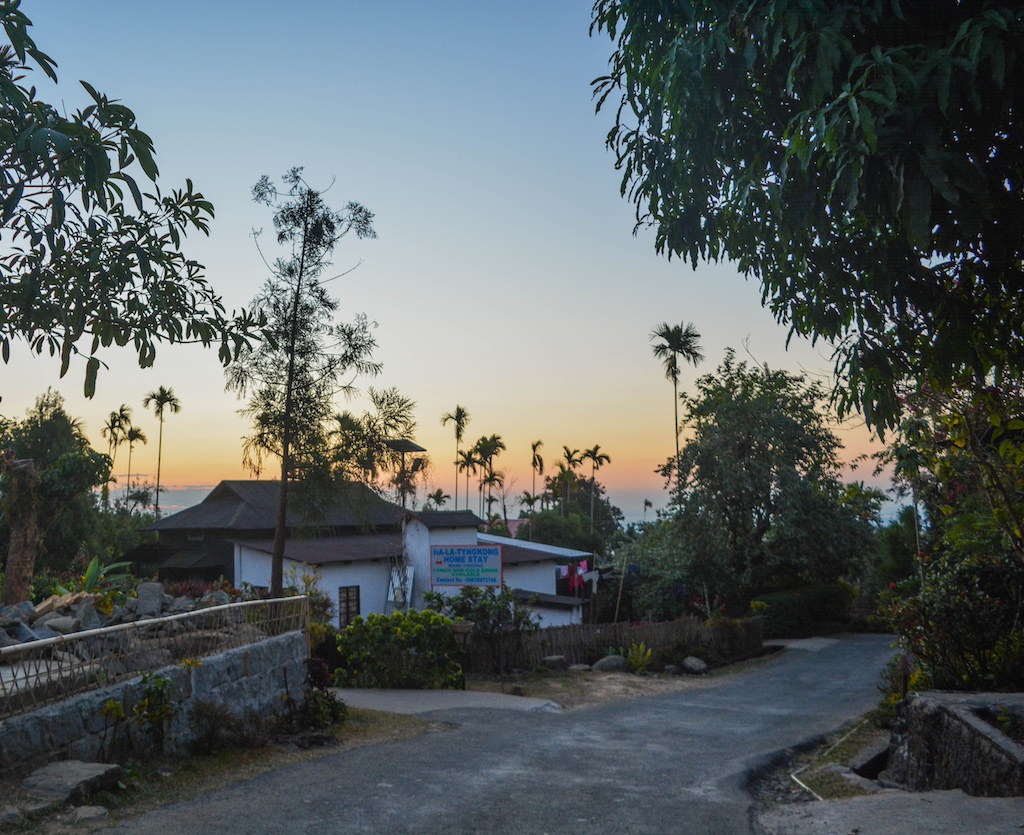



As places around the world grapple with overtourism, with destinations as diverse as Venice and Mount Fuji introducing access fees, one village in Asia has hit the headlines for its approach to balancing the needs of visitors and locals: closing for one day a week.
Mawlynnong in north-eastern India has only 600 residents and a single road in and out, but it welcomes thousands of visitors a year thanks to its reputation as India’s cleanest village, a title it earned over two decades ago and has proudly worn since. Even Prime Minister Narendra Modi gave Mawlynnong a special shout out launching his Clean India Mission campaign in 2014, noting: “It has become the habit of the residents to maintain cleanliness,” he said. “All this infuses confidence in us that our country will surely become clean through the efforts of fellow citizens.”
The BBC describes “flower-lined lanes” and streets that are “spotless” thanks to children who rise early before school to deal with leaves and litter, while grown-up residents who have inherited Khasi bioengineering know-how take landscaping into their own hands. The pivot from a rural, agricultural economy saw a car park, tea stalls, and souvenir shops installed, residents spending money on concrete homes rather than grass houses, and, more recently, a social media feedback loop of Instagrammers and traveltokkers.
But in this church-influenced, matrilineal society, the sense of community is precious and has led the village to close its access road once a week—on its most lucrative day for tourism.
“Visitors are not allowed on Sunday”, a sign declares. “Villagers themselves politely turn away visitors”, writes Sunanda Singh in the Free Press Journal, pointing out that “Shops, cafes, and homestays now remain closed on Sundays, giving everyone, including cleaning staff, a much-needed day off.”
Precious Khongdup, a committee member, told The Print the initiative helps to preserve cultural identity and discipline. “We have to have a break,” Khongdup said. “If we close one day from the tourists, then we can have real village life.”
And resident Festival Kharrymba, who collects a visitor fee of 30 rupees (€0.27) to cross the village’s large bamboo walkway, agrees. “It’s good for us. We have time to go to church, for service, for praying,” she added. “If tourists are here on Sunday, it’s a problem.”
It is perhaps no coincidence that the policy came about after viral social media footage showed litter in the streets, left behind by tourists who do not share the village’s values. That struggle to balance tourism revenues and visitors from diverse source markets with traditional “local” life and standards is also playing out elsewhere.
Italy has perhaps seen more than its fair share of “antisocial” behaviour by guests, with, for example, Venice’s Mayor Luigi Brugnaro publicly lambasting tourists and parkourers who perform illegal stunts as “idiots” in 2022. Tourist incursions into fountains in Rome and bachelorette shenanigans in Florence have led to damage and fines. Meanwhile, in France, Japan, the Netherlands, the UK, and Spain, guidance about nudity, littering, public partying, vehicle parking, and other aspects of local etiquette has had to be issued.
It is hard for capital cities and beach resorts to close at the weekend, but, like Mawlynnong, Ulva in Scotland’s Inner Hebrides is shutting on a Sunday from summer 2026. It has limited accessibility, via a five-minute ferry crossing from the Isle of Mull, as Travel Tomorrow has reported. “To give ourselves, the Boathouse and fellow islanders the chance to recharge and prepare for the week ahead, we have made the difficult decision not to open Sundays this summer,” the ferry operators confirmed in early June, effectively pausing tourism access once a week during the busiest months. Another spot that could learn from both Mawlynnong and Ulva is Vlkolínec, at the heart of Slovakia, where residents have demanded that UNESCO remove their historic hamlet from its World Heritage list to reduce the number of visitor arrivals, which annually outnumber locals by 7000-to-one. Such a drastic measure is not needed in Mawlynnong. Thanks to its day of rest, the north Indian treasure will not be demanding its reputation as India’s cleanest village is revoked any time soon.