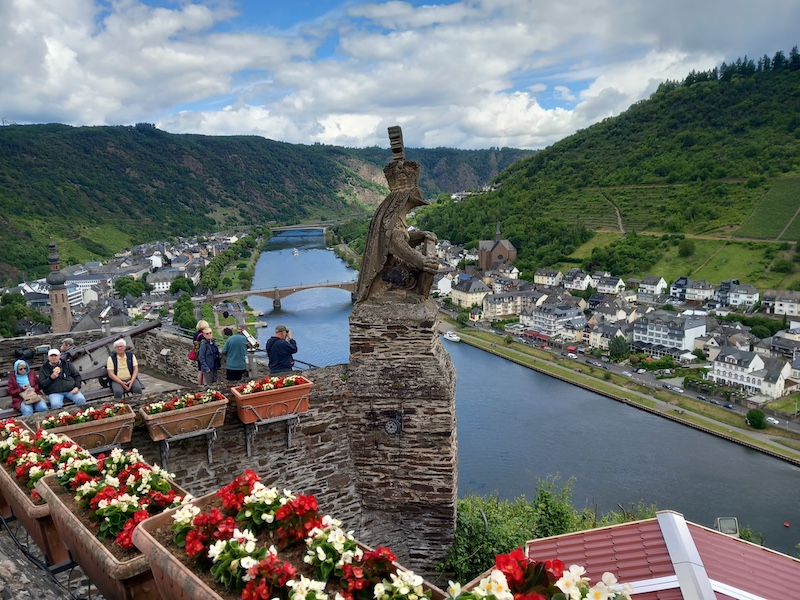


The gentle hum of a tractor engine carries across the glass-like surface of the Mosel River. On the opposite bank, a vigneron manoeuvres a tired 4WD along a terrifying bluff.
All along this meandering valley in western Germany, farmers are out in the June sunshine, clambering across slate embankments to inspect their beloved crops.
But times are changing in the Mittelmosel surrounding the postcard-pretty town of Cochem. The wine business isn’t what it used to be, and the much-needed tourism it feeds is facing steep challenges, too.
The first thing you notice is that visitors to the area are getting older and they’re more self-sufficient than ever before, staying in their comfortable RVs and cruising the river on their e-bikes.
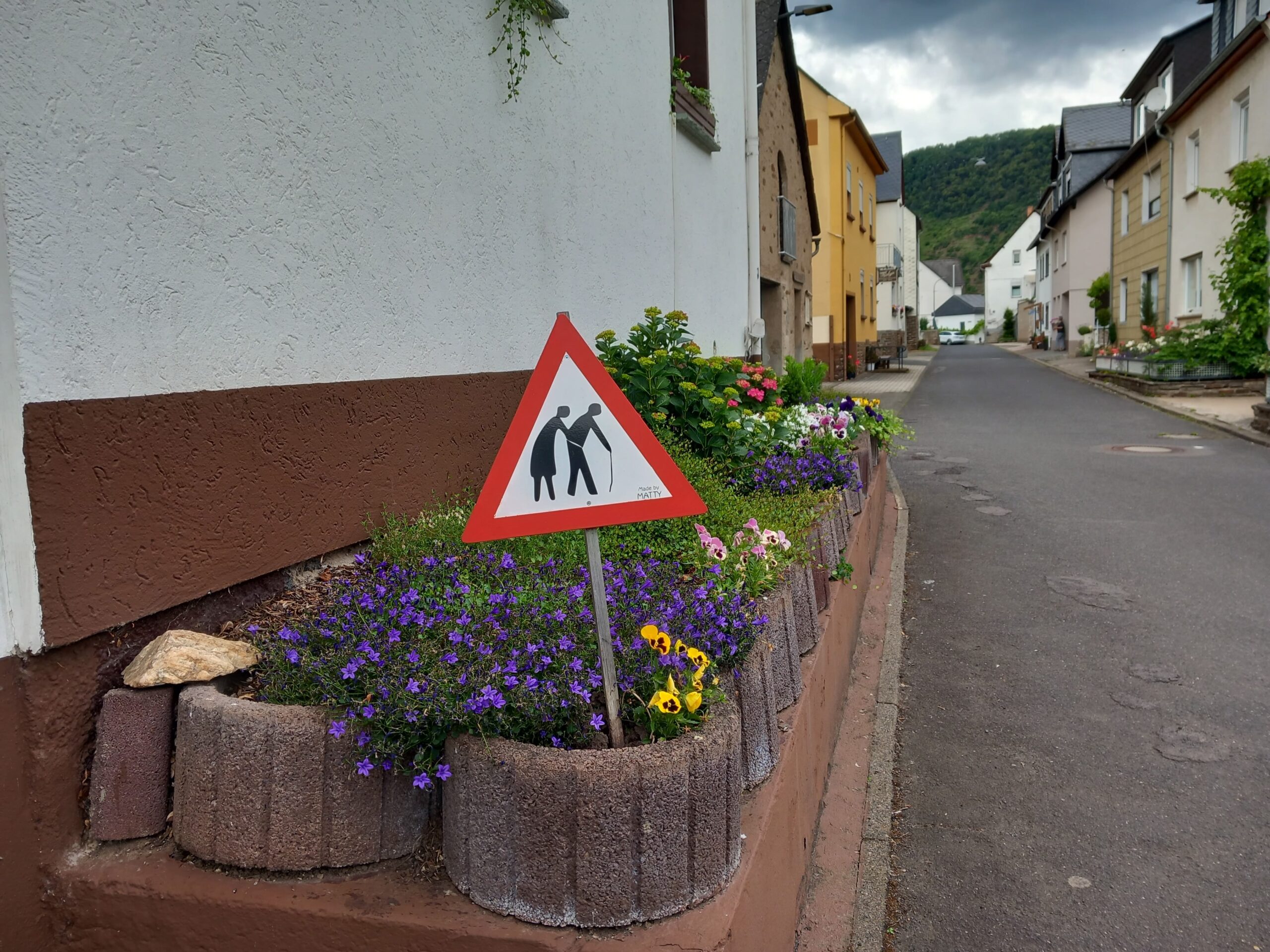
The region is a “stronghold” for mature and senior visitors (typically aged 55+), though regional tourism strategies are successfully drawing younger “active travellers” (35-50), according to the Tourism and Marketing Office in Trier, a heritage-laden city downriver.
Local businesses are having to adapt to new realities. Hotels, restaurants, wine houses and zimmers have either found new niches to get the zippy bikers to stop in for a local treat, adjusted their opening times, or closed for good.
This is the reality of an increasingly competitive tourism sector here in Germany, but also in other European regions, as pointed out by the EU Tourism Platform.
For starters, wine-tasting weekends are less popular among younger generations who don’t drink as much as their parents, and don’t have spare cash even if they did. As “digital nomads,” they may even prefer to combine work and travel in far-flung destinations like Thailand. Low-cost airlines and better connections make it cheaper and easier too.
That’s a great shame because the Rhineland-Palatinate Holiday Region, as they like to call it, has so much to offer, and it’s only a few hours from major capitals. The pace of life is somehow different, as chilled as the crisp white wines produced here.
Powerful natural forces
A mother swan glides along the river’s edge with this year’s fluffy, grey brood in tow. Farm hands work their way along vine rows, trimming and tidying the already lush growth. In picking season, they will navigate the banks on cable-driven elevators.
It hasn’t always been so tranquil. Powerful natural forces have shaped the Rhenish Massif spanning western Germany, eastern Belgium, Luxembourg and northeastern France. This looping topography is responsible for the hyper-steep, south-facing slopes bathing this cool climate region in warming sunlight. Great for wine-growing, but the historically fast-flowing waterway has also been known to throw seasonal tantrums.
Thanks to huge engineering projects in the mid-20th century – including a network of locks and barrages – the river has been mostly tamed into a more dependable transport lane. It’s not uncommon today to see cargo barges laden with industrial goods sharing the water with multi-deck cruise boats.
Yet, nature still has its way sometimes. A prolonged heat wave in 2022 nearly crippled shipping along the Mosel and Rhine rivers. Floods (Hochwasser) remain a scourge as well, with the most recent occurring last year. Esplanades, campsites and parking lots in several riverside towns like Zell and Cochem were hit hard. Climate change could make these events more common.
Two wheels, two banks on a loop
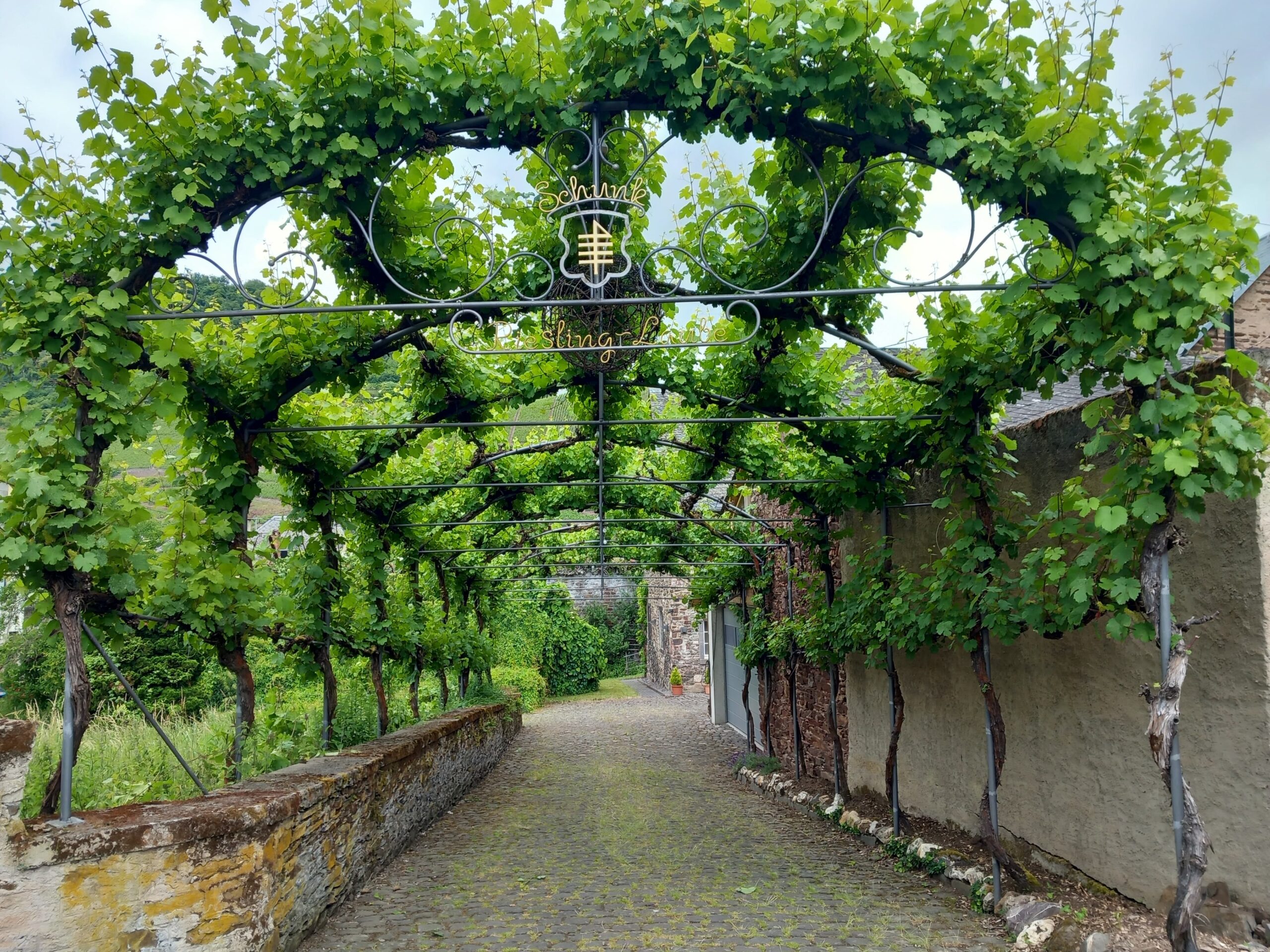
For those exploring by land, the bike lanes are smooth sailing for e-biking baby boomers. Paths flank both sides of the Mosel, making it a neat circuit. Cyclists can pedal down one bank, cross a bridge or small passenger ferry, and return up or down the opposite side. That means new sites and scenes at every turn.
Those with time and money to spare can quickly and safely navigate the river and surrounding terrain. What was once a punishing trek is now a gentle, assisted cruise. Couples clad in matching high-vis garb glide effortlessly past medieval backdrops, their panniers packed with picnics and wine.
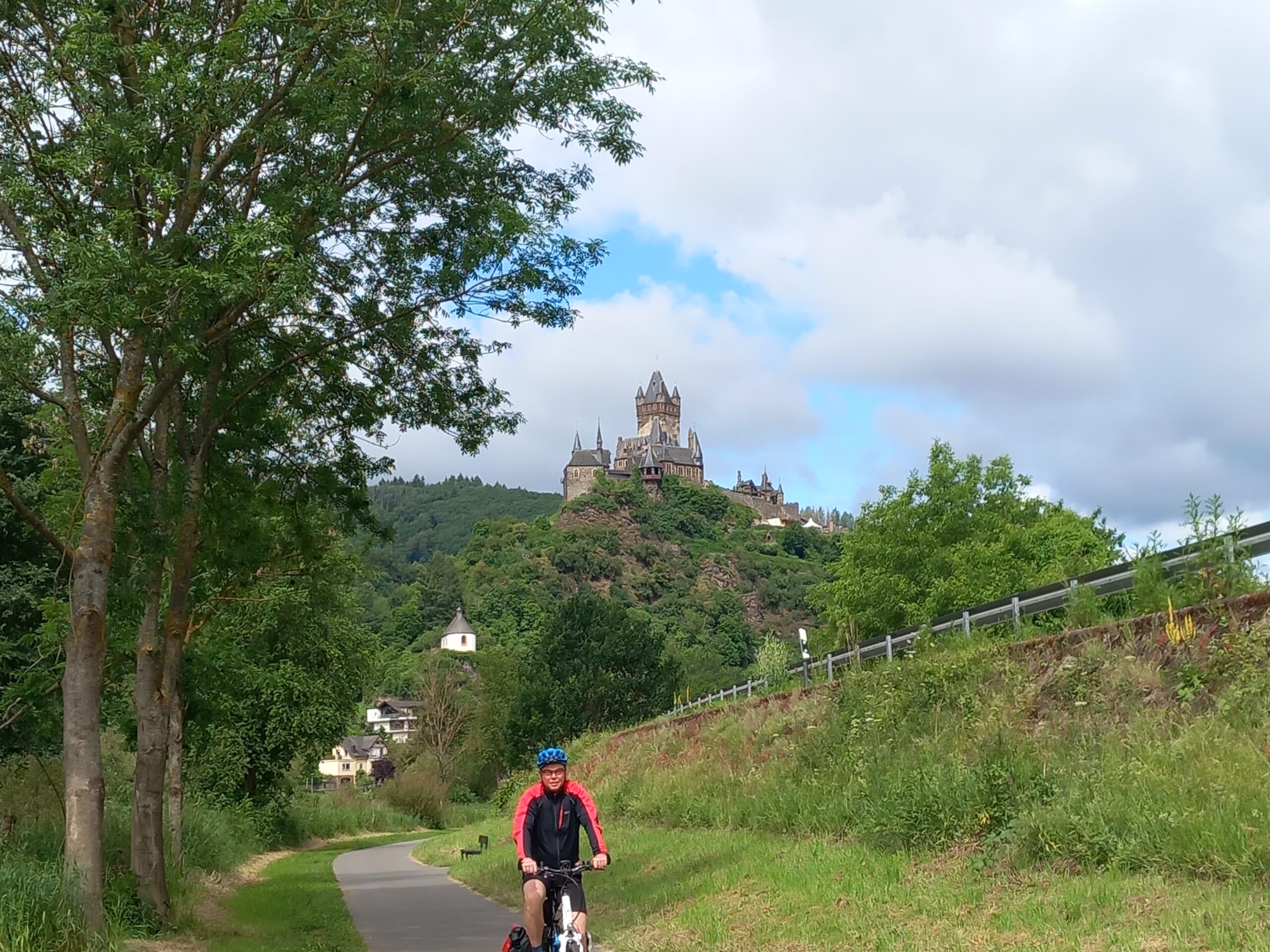
The undisputed hub of the lower Mosel is Cochem, a bustling town dominated by the Reichsburg (Imperial) Castle, a fairy-tale fortress looming above the vines and timber-framed houses below. Visitors can explore Cochem’s winding alleyways, ride the Sesselbahn chairlift for a panorama of the river and surrounding peaks, or explore the Bundesbank Bunker – a once-secret underground vault that hid billions of Deutsche Marks during the Cold War.
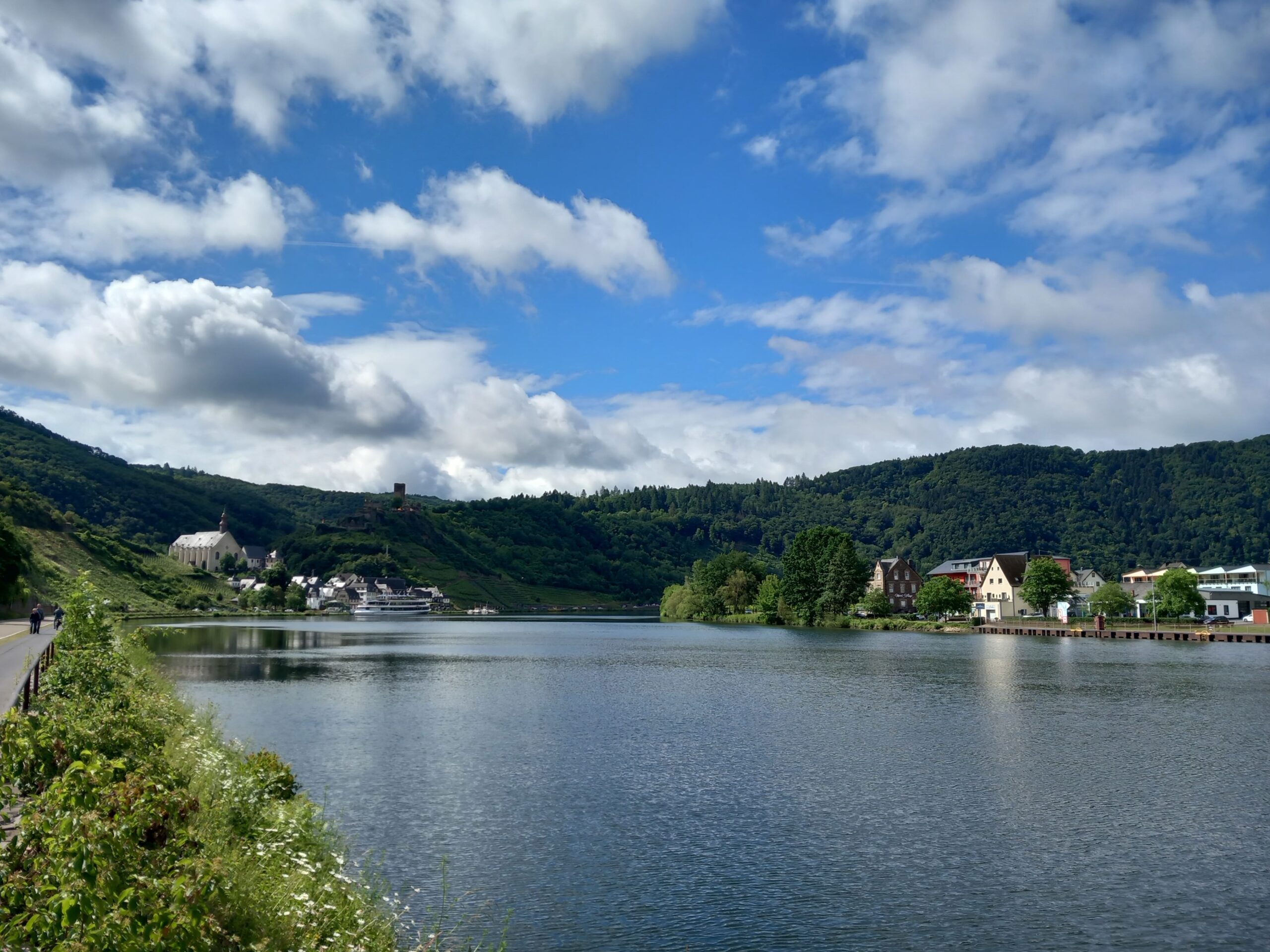
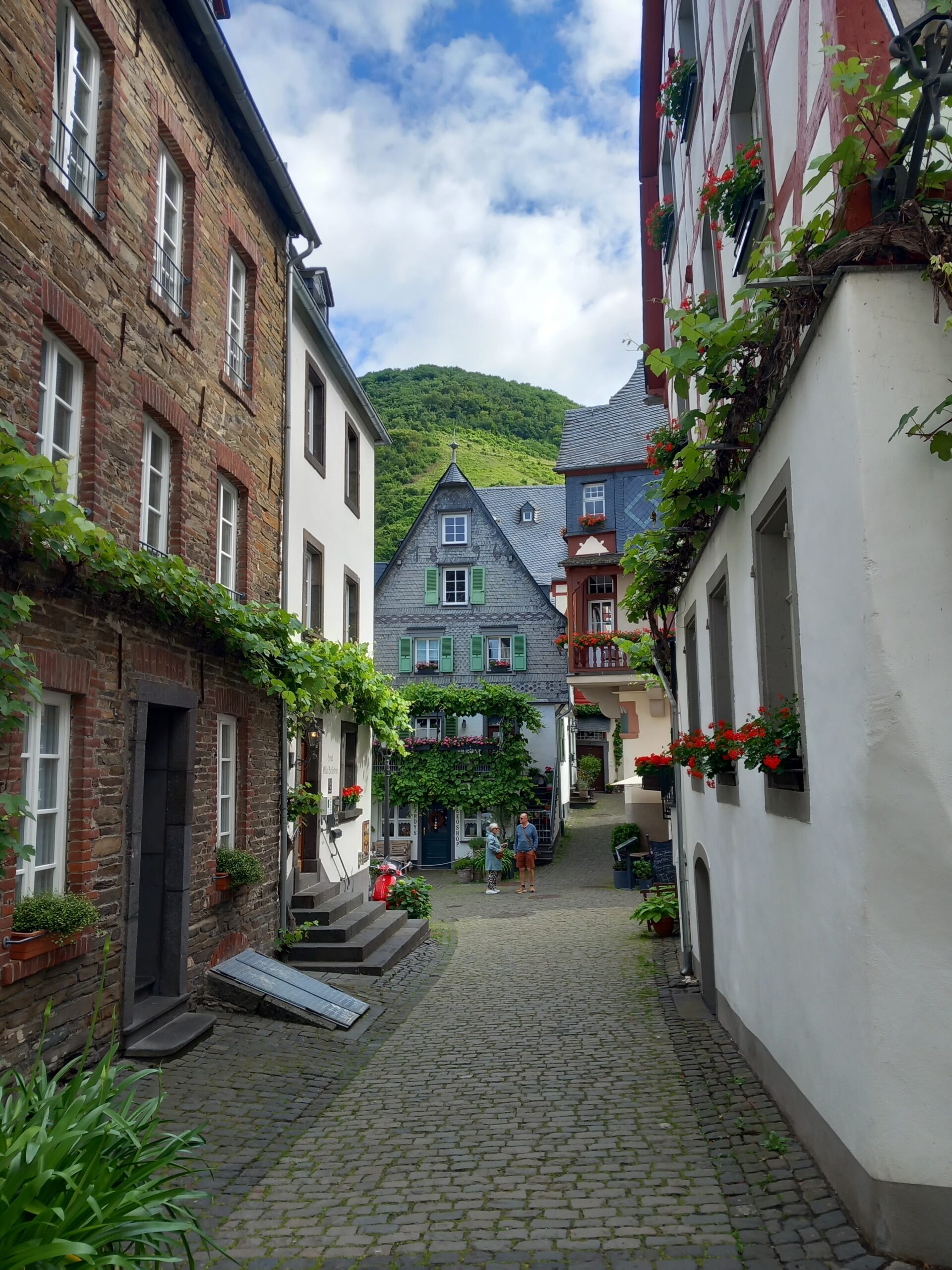
Continuing south, cyclists encounter Beilstein, affectionately known as the “Sleeping Beauty of the Mosel”. Squeezed almost unnaturally between the vines and a bend in the river, this well-preserved medieval village is paternally watched over by the ruins of Metternich Castle. The town’s quirky architecture and cobbled passages have graced many films and holiday albums over the years.
Northern soul you can taste
Visitors love the atmosphere, but no trip to Beilstein or the region is complete without sampling some fresh Rieslings or floral Rivaners. This ‘tasting experience’ is rooted in the traditional Weinhäuser taverns and Straußwirtschaften – makeshift bars run by vintners within their own courtyards and cellars.
The wine culture and distinct flavour notes are a product of the valley’s unique geology, positioning and slatey soil that absorbs heat during the day and distributes it overnight. The end result is German wines with an unmistakable northern soul.
A signature stony minerality, a crisp taste described by those who know such things as “wet stones or rain on hot pavement”. Experts also wax on about “vibrant and sharp acidity” with some “bright and citrus” notes worthy of their warmer southern cousins.
Flammkuchen and other fare
Such distinct vinous profiles demand a culinary counterweight. The food culture of the Mosel Valley is unpretentious, hearty and designed to complement the acidity of the drier whites. Menus feature rich pork dishes, hotpots and locally sourced trout.
But the region’s go-to accompaniment is the traditional flammkuchen (tarte flambée). Originating in the Franco-German borderlands, this flatbread is traditionally topped with schmand (similar to crème fraiche) or scattered generously with smoked lardons (speck), finely sliced onions, and often seasoned with nutmeg.
Traditionally baked in wood-fired ovens for just a few minutes, the edges crisp up while the centre tends to remain soft. The salty, smokiness of this pizza-like tarte is a gastronomic foil to an off-dry Mosel wine.
A Gen-Z story
Beneath the idyllic surface of this postcard-primed destination, a striking demographic and socio-economic story emerges. Look closely at the patrons stopping for a mid-afternoon tasting these days, and you can’t fail to notice a pattern. Where are the Gen-Zers?
Data confirms a widening behavioural gap. Today, only 18% of young people aged 18 to 31 drink German wine regularly, and fewer still (11%) opt for sparkling varieties or Sekt. For the 39% who do drink, according to a study quoted by the newspaper Die Rheinpfalz, wine is no longer their default; they prefer spirits and ready-to-drink options.
Other ‘drug affinity’ studies in Germany show that those born after 2000 who do enjoy a tipple are opting for organic wines or the increasingly popular category of ‘no or low’ alcohol alternatives neatly branded as ‘NoLo’.
This pattern replaces the traditional all-or-nothing drinking culture. The mindset of Gen-Z drinkers, according to industry observers like Verallia, is more focused on moderation, wellness and sophisticated socialising. Another trend driving NoLo growth, notes this glass bottle and packaging company, is “zebra striping” or alternating alcoholic beverages with NoLo drinks.
Social and behavioural changes are only half the story. Cost-of-living concerns are a key factor as well. Higher real estate and mortgage costs, steep rent and persistent day-to-day inflationary pressures mean less disposable income across the board for weekend jollies on the Mosel. And premium bottles of wine are simply out of reach for younger consumers.
Competition is another factor. If a young traveller is going to spend limited savings on a holiday, a weekend getaway to the cooler climes of northwestern Europe has less appeal. Easy connections between European capitals and tropical destinations like Phuket and Krabi are a more exotic option for Gen-Zers.
To complicate matters, the German wine industry is battling its own fiscal demons. Rising energy and material costs for glass bottles and increases in the national minimum wage have squeezed profit margins at family-run estates.
While reports of some regions in France being paid to pull up vines to combat oversupply, Mosel vintners are instead facing a quiet crisis of attrition, struggling to pass increased production costs onto a price-sensitive domestic market.
Quiet crossroads
This shift is leaving its mark on local populations. Where tourism and the wine industry have long sustained quiet villages tucked between the vines and the water, that calm certitude is starting to fray.
It is late June – not quite peak summer, but certainly the cusp of the season – and yet many of the local businesses remain closed during the week. Some permanently. In Briedern, one hotel-restaurant seems to be bucking the trend. Business is steady, but staff are under no illusions. A local waitress laments that her establishment feels a bit like “the last man standing”, a winner-takes-all in a town trying to keep up.
While larger, castle-crowned destinations like Cochem and Beilstein still draw the daytime crowds, the smaller intermediate villages appear to be feeling the squeeze.
The vineyards of the Mosel are not about to disappear. Devoted farmers still nurture their crops, and the landscape remains as breathtaking as ever. But as the traditional wine-tourist demographic ages, the region faces a crossroads.
Planning your Mosel visit
Getting there and around
- By car: Distance from Brussels to Cochem is around 340 km or a 3.5-hour drive, depending on traffic.
- By public transport: Regular rail links via Eurostar or ICE trains from Brussels-Midi to Cologne (Köln) or Koblenz. From Koblenz, local regional trains (Moseltal-Bahn) run to Cochem station. The fastest combined routes take over 4 hours.
- Mosel river cruises: Local operators such as Gebrüder Kolb run daily schedules. Options include short panoramic loops from Cochem and scenic “lock cruises” through the Fankel barrage to Beilstein.
Historic sites
- Reichsburg Cochem (Imperial Castle): Open daily for the summer season. Interior visits are accessible via guided tours only.
- Burg Metternich (Beilstein): Through the town and up a steep stairway, the hillside ruins are open daily except Mondays.
Top-rated places to stay
(Based on Booking.com and TripAdvisor guest satisfaction reports, as of 15 June 2026)
In Cochem
- Hotel Villa Vie Cochem (Rating: 9.3/10): A boutique-style hotel located a short walk from the centre with river views.
- Hotel Altes Winzerhaus (Rating: 9.2/10): A family-run B&B sitting directly on the promenade with direct views of the Reichsburg.
- Hotel Villa Vinum Cochem (Rating: 9.1/10): Featuring natural stone architecture and timber-framed accents, the hotel has an upscale vibe.
In Beilstein
- Hotel Lipmann ‘Am Klosterberg’ (Rating: 9.3/10): Rustic and well-situated, overlooking the historic town squares and rolling vineyards.
- Hotel Restaurant Alte Stadtmauer (Rating: 9.2/10): Guests appreciate the hospitality and characterful setting integrated into the village’s old defences.
- Hotel Haus Burg Metternich (Rating: 8.6/10): Traditional charm and a gateway for exploring the castle trail and cobblestone lanes.