


Despite a drop in fuel prices thanks to the Iran peace deal and the unlocking of the key transit route, the Strait of Hormuz, air fares are unlikely to become cheaper any time soon, according to the consensus among commentators and aviation stakeholders.
Reuters has calculated that United States carriers are likely to save an annual $40 billion if the newly lower fuel prices of $2.85 a gallon mid-June (down €2.03 since April) continue. But airlines cannot yet pass those savings onto consumers who have been paying higher ticket prices for flights, the story goes, because they must repair margins that were slashed during the crisis.
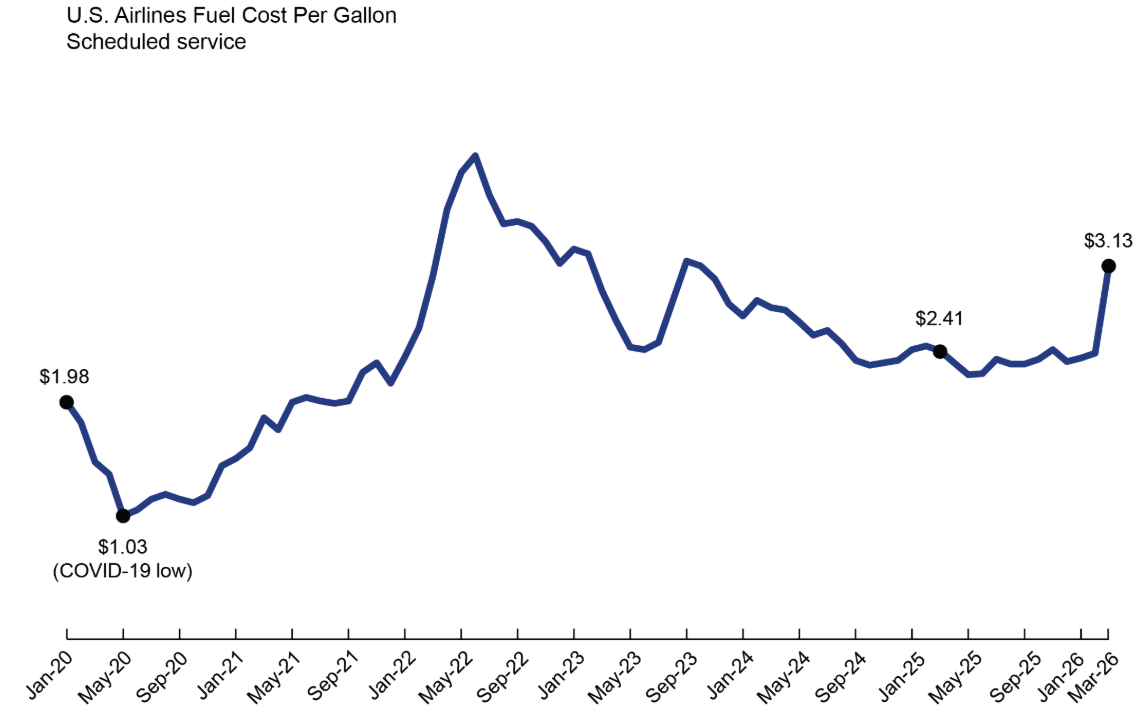
US carriers from Alaska Air to American, Delta, Frontier, JetBlue, and United estimate they will recuperate only between a third and 50% of the additional spend on fuel caused by the crisis during the second financial quarter of the year. That’s less than Deutsche Bank’s calculations of 60 cents on the dollar. United’s chief Scott Kirby said it would take until the end of the year to recuperate 100%.
In Europe, long-haul fares might get cheaper before short-haul trips, because airlines were able to charge more for them during the crisis. If consumer demand stays high, short-haul ticket prices are also likely to remain inflated, analysts say.
In Asia, Hong Kong’s Cathay Pacific is in a similar position, supported by the premium segment and cargo income, but China’s three majors (Southern, China Eastern, and Air China) cannot put up prices due to the poor relationship between fleet size and block hours flown.
Adding to the tricky situation for travellers around the world, airline bankruptcies and consolidation, plus supply chain issues, mean that capacity is tight, both for airlines waiting on delayed aircraft manufacturing and at airports. With demand still fairly robust, it’s not a situation that will promote bargain air fares, as Dudley Shanley, head of aviation and travel research at Dublin-based Goodbody, told the press, saying: “This is very much subject to the strength of the consumer.”
In the Middle East, however, where aviation is coming back from a near-total grounding and consumer confidence has plummeted, airlines could start using price offers to compete for returning customers, but there too, carriers must still counter high fuel prices. Yet another factor is that almost all the majors in the region benefit from strong government backing, either in the form of direct subsidies or indirect state advantages, a fact that could allow them to introduce more aggressive pricing strategies if they chose to do so.