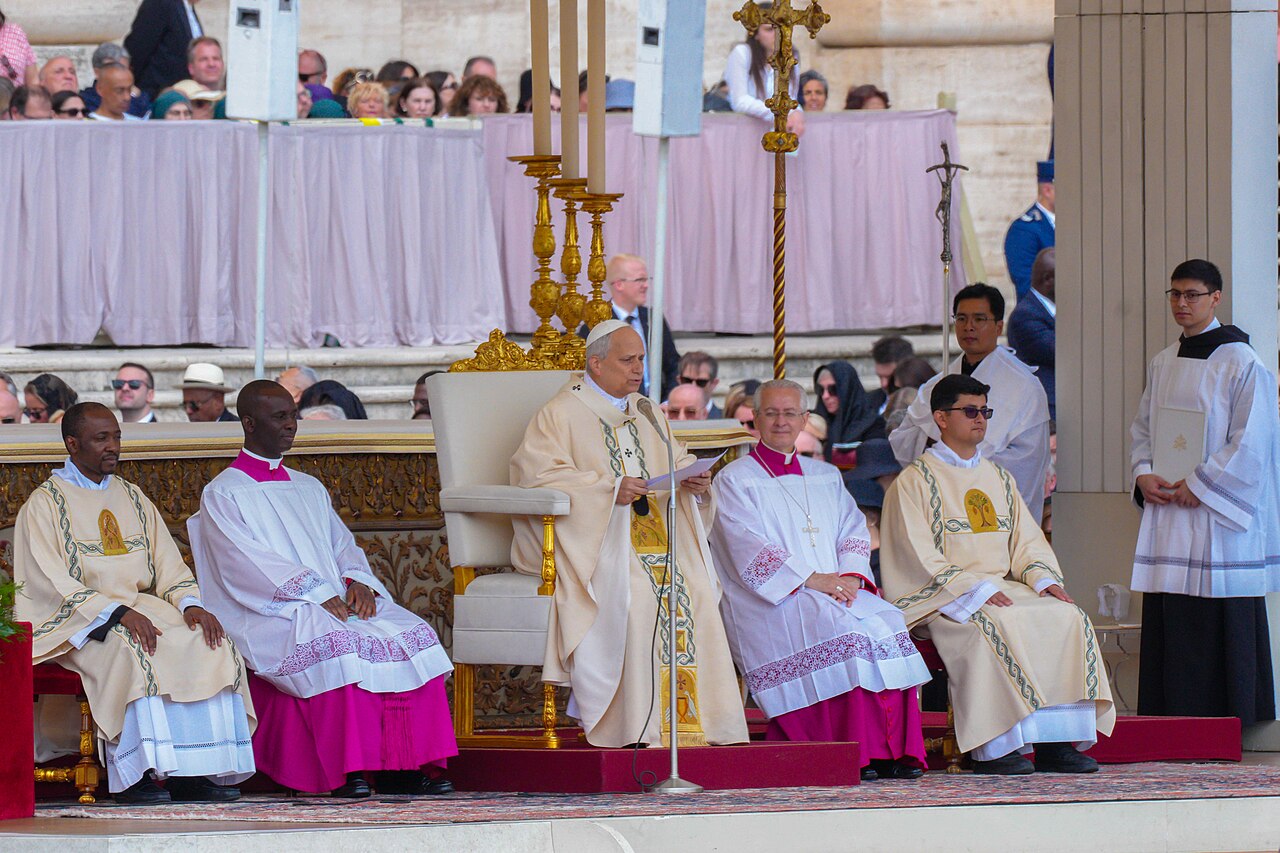


As Pope Leo XIV continues his first visit to Spain, attention is increasingly turning not only to the spiritual significance of the trip but also to its economic and tourism impact. What began as a pastoral journey is already shaping up to be one of the most consequential tourism events of the year for Spain, with experts estimating that the seven-day visit could generate between €90 million and €150 million in economic activity.
The visit, which runs from 6 to 12 June and includes stops in Madrid, Barcelona, Gran Canaria and Tenerife, has attracted enormous public interest. On Sunday alone, an estimated 1.2 million people gathered near Madrid’s iconic Cibeles Square for an open-air Mass celebrated by the Pontiff, making it one of the largest public events in Spain in recent years.
This is the view of 1.2 million people from above. This is happening in Madrid, in the famous Plaza de Cibeles and its surroundings, where Pope Leo XIV will preside over the solemn Corpus Christi Mass, followed by a historic procession. pic.twitter.com/KYLIK6ek1V
— EWTN Vatican (@EWTNVatican) June 7, 2026
Addressing the crowd, Pope Leo XIV called on Catholics to support society’s most vulnerable members, saying that God “identifies with the poor, the downtrodden, those who are alone and forsaken”. The Mass followed a vigil attended by approximately 600,000 young people the previous evening and came after meetings with migrants and homeless communities during the first days of the visit.
Five euros returned for every euro invested
According to estimates from the Spanish Bishops’ Conference (CEE), the total cost of organising the papal visit is expected to reach around €25 million. Yet organisers believe the overall economic return could exceed €150 million, effectively generating five euros for every euro invested.
The budget covers event production, logistics, communications, transport, accommodation for the papal entourage and volunteer operations. Around 85% of spending is directed towards the events themselves.
Funding comes from a combination of Church resources, donations from companies and benefactors, support from local authorities and contributions from faithful through fundraising initiatives.
While Church officials have repeatedly stressed that financial returns are not the purpose of the visit, the figures illustrate the scale of economic activity generated by large-scale religious events.
Tourism sector already seeing the benefits
Evidence of the tourism boost emerged even before Pope Leo’s arrival.
According to tourism intelligence company Data Appeal Mabrian, Madrid alone was expected to generate approximately €73.8 million in additional visitor spending during the first days of the visit, driven by an estimated 1.8 million attendees.
Restaurants and food services account for the largest share of spending, representing roughly 78% of the economic impact, followed by transport and accommodation.
🇪🇸Spain is now the world's third-largest destination for international visitor spending – and the number one in Europe.
— WTTC (@WTTC) May 18, 2026
In 2025, international visitors to Spain spent €115.1BN – with each traveller spending an average of US$1,344, well above the European average of US$1,068.… pic.twitter.com/CcrX5ywzPw
Hotel demand has also risen significantly. Data from online travel agencies showed average hotel prices in Madrid increasing by 4.5% compared with the same weekend last year, while occupancy levels were running several percentage points above 2025 levels.
In Barcelona, which will host the Pope later this week, hotel occupancy is also tracking well ahead of last year. Booking platforms reported accommodation searches rising by more than 50% in some destinations along the papal route.
Bars, restaurants and holiday rental operators in both Madrid and Barcelona have reported exceptionally strong demand, with many establishments fully booked during key events.
The value of the ‘showcase effect’
Tourism analysts caution that the true impact of the visit may only become apparent in the months and years ahead.
ObservaTUR, a tourism monitoring organisation, estimates the immediate economic impact at between €90 million and €125 million. However, researchers emphasise what they describe as the “showcase effect” — the long-term promotional value generated by extensive international media coverage.
With hundreds of accredited journalists covering the visit and images of Spain being broadcast around the world, destinations such as Madrid, Barcelona and the Canary Islands are benefiting from unprecedented exposure.
The expectation is that increased visibility will stimulate future demand for religious, cultural and heritage tourism, encouraging visitors to explore Spain’s churches, pilgrimage routes and historic cities long after the Pope has returned to Rome.
Over a million people lined the streets of Madrid and one of its main squares to catch a glimpse of Pope Leo as he made his way to an open-air Mass in what was expected to be the largest event during his week-long visit to Spain https://t.co/f176gaD8Oy pic.twitter.com/k2UtAc9GDH
— Reuters (@Reuters) June 7, 2026
Lessons from previous papal visits
Historical examples suggest that these expectations are not unrealistic.
According to data cited by the World Travel & Tourism Council (WTTC), Pope Benedict XVI’s visit to Barcelona in 2010 generated almost €30 million in economic impact for the city.
The last time a pope visited Spain, a massive World Youth Day took over Madrid. It was 2011, and Benedict XVI made history. Fifteen years later, a pope has returned, and tonight Pope Leo is leading a huge youth vigil with an estimated 600,000 people. It’s hard not to think of… pic.twitter.com/umYdGYHjmM
— EWTN Vatican (@EWTNVatican) June 6, 2026
Even more significant was World Youth Day in Madrid in 2011, which produced more than €200 million in direct visitor spending and contributed to a 29% increase in overnight stays during the event. Surveys conducted afterwards found that 90% of international pilgrims intended to return to Spain.
Globally, papal visits have also demonstrated their economic value. Pope Francis’ visit to Bogotá in 2017 attracted hundreds of thousands of visitors and generated more than US$61 million for the local economy.
Madrid benefits from a unique convergence
An additional factor strengthening tourism performance this week is the overlap between Pope Leo XIV’s visit and a series of concerts by Puerto Rican superstar Bad Bunny.
Pope Leo told reporters that young people might be more inclined to see Puerto Rican artist Bad Bunny than attend a papal event while on his flight to Madrid, Spain on Saturday to inaugurate a new tower in Barcelona’s famed Sagrada Familia basilica and meet migrants who braved… pic.twitter.com/SMRZoq47cT
— CBS News (@CBSNews) June 7, 2026
The simultaneous arrival of pilgrims, international media, concertgoers and tourists has created an unusual concentration of demand for accommodation, transport and hospitality services.
Industry observers say the combination is reinforcing Madrid’s position as one of Europe’s leading destinations for major international events.
More than a religious event
For the World Travel & Tourism Council, the visit demonstrates the broader value of faith based tourism.
“Major religious tourism events such as papal visits clearly demonstrate the powerful ability of Travel & Tourism to generate immediate economic impact while also delivering long term value for destinations,” said WTTC President and CEO Gloria Guevara.
As Pope Leo XIV continues his journey through Spain this week, final economic figures remain uncertain. Yet with more than a million people already gathering in Madrid and tourism businesses reporting increased demand across multiple regions, the visit is already proving to be far more than a religious occasion.
Whether the final impact reaches €100 million or €150 million, Spain is once again demonstrating how major faith based events can deliver both spiritual significance and tangible economic benefits.