
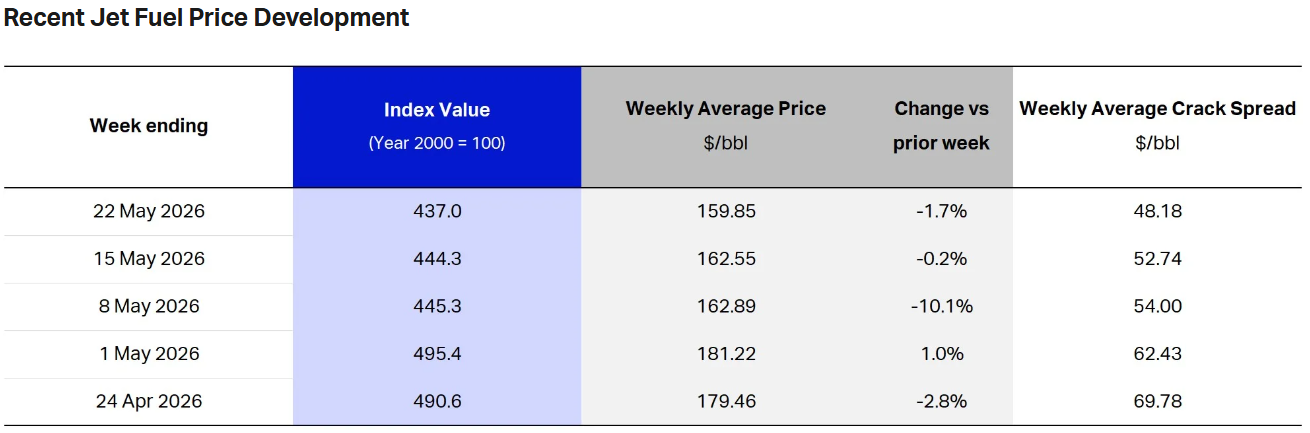
American Airlines profit forecast for the year remains unchanged in the wake of recent high jet fuel prices, according to the carrier’s CEO, Robert Isom, speaking at a Bernstein investor conference on Wednesday.
Ipson said the strength of revenue, premium demand and the corporate segment could help shield the carrier from an additional $4 billion to $5 billion financial hit on fuel costs this year, repeating the profitability it had last year.
The conference came shortly after a US Memorial Day weekend (in fact six days) over which the number of travellers and crews passing through Transportation Security Administration (TSA) checkpoints fell by nearly one percent year-over-year to roughly 16.1 million, agency figures reveal.
But Isom highlighted that demand among high-income consumers is outperforming that of lower-income customers, in a K-shaped pattern. He also insisted on the growth he has seen across income groups, with the airline booked to about 80% capacity for the second quarter, corporate travel up 13% year over year and leisure demand “incredibly” strong. “People still want to and travel is still a bargain,” he remarked in an interview with Bloomberg TV.
Isom went on to note a short-term lift in basic-economy ticket purchases after Spirit’s recent demise, but said that represented only 1.5% of the market at the time, and has now levelled out. Rivals, including Allegiant Air, American, Breeze Airways, Frontier Airlines, JetBlue Airways, and Southwest Airlines, joined United in upping their budget offer after Spirit’s bankruptcy.
Isom’s encouraging words on demand were echoed at the conference by United Airlines CEO, with both chief executives commenting on the market’s resilience despite geopolitical uncertainty.
Isom appears to have cushioned the blow of the airline’s profit revision a month ago, taking the firm’s 2026 results to between 40 cents per share and a profit of $1.10 per share, down from previous expectations of profits between $1.70 and $2.70 per share. Revenue for Q2 was expected to increase 15% year on year based on capacity growth of five percent, meaning 10% comes from unit revenue. The airline’s shares rose one percent during afternoon trading.
The airline is betting on premium products and customer experience in its efforts to catch Delta Air Lines and United on profitability. It has invested in more premium capacity, including lie-flat options, which it is expanding at twice its main cabin seating. Isom said these premium buy-ups, sales and distribution changes, stronger hubs and bag fees would boost revenue.