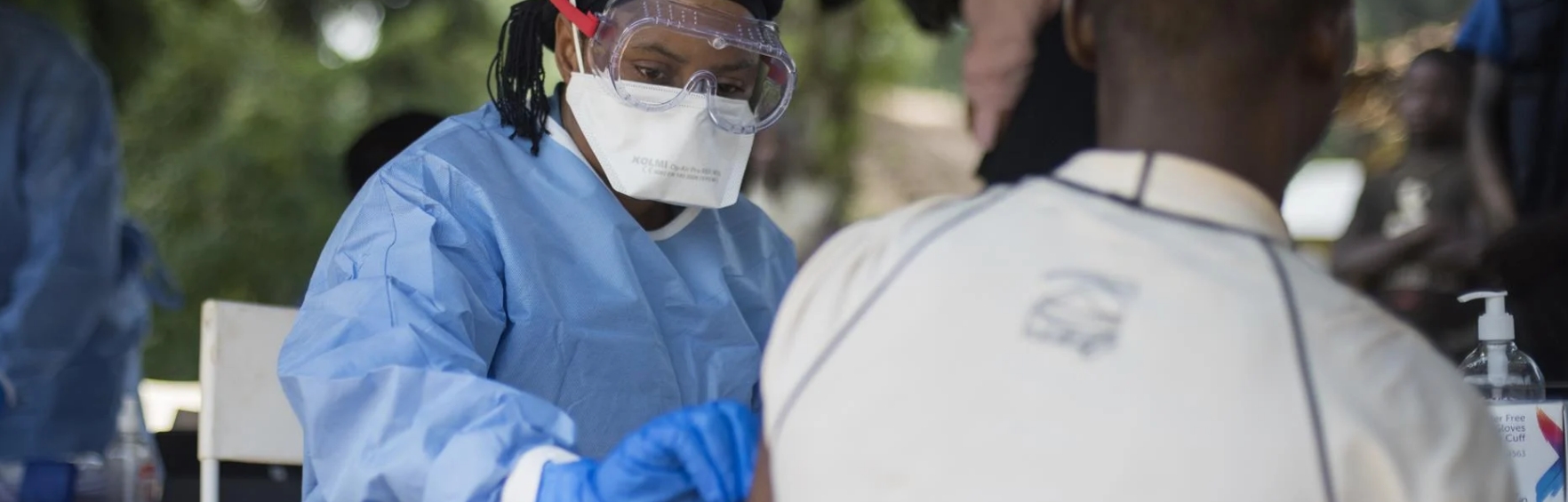



As the United States introduces airport Ebola screening for passengers arriving from nations affected by the current outbreak, many are asking whether similar health checks will be implemented at European travel hubs.
On 17 May 2026, the World Health Organisation classified Ebola disease caused by Bundibugyo virus in the Democratic Republic of the Congo and Uganda as a public health emergency of international concern (PHEIC), but held back from giving the outbreak the status of “pandemic emergency, despite evidence it has spread from rural communities to the cities of Bunia and Goma.”
After having consulted the #DRC and #Uganda where the #Ebola disease caused by Bundibugyo virus is known to be currently occurring, I determine that the epidemic constitutes a public health emergency of international concern (PHEIC), as defined in the provisions of IHR.
— Tedros Adhanom Ghebreyesus (@DrTedros) May 17, 2026
My full… pic.twitter.com/zhYVEyxSI8
However, Dr Tedros Adhanom Ghebreyesus, WHO’s Director-General, has expressed deep concern about “the scale and speed of the epidemic” in affected regions, noting in a social media post on 24 May that “more than 900 suspected cases have been identified so far, including 101 confirmed cases.” The WHO estimates the number of deaths linked to the Ebola outbreak in DRC at 220, while Congolese authorities put the national figures at 131 deaths and 500 cases.
Against that background, the US Centers for Disease Control and Prevention (CDC) has brought in measures that include screening air arrivals from outbreak areas and restricting entry for non-US passport holders who have visited the Democratic Republic of Congo (DRC), South Sudan, or Uganda, within the past 21 days. Visa services for the US have been suspended at the US embassy in Kampala. These actions could be adjusted “as additional information becomes available,” the CDC said.
En Ituri 🇨🇩, chaque investissement sauve des vies face à #Ebola_Bundibugyo. Ce que nous faisons:
— OMS RDC (@OMSRDCONGO) May 25, 2026
▪️Renforcer le système de santé
▪️CTE durable
▪️Soins de qualité pour les patients
Investir dans les capacités de 1ère ligne, pour prévenir les crises de demain. Merci à @FCDOGovUK🇬🇧. pic.twitter.com/2c5hnUCixo
In Europe, though, current vigilance is taking place in a piecemeal way, by individual airlines. From Brussels—a city considered a European gateway for the former Belgian colony DRC—the national flag carrier operates daily flights, seven days a week, to Kinshasa.
Brussels Airlines says it is monitoring the situation and is “in contact with all relevant authorities and will adjust our operations should this be necessary.” Joëlle Neeb, Senior Media Relations Manager, told Euronews: “all flights are operating as scheduled, and no additional protective measures are in place.”
She also highlighted that cabin crew are trained in following infectious diseases protocols and that anyone “with an infectious disease … is evacuated by a specialist ambulance from the military hospital.” The airline had not yet received any specific guidance from the Public Health Ministry, she said.
Q: How does the #Ebola virus spread from one person to another?
— WHO African Region (@WHOAFRO) May 23, 2026
A: Ebola spreads through direct contact with the blood, body fluids, or tissues of an infected person, including someone who has died from the disease. It can also spread through contaminated objects such as bedding,…
Belgium’s Foreign Affairs Security Ministry is powerless to ban travel to identified countries but has “formally discouraged” all travel to the DRC provinces of Ituri and North Kivu at the heart of the outbreak.
When it comes to higher international instances, the European equivalent of the CDC has so far rejected calls for entry screening measures across the bloc. Celine Gossner, a specialist at the European Centre for Disease Prevention and Control, questioned the resource-heavy strategy, saying it has “limited effectiveness.” The ECDPC is, however, sending experts to assist the DRC in planning and putting in place its control measures.
At the time of writing, according to an official spokesperson for the European Commission, no formal requests for assistance had been made to the bloc from any of the affected partners.