


A Dutch cruise ship and its passengers are under close investigation after a hantavirus outbreak on board claimed three deaths. While the WHO looks into the possibility of rare human-to-human transmission, new information shows that the first victim fell ill almost a month before lab results confirmed a hantavirus outbreak.
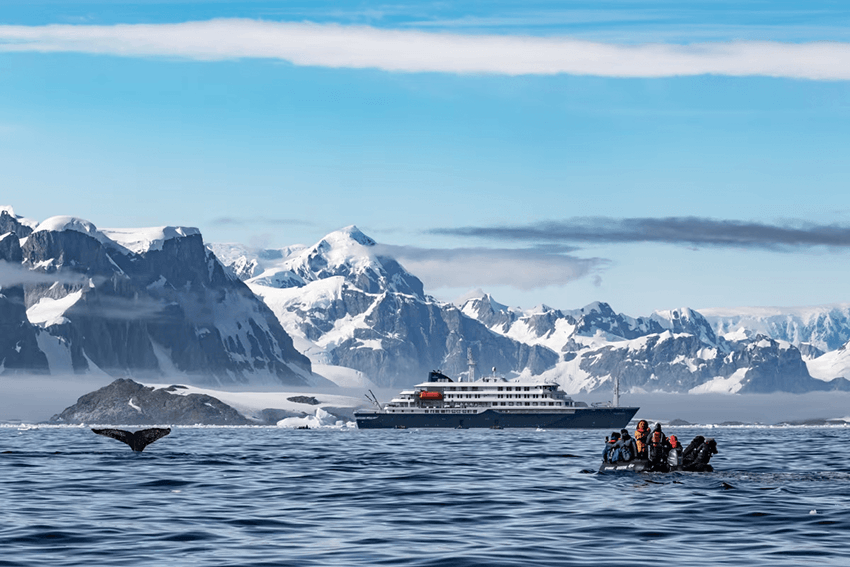
When the cruise ship operated by the Dutch company M/V Hondius set off from Argentina on 1 April 2026, ready to explore Antarctica and multiple islands in the South Atlantic, all seemed fine. However, on 6 April 2026, a Dutch 70-year-old passenger fell ill, and he died just a couple of days later, on 11 April 2026. Only on 24 April 2026, his body was removed from the ship at St. Helena. His wife, a 69-year-old Dutch woman, leaves the ship at the same time and takes a flight to South Africa, where she dies on 26 April 2026 after falling ill during the journey.
Meanwhile, on the ship, other passengers start falling ill. On 27 April, a traveller is evacuated to South Africa, and a woman who started showing symptoms on 28 April dies onboard the ship on 2 May 2026.
That same day, the first lab results start coming in. They confirm that the passenger who was evacuated to South Africa on 27 April suffers from hantavirus. On 4 May, a second (posthumous) test shows that the Dutch woman who died on 26 April also had hantavirus.
@bbcnews Three people have died and another passenger is seriously ill following a suspected hantavirus outbreak on a cruise ship, which is currently off the coast of Cape Verde. #CruiseShip #Cruise #CapeVerde #Hantavirus #News #BBCNews ♬ original sound – BBC News
Since the arrival of the cruise ship in Cape Verde on 3 May 2026, authorities have been investigating what is now considered to be a hantavirus outbreak. Although only two cases have been confirmed, the WHO is confident that other deaths and illnesses have been caused by the same virus. Two other passengers who fell ill have already been evacuated.
The WHO is investigating the outbreak. Although hantavirus is spread by rodents – especially by contact with infected rodents’ saliva, urine, or droppings – the organisation is studying the possibility of rare human-to-human transmission.
“We do believe that there may be some human-to-human transmission that’s happening among the really close contacts, the husband and wife, people who have shared cabins, et cetera,” stated Maria Van Kerkhove, director of Epidemic and Pandemic Preparedness and Prevention at the WHO.
#Hantavirus cluster linked to cruise ship travel:
— World Health Organization (WHO) (@WHO) May 5, 2026
Since 1 April when the boat set sail, of the 147 passengers and crew, 7 people have become ill, among whom 3 have died, 1 is critically ill and 3 are reporting mild symptoms.
Based on the current information, including how… pic.twitter.com/KDKwmrNeBt
Such human-to-human transmission is rare but can happen through really close contact, especially with the Andes virus, a specific case of hantavirus. As the Dutch couple who fell ill first had been travelling through Argentina and South America before boarding, it is possible the passengers are suffering from the specific variant, although nothing has been confirmed as of yet.
“At present, the risk to the general population in Europe from this outbreak is considered very low, given that appropriate infection prevention and control measures are being implemented on board and that hantaviruses are not easily spread between people. It is not yet known whether transmission in the current outbreak occurred through environmental exposure or between individuals, and the specific hantavirus involved has not yet been identified,” the European Centre for Disease Prevention and Control (ECDC) said in a statement on Monday, 4 May 2026.
At the moment of writing, the cruise ship has set sail for the Canary Islands, a journey that should take approximately three days. Once arrived, Spain’s Ministry of Health has confirmed that a team of epidemiologists will go on board to screen the passengers for symptoms and assess the risks. In the meantime, crew members and passengers aboard the ship have been isolated in cabins and are applying maximal physical distancing in order to minimise further risks of contamination.