


Travellers could soon experience Costa Rica’s famous biodiversity and ecotourism whilst wearing an authentic, freshly purchased Panama hat, thanks to a proposed rail link between the two countries.
Costa Rica’s national rail company, INCOFER, and Panama’s National Railway Secretariat have signed a memorandum of understanding (MoU) to explore the creation of a “rail logistics corridor” between the two countries. According to The Tico Times, the agreement lays the groundwork for what could become a broader regional transport network.
The long-term vision is for a more integrated Central American rail system under the Central American Integration System (SICA). In an optimistic scenario, this could one day facilitate connections across the region, linking up with Mexico’s Tren Maya and the Interoceanic Corridor. This would allow passengers to travel by rail from Panama’s jungles all the way to the US border.
The project currently under discussion, however, is far more limited in scope. The proposed line would run from Panama City to Paso Canoas on the Costa Rican border, covering around 475 km with approximately 14 stops, including Albrook, La Chorrera, Santiago, David, and Bugaba. The first phase is expected to focus on the Panama Pacífico to Divisa section.
The MoU aims to strengthen regional connectivity while boosting trade, logistics, tourism and economic integration. For now, however, the project remains in its very early stages.
The agreement does not yet commit to extending the railway into Costa Rica, but instead establishes a formal framework for bilateral cooperation. This includes feasibility studies, engineering assessments, environmental and social impact reviews, border-area land use planning, protection of cultural and natural heritage, and risk management for major infrastructure projects.
If realised, the railway will serve both passengers and freight, establishing itself as a vital artery for trade and tourism. It is also intended as the first step towards creating a wider Central American rail network.
Unlike in Europe or certain parts of Asia, however, train travel in Central America remains extremely limited. Most countries have dismantled their rail networks, and in those that have not, they have been left to fall into disrepair while buses, cars and aeroplanes have been prioritised as the main modes of transport.
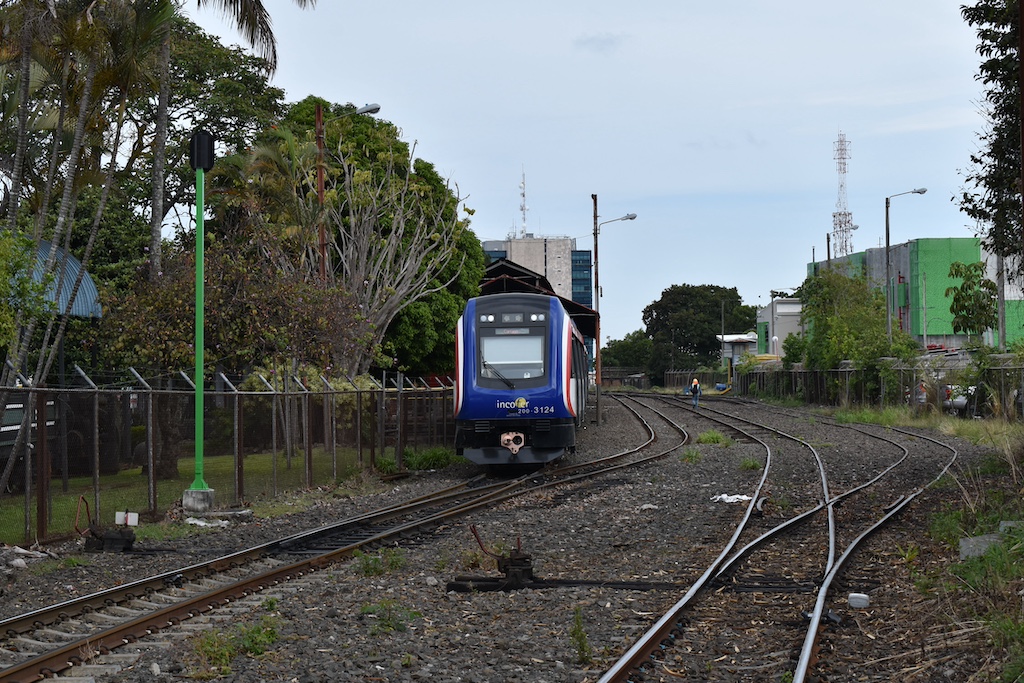
Although Costa Rica does have a train network, it is essentially limited to commuter services around the capital, San José. Meanwhile, Panama only has one modern passenger line, running between Panama City and Colón, which is mainly used by tourists and commuters.
@josue_f07 🇨🇷 Disfrutando mi pais Costa Rica, Pinares. #PuraVida #incofer #CostaRica #cartago #sanjose #curridabat #tresrios #tren #turismo #montañas #vistas ♬ secure – Khamir Music
For long-distance travel, people rely on buses, which are widespread and inexpensive, forming the backbone of regional mobility.
However, significant obstacles remain to be overcome before the project can take shape, as highlighted by The Tico Times. Similar projects have previously failed due to funding difficulties, environmental concerns, issues with acquiring land and maintaining political continuity between administrations. Cross-border coordination adds an extra layer of complexity.
Having approved funding for a consultancy study earlier this year, Panama appears to have a slight head start on the project, while Costa Rica remains focused on cooperation and preliminary planning.
While this represents a modest diplomatic step forward, only time will tell if it will ultimately lead to the launch of a cross-border rail service.