



In a world where so much goes on online, people are having an increasingly hard time to look away from their screens. We selected 5 effective ways to reduce your screen time – starting today.
Anno 2026, the average person spends a lot of time on their phone screen. According to a survey commissioned by Virgin Media O2, for example, UK adults spend around four hours per day on their phone – 36% of which unintentionally. And data gathered by health data management firm Harmony Healthcare IT show Americans are spending an average of 5 hours and 16 minutes per day on their phone.

Of course, global screen time numbers have surged along with the rise of social media. Once, people only used their mobile to call and text. Meaning that unless they had a very social life, they weren’t spending hours on end scrolling. Yet the arrival of social media shook things up.
Firstly, there an unending stream of content to be found online nowadays. Secondly, as proven by the fact that Meta and YouTube were ordered to pay $6 million by a US court in March 2026 as their platforms were found to be designed in such a way as to be addictive, it is harder than ever to look away.

And yet, spending too much time staring at a (phone) screen should be avoided at all costs. While spending four times a day on your screen one or two days on end isn’t likely to cause any long-lasting damage, when it becomes a habit, our health is being put under considerable pressure. Eye damage, back issues, increased levels of depression, anxiety… the list of risks is long and bleak.
While tuning down your screen time isn’t necessarily an easy task, it is one that is very likely to make your life better. These five habits will set you on your way.
1. Track your time
In order to determine exactly how big your screen time problem is, you need to start collecting data. By activating Digital Wellbeing (Android) or Screen Time (Apple), you will immediately know exactly how much time you spend looking at your screen and which apps are the biggest culprits.
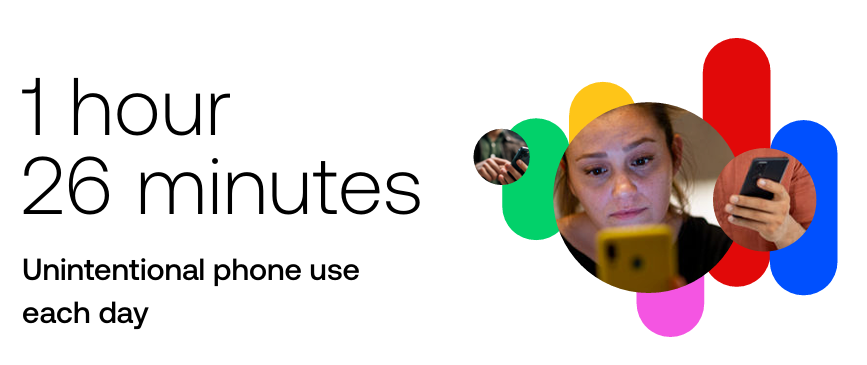
While you want to avoid getting too caught-up in numbers – which might lead to even more anxiety – there’s nothing like a little reality check to get things going. Those four hours a day spent scrolling through TikTok could undoubtedly be put to better use.
“We’re really bad at estimating about time we spend doing things, particularly around tech use. Being able to notice when you’re using it when you don’t want to or need to is a really important first step,” Etchells, a professor of psychology and science communication at Bath Spa University, told the BBC.
2. Turn off notifications
How often have you finally put down your phone, only to pick it up again two seconds later because you got a notification? Right. As every peep causes a small spike of dopamine, it is no wonder that we crave to hear our smartphone make some kind of noise, never mind the reason.
For some people, turning off all but the most essential of notifications – think calls and messages – can be a great way of getting the ball rolling. Yet beware: if this means you’ll start checking every single app thirty times a day to make sure you haven’t missed anything, you’d better try something else instead.
3. Apply social distancing
Human beings tend to be lazy. One of the reasons why smartphones are more likely to create a form of addiction is the fact that they’re always there. In the sofa, on the toilet, at a bar, and even in bed: most of us keep our smartphone within reach, at all times.
Yet when trying to cut your screen time, there is an actual upside to this laziness. By putting your phone in another room or even by just leaving it on your desk while you’re sitting in the sofa, chances are, you will be less tempted to inadvertently start scrolling.

This rule becomes even more important when we’re talking bedtime and sleep. If you are used to keeping your smartphone on your nightstand and if scrolling is both the first and the last thing you do on a day, try putting it in another room instead. In the hall, in the dressing room, or in the bathroom: as long as it’s not within reach, al is well.
4. Make your phone less appealing
While turning off notifications and putting your phone at a distance are already a great way to start making it less attractive, it is possible to go even further. For example, most phones allow you to switch the screen to greyscale, filtering all those picture-perfect colours away. You could also choose to adapt your lock screen, not by changing it into some appalling picture (unless that works for you) but by opting for something that reminds you of something in the real world that matters to you. With a little luck, you’ll be turning your attention to that instead.
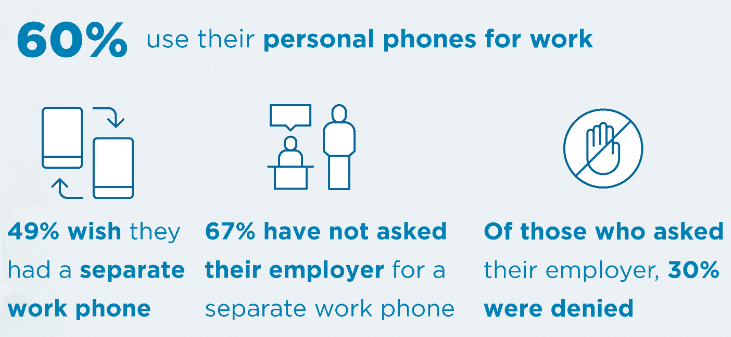
Another, more radical option could be to (temporarily) use a so-called dumb phone instead. In essence, instead of a modern smartphones, they are more alike the cells used in the 90s and early 00s. Some applications also allow you to turn your own phone into a dumb phone. However, especially when you need to use the internet professionally or even when you’re used for example do your groceries through an app or to scan a QR-code to look at a menu, dumb phones can quickly become unpractical.
5. Create new habits
“Passive screen time is like eating sugar but for your brain. It ‘tastes’ good, and you want it now, but you’re not actually feeding yourself. You’re not giving your brain any nutrition. Instead, replace screen time with an intentional healthy habit that feeds your brain in a healthy way. Lifestyle medicine activities, like exercise, good sleep, social connection, and stress management, function like ‘nutrition’ for your brain and mental health,” Maris Loeffler, MA, Family and Marriage Therapist, and member of the Stanford Lifestyle Medicine Cognitive Enhancement pillar, explains in an interview with Lifestyle Medicine Stanford.
One of the most important things to keep in mind when you want to spend less time on your screen is the fact that you might want to start thinking of new ways to use your time. Reading a book, going to a museum, meeting up with friends, gardening, working out, getting those eight hours of sleep per night… Anything works, as long as it works for you.