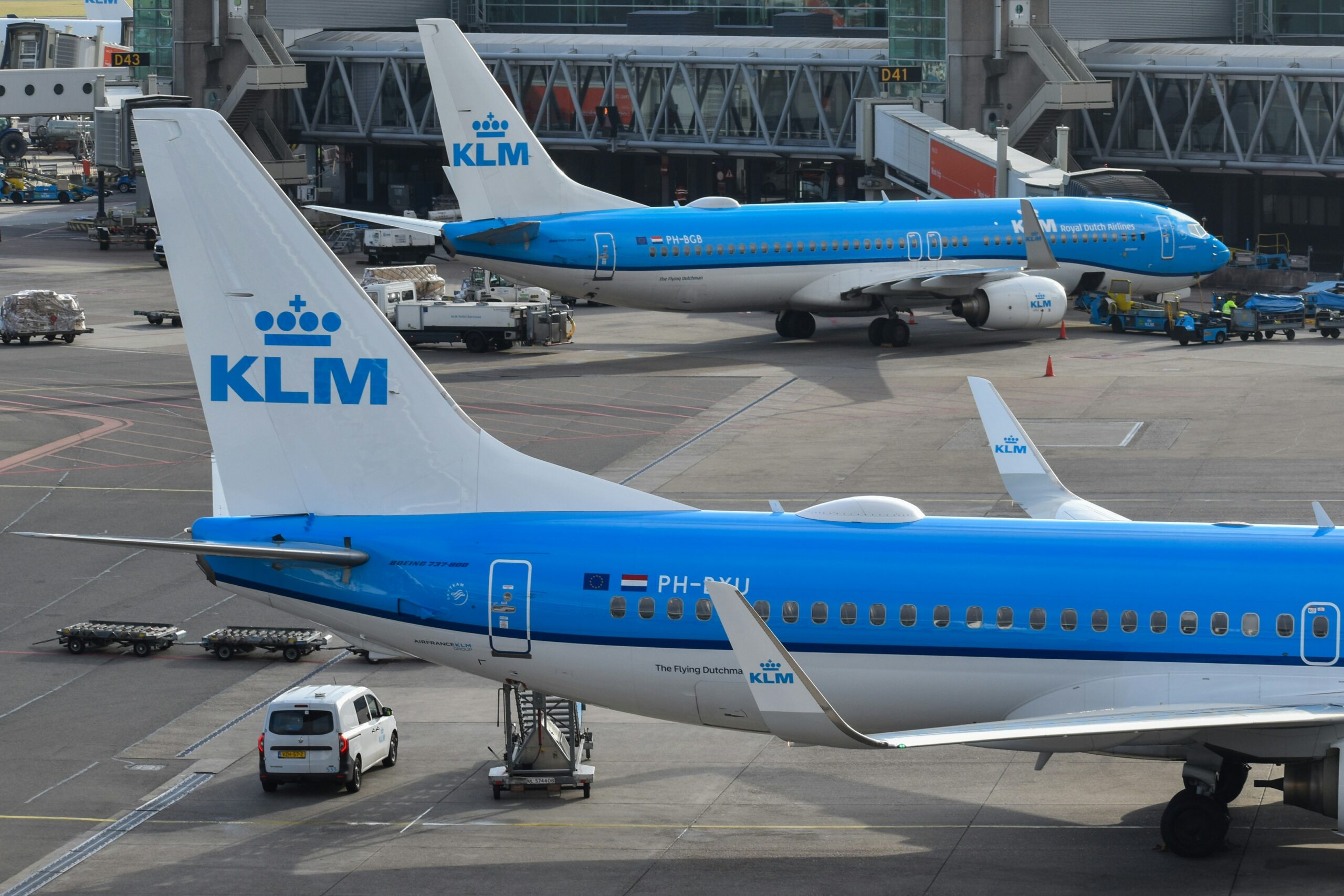



Two aircraft collided at Amsterdam -Schiphol Airport on Saturday, 21 February, in an incident on the tarmac between a stationary and a moving Boeing 737. Both aircraft were operated by KLM.
No injuries were reported and passengers from the planes were taken back to the terminal. No explanation has yet been given for the collision. Crash investigators are now looking what happened and KLM has said it is working with authorities to find the cause.
The collision occurred between a Boeing 737-800, registered PH-BCL, according to Aviation24, as it prepared for departure, and another Boeing 737-8K2, registered PH-BGC, which had just landed from Birmingham in the UK.
An Aviation Safety Network document reveals the first was being operated as flight KLM1953 to Athens, and that it “hit” the Birmingham aircraft “during push back from gate D54 at Amsterdam-Schiphol International Airport.”
@skyvibesl6 On 21 February 2026, two KLM Royal Dutch Airlines Boeing 737-800 aircraft collided on the ground at Amsterdam Airport Schiphol during pushback and taxi operations. One had arrived from Birmingham, the other was departing for Athens. There were no injuries, minor damage was reported, and authorities are investigating the cause. #fyp #news #aviation #Uk #netherland ♬ Monolith – Soundridemusic
The same document shows the Athens aircraft “received minor tail rudder damage and was taken out of service for inspection and repair.” Meanwhile, the aircraft arriving from Birmingham received minor damage and was also taken out of service for inspection.
The passengers heading to Athens were put on another KLM Boeing 737 and flew out to the Greek capital approximately three and a half hours late. Characterising the collision as “highly unusual,” KLM said in a statement: “We are investigating the circumstances of the incident together with the relevant authorities.” The carrier added: “We understand that this is inconvenient for our passengers and have rebooked them onto other flights as quickly as possible.”
The collision is the second airport taxi-ing emergency to have happened in the region this month. At Brussels Airport earlier in February, a Scandinavian Airlines (SAS) attempted departure from the Belgian capital on its way to Copenhagen, Denmark. Instead of pushing back from its gate and reaching its assigned runway for take-off, the pilots of the Airbus A320neo began gathering speed for ascent while it was still on a taxiway, putting the aircraft and its 165 passengers at risk of running out of tarmac, encountering a side road, or crashing into an obstacle.
Take-off was aborted and the SAS flight came to a halt near fuel containers, where it was met by emergency responders and fire teams. No injuries were reported but passengers had to wait hours return to the terminal and were accommodated overnight, flying out the next day.
Some aircraft are fitted with the Runway Awareness Advisory System (RAAS), a non-mandatory software that helps guide the crew in these situations. The SAS plane was not, the airline has said. It is not yet clear whether Amsterdam planes were.