

Venice is a city full of mystery and exotic treasures. A new study now shows how even its most famous winged lion was actually imported from China, most likely by the uncle and father of Marc O’Polo.
Although it might not necessarily be Venice’s most time-consuming sight, the winged lion perched atop a column on the Piazzetta San Marco next to Saint Mark’s Basilica has certainly become a symbol of the Italian city. The animal, a holy emblem of Venice’s patron Saint Mark, has been pictured many times throughout the city, yet its origin story remained a bit of a mystery.
Historians always thought the 300-kilogram statue, made out of bronze, felt out of place stylistically. Some believed the animal might have come from Syria or from the Hellenistic period, while others argued that it could have been transported to Venice when Constantinople was destroyed and looted by Crusaders in 1204. However, there was no evidence to prove this, and although the column was erected at the end of the 12th century, the lion was only first mentioned at the end of the 13th century when talking about its restoration.
From China to Venice via the Silk Road
Now, scientists think to have resolved at least part of the mystery surrounding the lion. In a study published in the journal Antiquity, archaeologists from the University of Padua and the Ca’ Foscari University of Venice explain how they were able to track down the statue’s origins all the way to China.
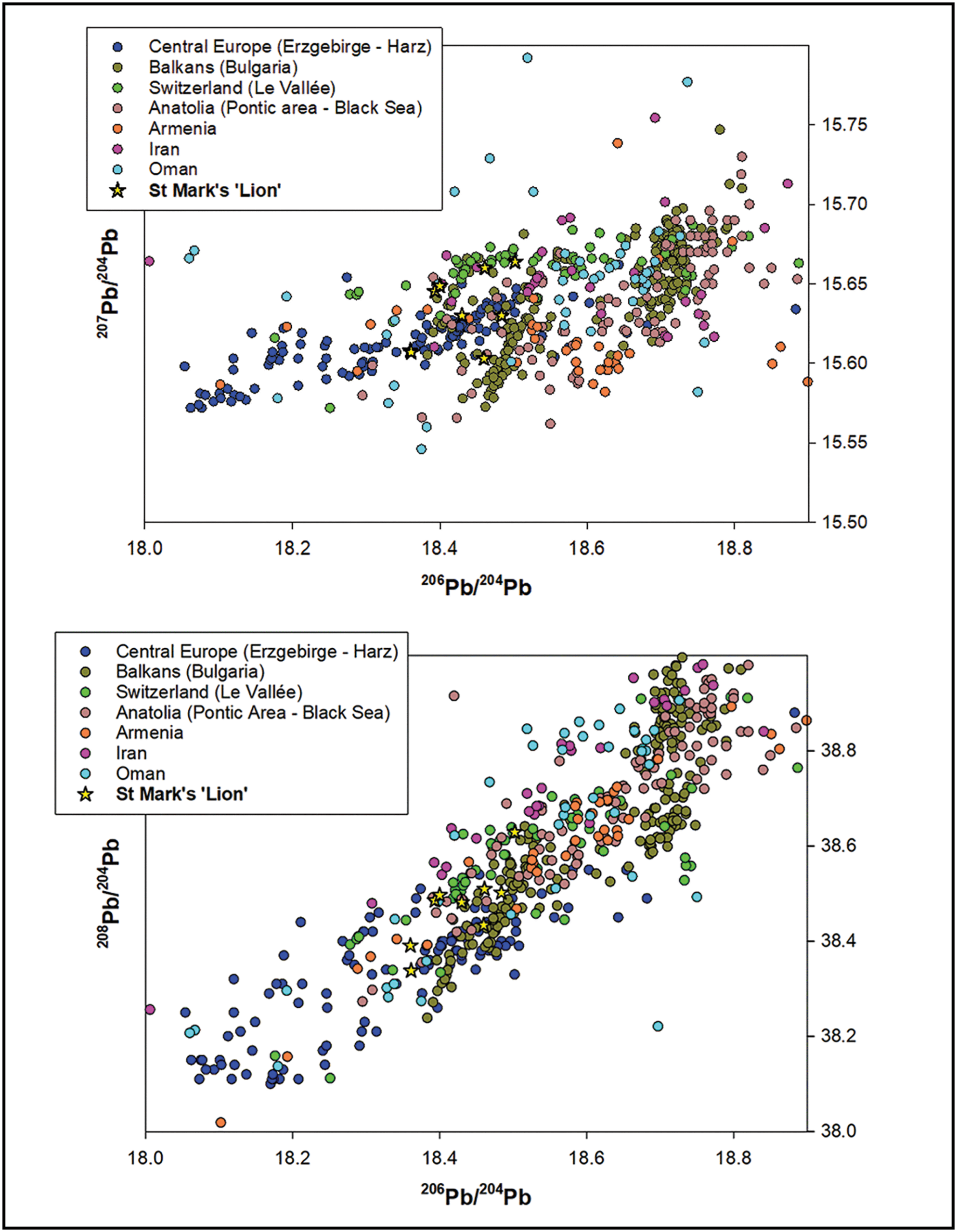
To determine where the lion originated from, the scientists took a sample of the bronze statue, made from copper and tin. Copper contains traces of lead, which can then serve as a fingerprint when using a lead isotope analysis. Thanks to the test, they were able to trace back the statue’s copper to the Yangtze River in China.
“Against traditional narratives that hypothesised local, Anatolian or Syrian production, we argue that the muzzle and mane of the hybrid bronze creature have similarities with Tang Dynasty zhènmùshòu (even though comparisons with earlier and later Chinese sculptures, in principle, could not be excluded). Lead isotope analysis of the bronze supports a Chinese origin, identifying likely copper sources in the Lower Yangzi River region. In a puzzling absence of written information, the intention and logistics behind its journey to Venice remain elusive and open to interpretation”, the researchers write.
The archaeologists also argue that Marco Polo’s father and uncle, during the four years they spent at the court of Kublai Khan during their first journey, might have been responsible for the acquisition of the sculpture somewhere around 1266-1268. Once in Venice, it is thought that some alterations were made to the statue’s exterior, such as the removal of a pair of horns and the addition of a so-called wig. Knowing this, the resemblance to the tomb guardians from the Tang Dynasty is even more striking.
“Venice is a city full of mysteries, but one has been solved: the ‘Lion’ of St Mark is Chinese, and he walked the Silk Road”, Dr Massimo Vidale of Padua University concluded in a statement.