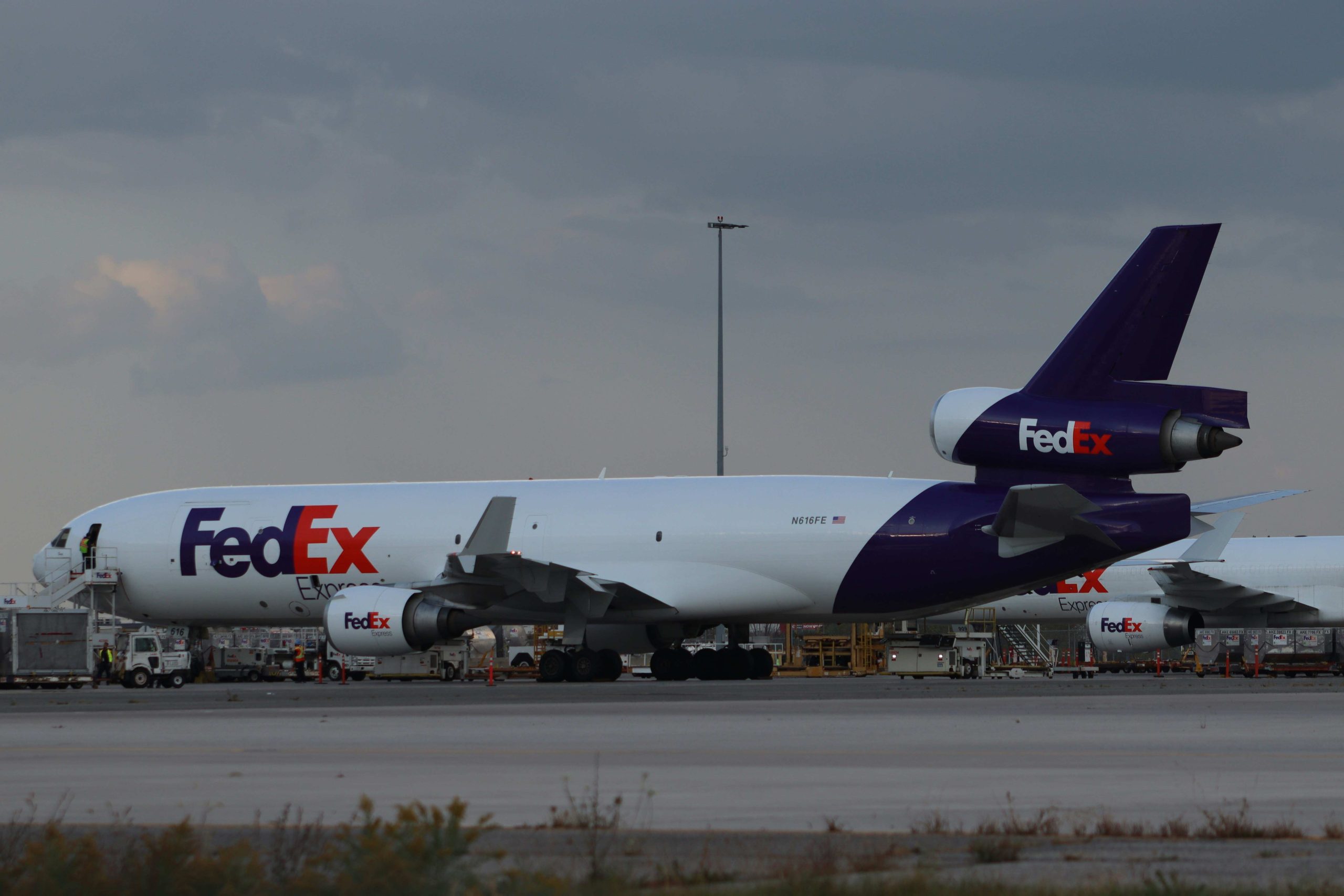



A FedEx cargo jet’s overrun, the second at the airport in three months, has put aviation safety back in the spotlight at the busiest travel moment of the US year. Millions of Americans were heading home for Thanksgiving when a FedEx cargo jet overran a runway at Miami International Airport on Wednesday evening, forcing most of the airport to shut down in the middle of the holiday rush.
The McDonnell Douglas MD-11, arriving from Memphis as FedEx Flight 910, left Runway 26R at about 8:40 pm local time amid heavy rain. Miami-Dade Fire Rescue attended, and the airport reported no injuries. FedEx said the aircraft had “an issue upon landing” and that its crew were safe.
BREAKING: Air traffic controller announces that Miami International Airport is closed following a FedEx cargo plane’s runway overrun. VIA: @theATCapp https://t.co/MEnr1vdUF2
— Breaking911 (@Breaking911) November 26, 2026
Only one runway, 9R, stayed open. Air traffic controllers told pilots to be patient, and inbound flights were diverted to Orlando. Passenger Greg Smith, who had been waiting for a 10:00 pm departure, told local broadcaster WSVN that everything had been on time until news of the diversions broke. “Safety first,” he added. The FAA said flights would resume shortly, but by Thursday morning it was still reporting delays of several hours.
The airport thanked travellers for their patience as it worked “to safely resume normal operations.” Passengers were urged to check with their airlines before leaving for the terminal.
The timing is unfortunate. As many as 81.5 million people are expected to travel for the holiday, with a storm forecast for the north-east. Any loss of capacity at a major gateway quickly ripples across the network.
A FedEx cargo plane ran off a runway at Miami International Airport amid wind and rain on Wednesday, prompting a temporary ground stop during one of the busiest travel days of the year. The two people on board were not injured. https://t.co/EuEplUtGqK
— CBS News (@CBSNews) November 26, 2026
Miami has had an unsettling autumn. In September, an Amazon cargo jet overshot a different runway, crossed a road, and struck a van, killing five people on the ground. Because three of Miami’s runways converge at their western end, the FedEx aircraft stopped close to the same area. DW also reports a minor taxiway collision between a Copa Airlines plane and a UPS plane less than two weeks ago, and a nationwide halt to departures on 13 November caused by air traffic control communication problems.
The aircraft type will draw attention. The MD-11 is the same model involved in last year’s UPS crash in Kentucky, which killed three pilots and 12 people on the ground after an engine detached on take-off. The FAA approved Boeing’s proposed fix, and FedEx only resumed MD-11 flights in May. Nothing so far links the two events, and the cause of Wednesday’s overrun has not been established; the FAA says it will investigate, while the NTSB had no information when contacted.
One passenger, speaking to NBC Miami, said flights should perhaps not have been operating in such weather. Whether conditions played a part is a question for investigators.
For travellers, the practical advice is unchanged: monitor your airline’s updates, allow extra time, and expect knock-on delays at peak periods. For regulators, the string of incidents at one airport will make for uncomfortable reading.