


The United Kingdom’s southeast could regain an airport that has been closed for over a decade if proposals to re-open it go ahead after the current public consultation. Government authorities have already granted a Development Consent Order for the site near Ramsgate.
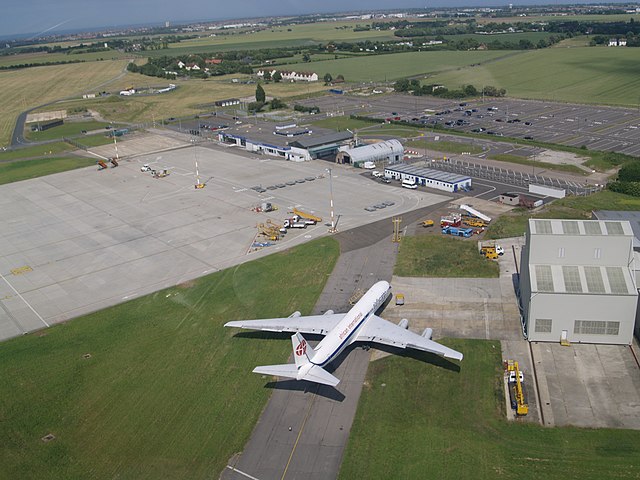
Closed since 2014, Manston Airport holds a special place in the hearts of some aviation enthusiasts due to its long history. Once a military base for the Royal Air Force, it saw some of the earliest days of aviation and operated as a pilot training and emergency landing site. Thanks to its location close to the front lines in mainland Europe, it was strategically important during the Second World War and the Battle of Britain. It has also served as a commercial hub known as Kent International and even “London Manston.”
The resurrection of activity there is the brainchild of investment firm RiverOak Strategic Partners (RSP), which purchased the site seven years ago. Now, a public consultation is set to seek community views as the next stage in the process of reopening the airport as an air freight hub. The consultation will run between 16 March and 22 June, alongside a series of events to help the public understand what the development could mean for them.
We are pleased to announce that @RSPManston is launching its Stage 3 airspace consultation, as part of the next step in the process to reopen the airport as an air freight hub. Find out more here: https://t.co/HTMyKWc3S9
— RSP Manston (@RSPManston) March 2, 2026
Stakeholders have emphasised the economic impact Manston’s relaunch could have on an area considered one of the most deprived areas of the UK, suffering high crime rates, low wages, and high rates of child poverty.
Tony Freudmann, RiverOak Director, has described the consultation as “an important step in our ambitions to reopen Manston airport, representing a once-in-a-generation opportunity to deliver new runway capacity to support the UK air cargo market and to transform the economic landscape in East Kent.”
He added: “We know Manston holds a special place in the area’s history; we would encourage people to find out more about our proposal and provide any feedback they might have to help shape our plans.”
According to the government consent order, the project could entail 19 widebody parking stands, four narrow-body passenger stands and 65,000m2 of cargo terminal, eight business aviation hangars, three recycling hangars, and over 100,000m2 of landside development.
The project’s supporters note that a unique aspect of Manston Airport is that it is deliverable in a short period—around four years— with a full-length existing runway capable of handling widebody freighters. It can therefore immediately address post-COVID demand for air cargo, ease pressure on congested London hubs, and serve a “gateway” region that is strategically useful for road, rail freight, air, and water connections. It is also intended to be Carbon Net Zero by 2035 through smart and energy-efficient buildings, electric apron vehicles, and autonomous vehicle technology.
People living near #ManstonAirport have been campaigning in #Ramsgate. Investors RiverOak Strategic Partners want to reopen it as an air freight hub. pic.twitter.com/VsO6zWUgGz
— BBC Kent (@BBCRadioKent) February 11, 2018
Nonetheless, the development is likely to be contentious in some quarters. Flight paths and times are yet to be confirmed, but the potential for 10,000 to 20,000 air traffic movements annually is a key concern for residents and tourism businesses in nearby coastal resorts such as Herne Bay. They have already been arguing for the last ten years that noise pollution could cause bad reviews and drive visitors away. Striking a balance between the needs of freight aviation and tourism, two important economic drivers, will be paramount.