


While rising sea levels are a hot topic within climate change projections, new research shows that sea levels have been heavily underestimated in the past. In many coastal regions, the effects of global warming could thus happen quicker and more severely than previously thought.
Climate change and rising sea levels are heavily intertwined topics. According to the UN Intergovernmental Panel on Climate Change (IPCC), levels might rise by 28-100 centimetres by 2100. In some regions across the globe, this rise will have severe consequences on coastal populations.
However, that impact might happen sooner than previously thought, according to a new study published in Nature. In their article, researchers Katharina Seeger and Philip S. J. Minderhoud from Wageningen University in the Netherlands analysed 385 examples of peer-reviewed scientific literature released between 2009 and 2025 regarding sea levels, only to conclude that some 90% of them might have been based on wrong data.
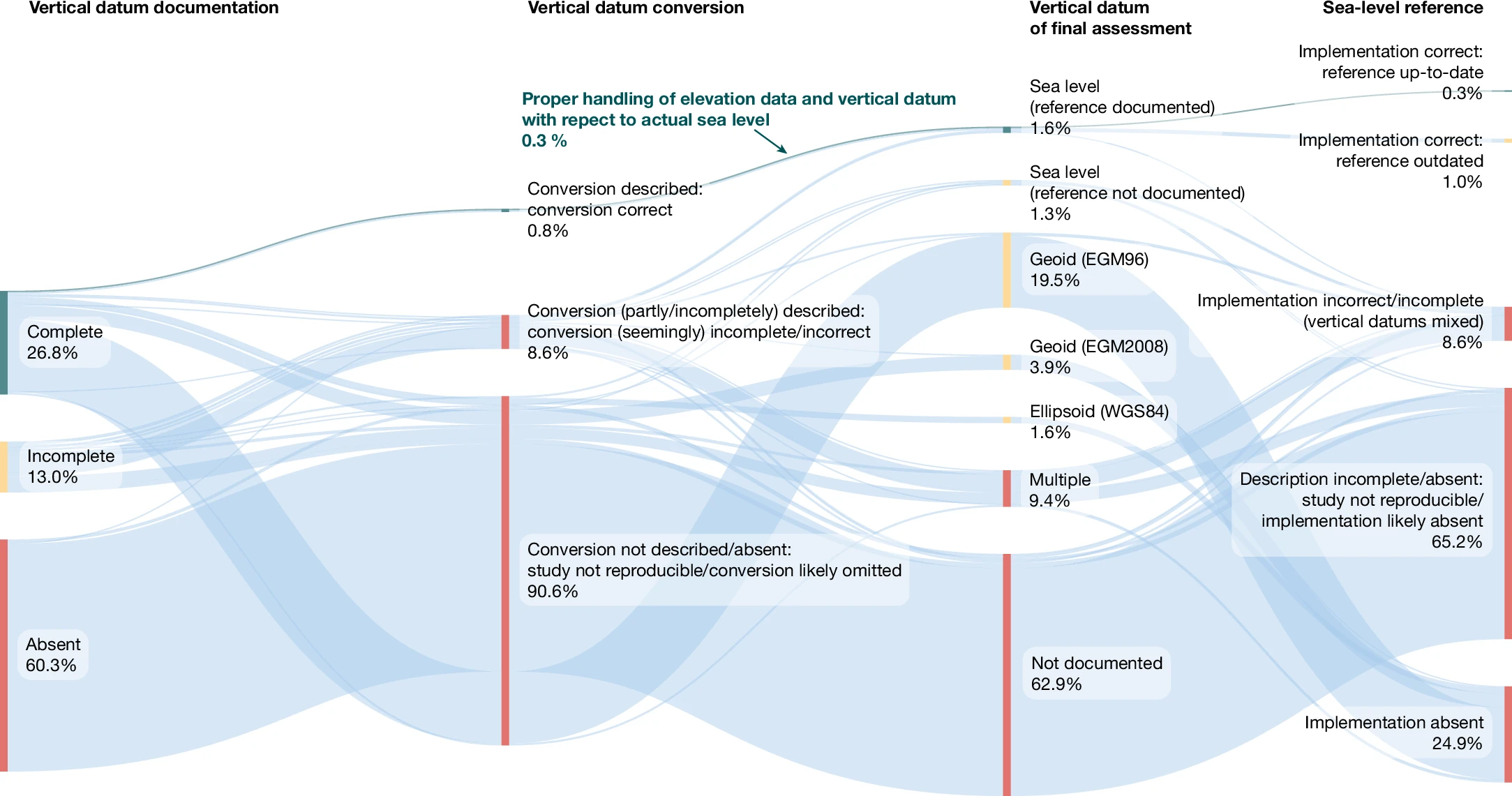
“The impacts of sea-level rise and other hazards on the coasts of the world are determined by coastal sea-level height and land elevation. Correct integration of both aspects is fundamental for reliable sea-level rise and coastal hazard impact assessments, but is often not carefully considered or properly performed. Here, we show that more than 99% of the evaluated impact assessments handled sea-level and land elevation data inadequately, thereby misjudging sea level relative to coastal elevation. Based on our literature evaluation, 90% of the hazard assessments assume coastal sea levels based on geoid models, rather than using actual sea-level measurements”, the authors write.
False data, false projections
Depending on the exact geoid model used, these false calculations might have led to an average underestimation of 24-27 centimetres. In some areas of the Global South, the discrepancy could even exceed 100 centimetres, with maximum underestimations reaching 550-760 centimetres. The differences can be explained, amongst other things, by a myriad of influential factors such as winds, ocean currents, seawater temperature, and salinity.
With this in mind, the researchers think it is likely that many risk assessments regarding the rising sea levels due to global warming, including the IPCC’s, might be wrong about their timelines.
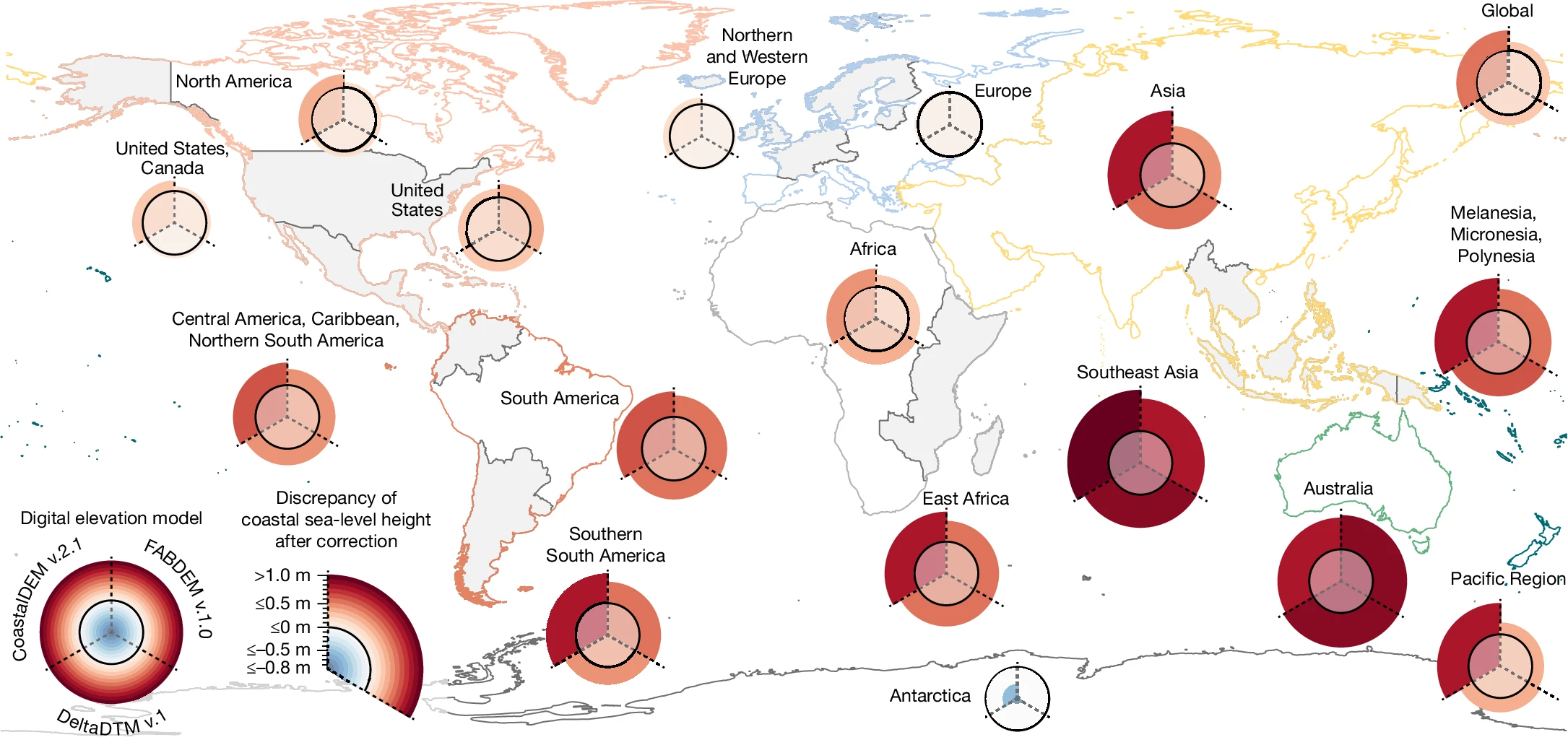
“This necessitates re-evaluating existing coastal hazard assessments to rule out vertical reference and sea-level datum issues and, if those assessments informed decision-making, potentially updating and expediting implementation timelines of coastal adaptation strategies, as exposure thresholds may be reached much sooner than previously projected”, the article states.
Recalculating the actual sea levels and revising the impacts of rising sea levels in order to get a correct model of the future impact of climate change on coastal settlements, thus, seems like a logical next step if Katharina Seeger and Philip S. J. Minderhoud’s data are in fact accurate.