
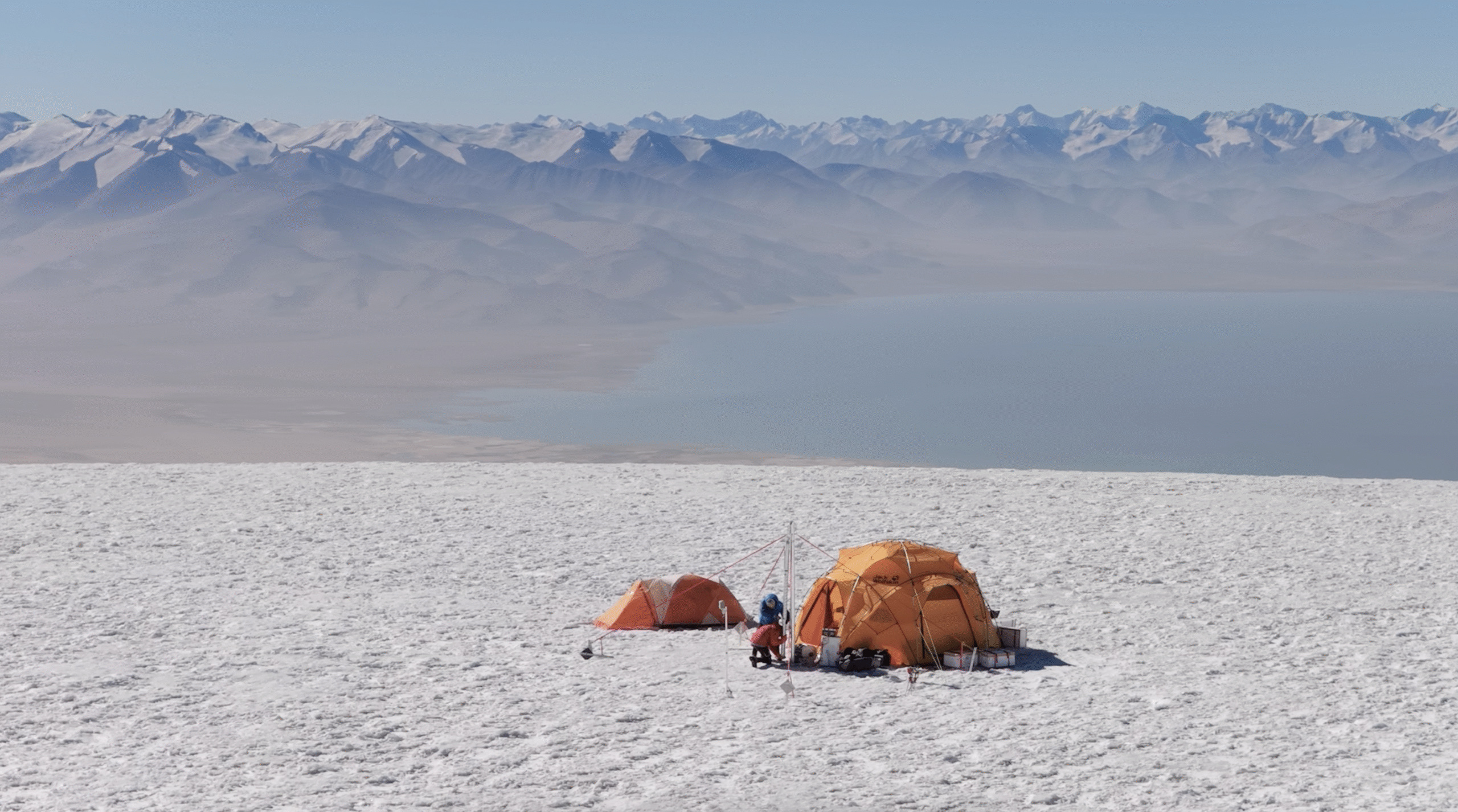
High in the heart of Central Asia, at the very edge of human endurance, a team of scientists has launched a mission that could help preserve the climate history of our planet for centuries to come. On 24 September, an international expedition began drilling deep into the Kon Chukurbashi ice cap in Tajikistan’s Pamir Mountains, a region often described as the “Roof of the World.” Their objective is to recover the first-ever deep ice cores from the Pamirs and safeguard the fragile “ice memory” contained within before it is lost forever to climate change.
A pioneering mission in the Pamirs
The Pamir Mountains are home to some of the highest and most ancient glaciers in the Northern Hemisphere. Like vast frozen archives, these glaciers preserve atmospheric records in the form of snow layers compressed over hundreds, even thousands, of years. Trapped within the ice are tiny air bubbles, particles of dust, isotopes and even microorganisms, each one carrying information about past climates, precipitation, and environmental conditions.
Despite their importance, the Pamirs remain one of the least studied cryospheric regions on Earth. No deep ice cores have ever been extracted here, largely due to the logistical challenges posed by the harsh terrain and extreme altitude. The current expedition, funded by the Swiss Polar Institute through the PAMIR Project, has managed to overcome these obstacles in collaboration with the Tajik Academy of Sciences.
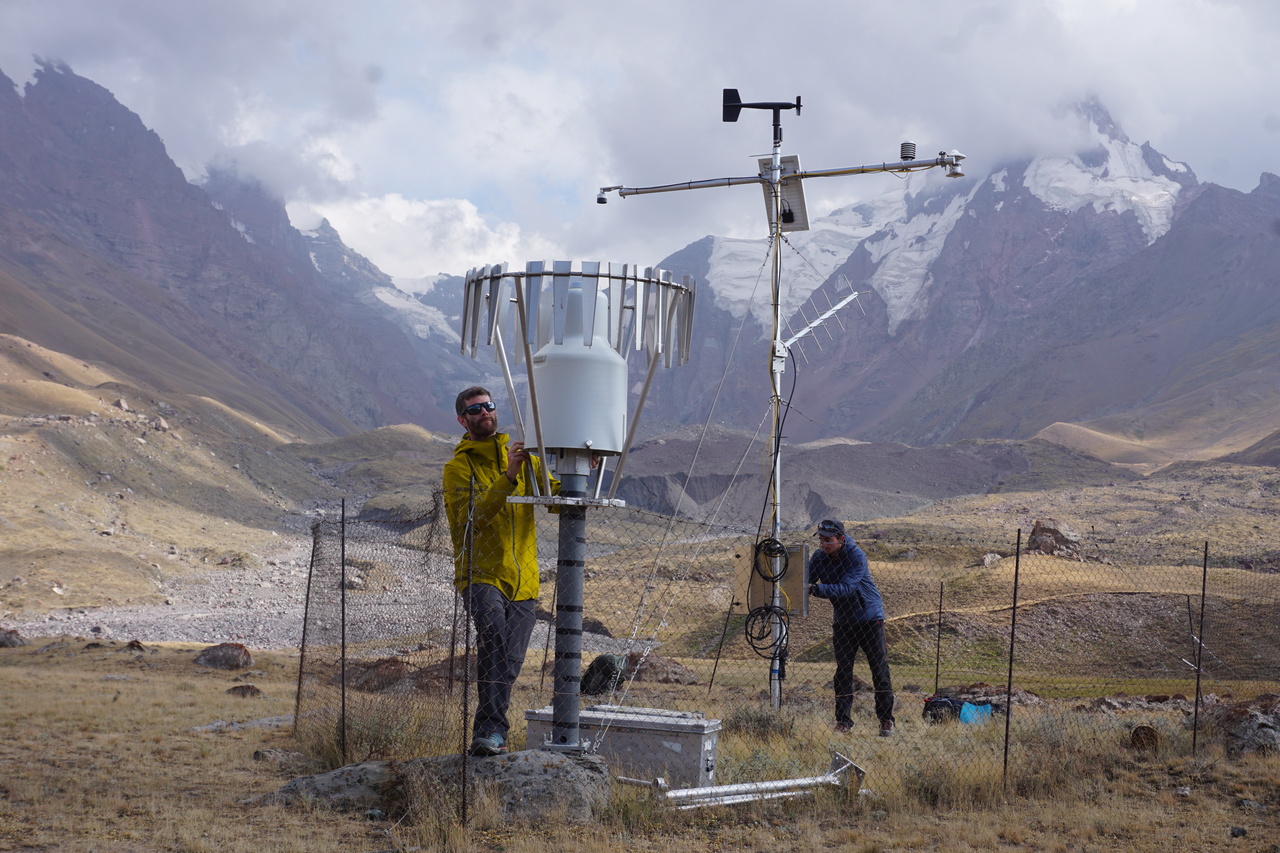
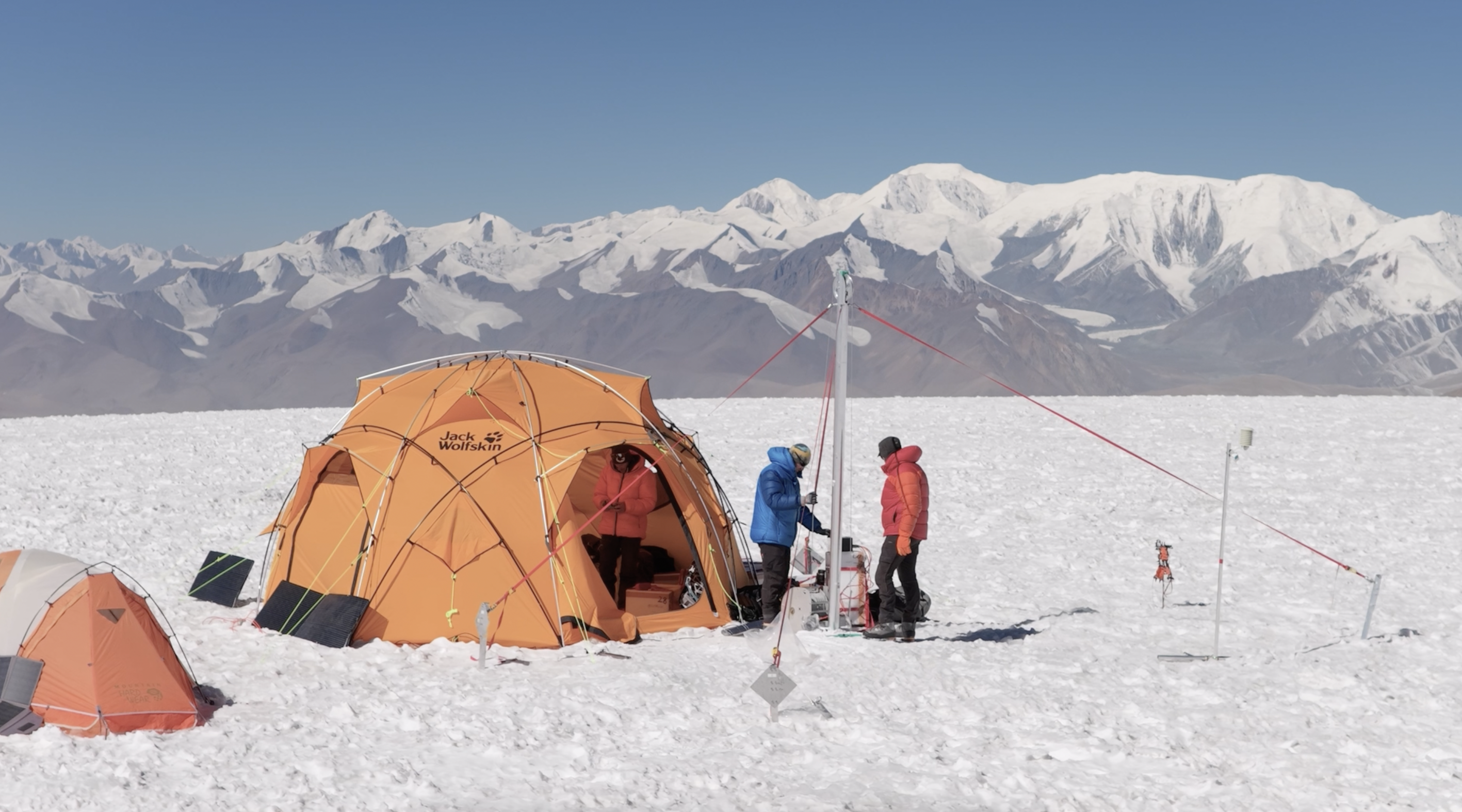
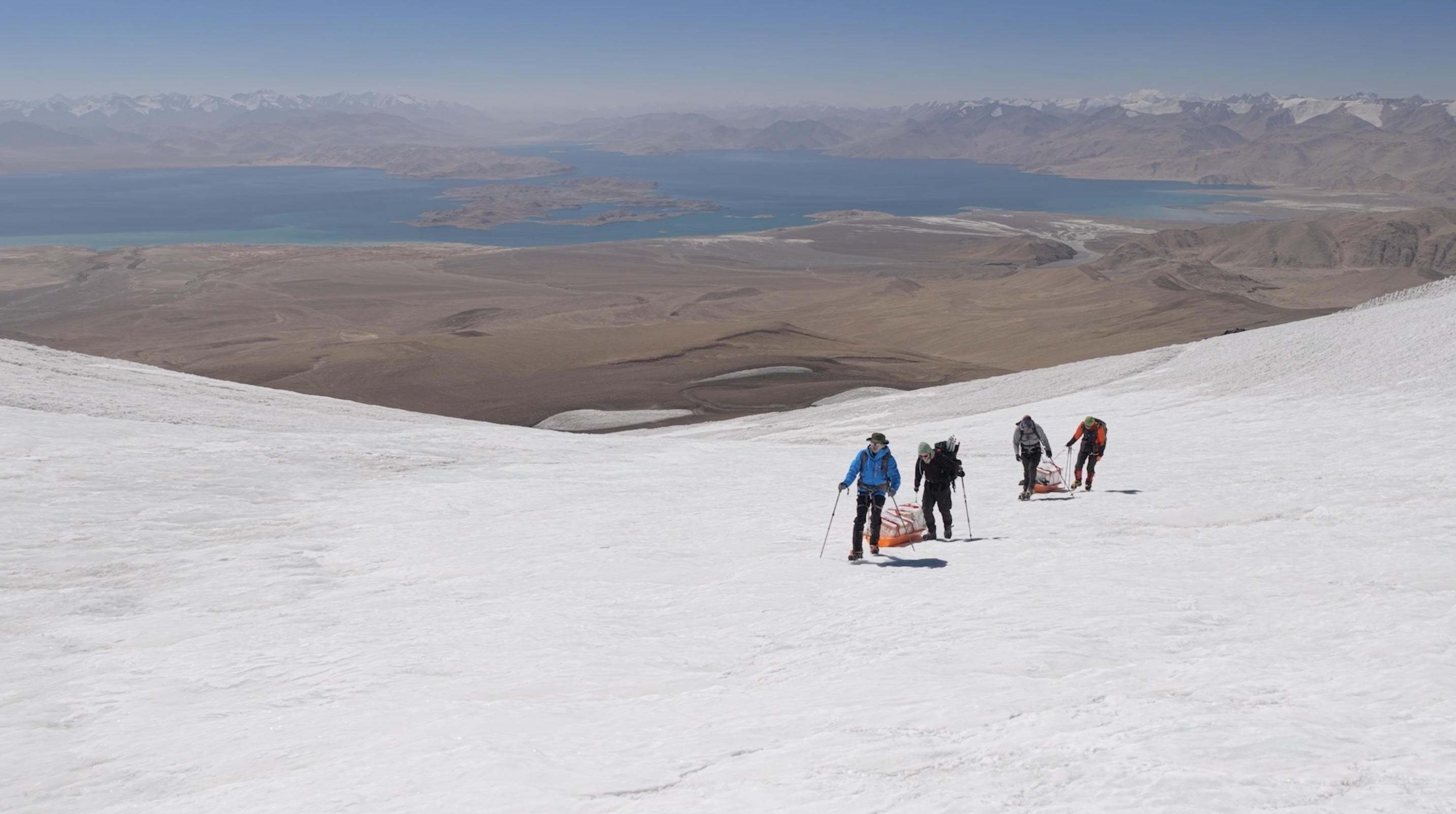
The team of 13 scientists, drawn from institutions in Switzerland, Tajikistan, Japan and the United States, is attempting to drill two ice cores reaching down to the bedrock, some 105 metres below the surface. Working at 5,800 metres above sea level in the Murghab region, they must spend weeks acclimatising to the altitude before establishing base and high camps from which to conduct their delicate drilling operations.
Why the Pamirs matter
For now, many glaciers in the Pamirs may appear stable compared to those in other parts of the world. But scientists warn that this resilience could be short-lived. Rising global temperatures and shifting weather patterns threaten even these high-altitude ice fields. If the glaciers disappear, the precious climatic information they hold will vanish with them.
Collecting an ice core from Kon Chukurbashi, therefore, represents a unique opportunity to secure Asia’s first deep, high-elevation archive of this kind. It is, quite literally, a race against time.
Dr Evan Miles of the University of Fribourg and the Swiss Federal Institute for Forest, Snow, and Landscape Research explains: “This ice holds hundreds and possibly even thousands of years of physical records of snowfall, temperature, dust, and atmospheric chemistry. We are racing against time to retrieve it before climate change induced melt damages these natural archives forever.”
A dual legacy: science today, preservation for tomorrow
Once recovered, one of the two cores will be analysed by the PAMIR Project’s international research team. Their work will provide crucial insights into how glaciers in the region have evolved, how they respond to climate fluctuations, and what this means for water resources and hazards in Central Asia.
The second core, however, is destined for a different journey. It will join the Ice Memory heritage collection in Antarctica, a unique sanctuary created to safeguard ice samples from around the world. At the French Italian Concordia Station, one of the coldest places on Earth, cores are preserved for future generations of scientists, long after the original glaciers may have disappeared.
This initiative is part of the Ice Memory Foundation, led by institutions including CNRS, Université Grenoble Alpes, Ca’ Foscari University of Venice, and the University of Bern. For Professor Thomas F. Stocker, Chair of the Foundation, the symbolism is powerful: “Today more than ever, we must protect the data that enable us to make science based decisions to better guide our societies, adapt to the global changes threatening our planet, and ensure that future generations are able to anticipate the profound transformations underway.”
A contribution to the United Nations Cryospheric Decade
The timing of the expedition is equally significant. It coincides with the launch of the United Nations Decade of Action for Cryospheric Sciences, which begins in 2025. By securing and preserving ice cores from the Pamirs, scientists are contributing not only to global climate research but also to a landmark international initiative.
As Olivier Poivre d’Arvor, French Ambassador for the Poles and Maritime Issues, remarked: “We can all be proud, France and Tajikistan together, that at the launch of this UN Decade of Action for Cryospheric Sciences, such an emblematic cooperation is taking shape. This operation marks a true flagship initiative and a milestone at the launch of the Decade.”
Beyond borders: a model of international cooperation
The expedition highlights the importance of international collaboration in climate science. The PAMIR Project alone brings together the University of Fribourg, the University of Zurich, the Tajik Academy of Sciences, Nagoya and Hokkaido universities in Japan, Ohio State University in the United States, and the University of Bern. It is supported by CHF 1.5 million in funding from the Swiss Polar Institute, under its Flagship Initiatives programme.
The Pamir research also builds on other collaborations in the region, including projects on the Fedchenko Glacier, once the largest glacier in the former Soviet Union, carried out with French and German partners. Together, these efforts are beginning to piece together the climatic puzzle of Central Asia’s “Third Pole,” a region that feeds water into major river systems supporting millions of people downstream.
Preserving a fragile legacy
For the scientists involved, the stakes are high. The expedition is not only about gathering data for today’s research but also about ensuring that the ice’s fragile memory survives for tomorrow.
If successful, the operation will create an enduring legacy: two cylinders of ancient ice, one destined for immediate analysis, the other for eternal preservation beneath the Antarctic snow. They will serve as both scientific resources and symbols of our shared responsibility to safeguard the knowledge embedded in Earth’s natural archives.
As climate change accelerates, the Pamir glaciers may not remain resilient forever. But thanks to this extraordinary mission, their story, written layer by layer in frozen time, will not be lost.