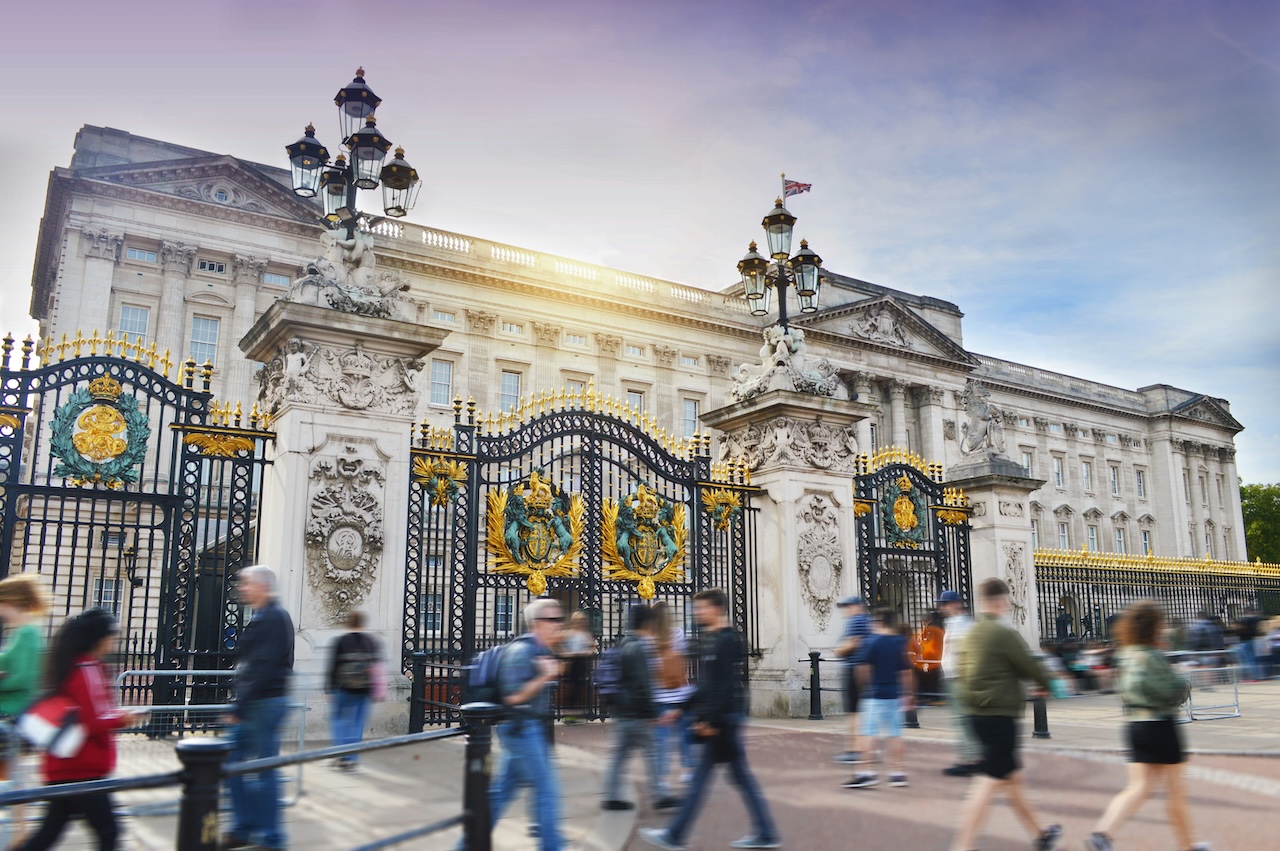



In 2027, the renovation works that have been going on at Buckingham Palace in London are set to come to an end. Yet despite the refurbishment, which will have cost £369 million, the British monarch, King Charles III, has announced he will not be living on the premises.
Since 1837, when Queen Victoria and her husband Prince Albert settled in, Buckingham Palace has served as the official London residence of the UK sovereign. And since the start, monarchs haven’t been very enthusiastic about the premises.
Despite the fact that the building is now very much linked to the late Queen Elizabeth II, even she had to be convinced to move to the Palace instead of staying at the nearby Clarence House by Prime Minister Winston Churchill. Yet throughout the years, Buckingham Palace has served as a royal home and as an epicentre of royal business of all kinds.
In 2017, a large-scale refurbishment of the premises was initiated. Ageing electrical installations, lead pipes, and ancient boilers – most of those last changed some 60 years earlier – were causing an increased fire and water damage risk. Ten years and £369 million later, the works should be finished by 2027.
While many thought King Charles III and his spouse Queen Camilla would be moving in after the renovation, the monarch has now officially decided to stay at the close-by Clarence House, where he has been living since 2003. His decision seems to be motivated by two main reasons. First and foremost, the couple, both in their late 70s, are not keen on having to move themselves, their belongings, and their staff. Secondly, Buckingham Palace could thus potentially welcome more visitors throughout the year, and more areas of the building could become open to the public.
Nonetheless, Buckingham Palace will still remain the main location for all official royal business, such as state banquets, audiences, and garden parties. Just like before, King Charles III is thus likely to travel a lot between Clarence House and Buckingham Palace.
“His Majesty retains huge affection for Buckingham Palace and a deep respect for its role in royal and public life. It will be a buzzing hive of royal activity in every other way,” a palace spokesperson commented.
Moreover, according to James Chalmers, keeper of the Privy Purse, the monarchs will still have access to private rooms within the palace where they can retire during the course of a working day, and which could be utilised as potential residential accommodation in times ahead.
The King’s finances
For the first time in history, the British monarch has also shared a financial account. This shows, among other things, that King Charles III paid £12.9 million in taxes in the 2024-2025 period. The sovereign’s private income comes from the Duchy of Lancaster estate, as well as a collection of holdings and investments.
The accounts also show a boost in the so-called Sovereign Grant (state funding for the monarchy) since 2017 in order to finance the renovation works of Buckingham Palace. For 2027-2028, the Grant will be lowered to £99.9 million, down from £137.9 million during 2026-2027.
However, the core grant will be almost double the amount of the 2024-2025 core grant. The increase is being explained as necessary in order to finance maintenance at occupied royal palaces, to strengthen the royal cybersecurity, and to install energy-efficient heating systems.
From 9 July – 27 September 2026, Buckingham Palace will once again be opening its State Rooms to the public. Standard tickets cost £33.00 when booked in advance. Outside the Summer period, visitors can only get inside on selected dates for exclusive guided tours.