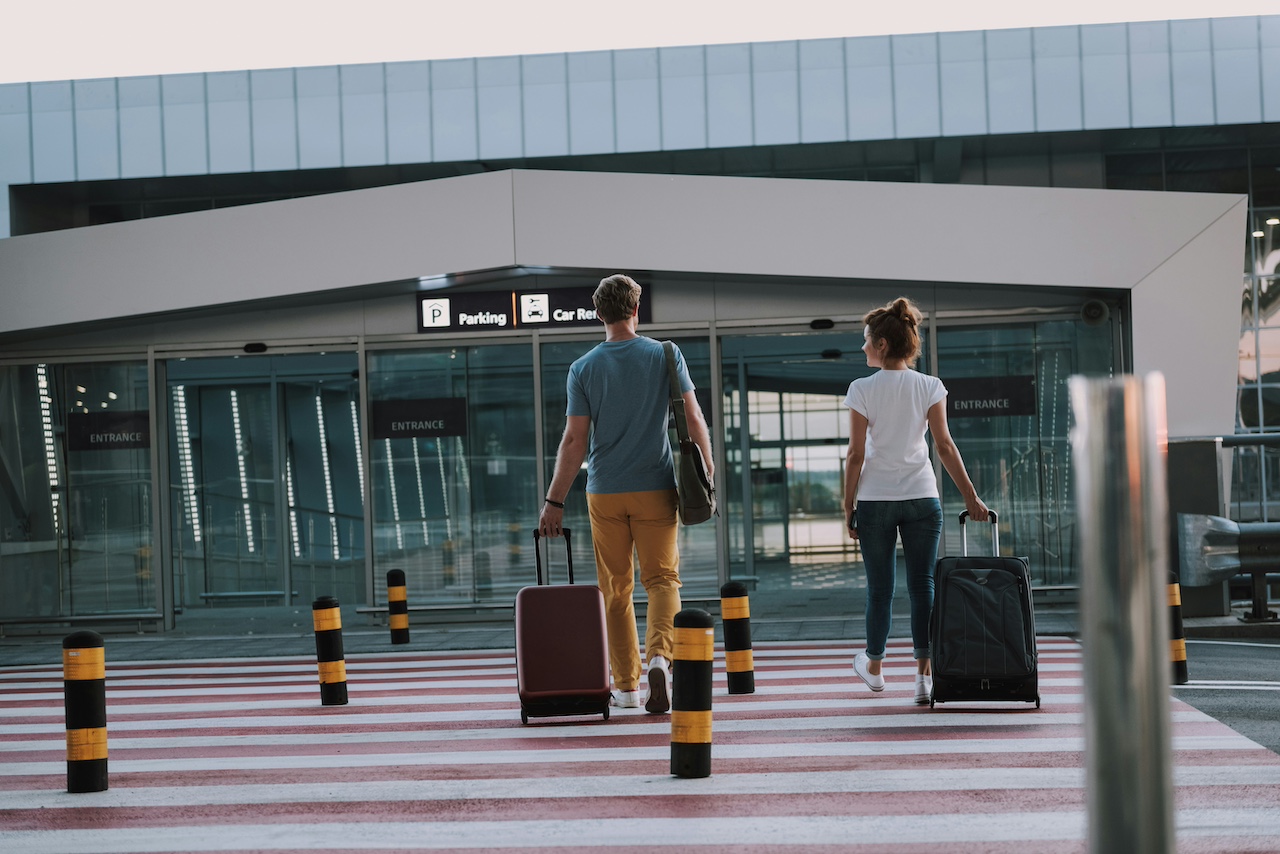



Travelling can be a stressful and very personal experience. By each going their own separate ways when arriving at the airport, couples are increasingly prioritising their relationship’s health. And it might work for you too.
Check-in, luggage drop-off, passport control, security check… For many, travelling by plane has become normal, but that doesn’t mean it goes smoothly for everyone. Even within the same couple, the whole airport approach can widely differ.
While one partner might find it very important to show up hours in advance and with everything organised until the last second, the other one might take things in a more relaxed manner – arriving just on time, wasting no more hours than strictly necessary, sometimes even missing their flight or their luggage as a result. Such contradictions within couples aren’t rare, and although there are no official data available, they have undoubtedly caused millions of arguments over the years.
Yet, according to the internet, things could be different. An airport divorce, as the technique is called, could save couples quite a bit of tension if both partners don’t share the same airport tactics. While the term might sound negative and permanent, the reality is far more positive.
There are different approaches to the airport divorce technique. While some couples might just split up before passport control and meet up a few minutes later, others might only be reunited once they’re aboard the plane. Others, still, prefer to each go to the airport separately and meet up at baggage claim once the plane has touched down, sometimes even travelling in different classes. The number of possibilities is (almost) endless, the goal is the same: to each travel according to one’s own preferences, thus avoiding unnecessary friction before the vacation has started.
“They can move at their own pace, manage their own anxiety and preserve their emotional energy for the holiday itself rather than spending it arguing in a security queue. Sometimes a little autonomy prevents a lot of unnecessary resentment”, psychologist Dr. Madeleine Roantree told Metro UK.
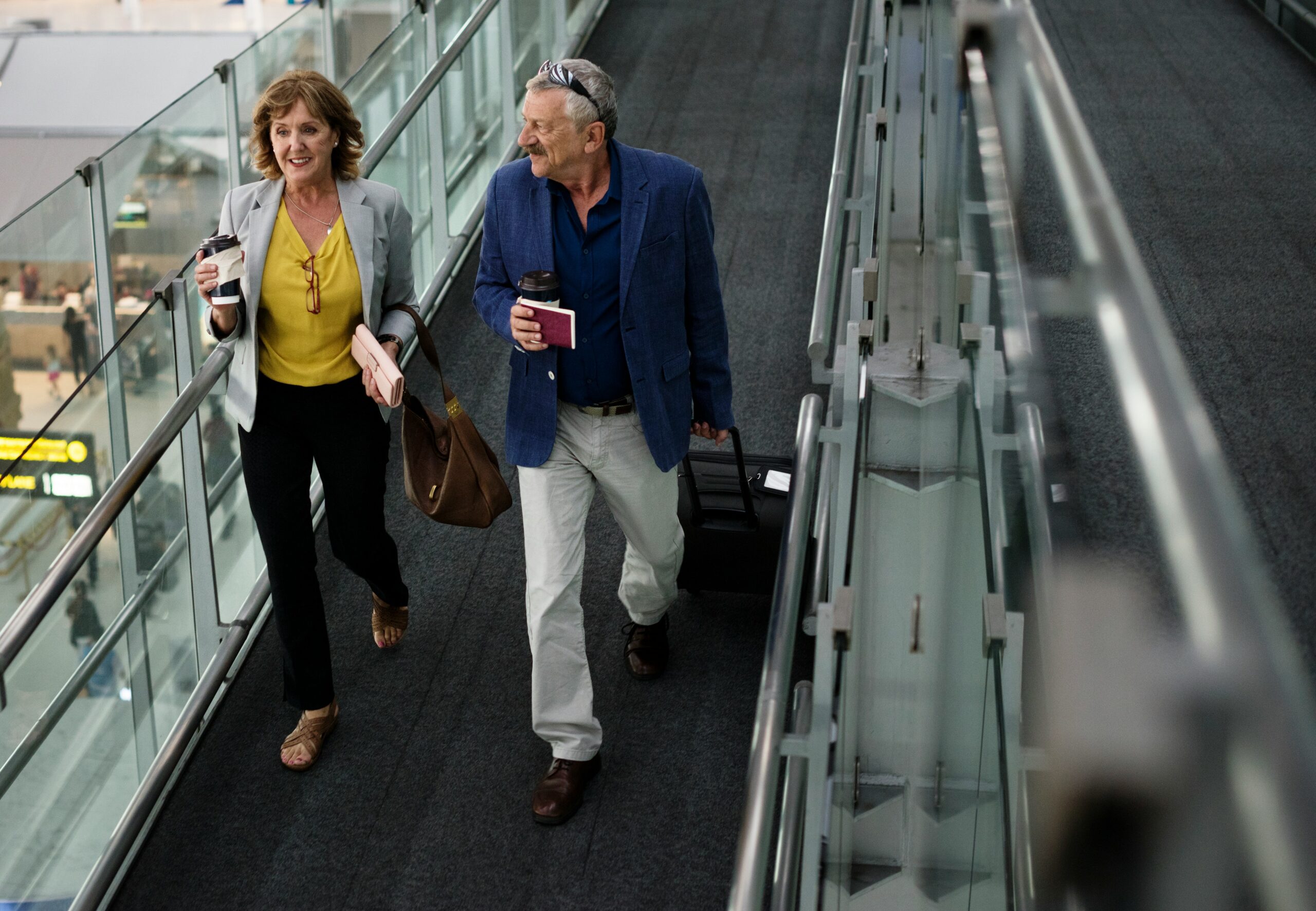
For some couples, an airport divorce might just be a simple solution to a practical problem. This can be the case, for example, when partners don’t have the same passport or travel perks, meaning it takes one of them more time to go through security than the other. Another example: one partner has a lot of difficulty sleeping in economy class, while the other hasn’t. Here, travelling in different comfort classes can be an easy and budget-friendly solution.
For other couples, a stressful situation such as travelling combined with a different approach may spark unwanted friction. When this is the case, it is important to determine whether or not every stressful situation eventually leads to conflict. In this case, an airport divorce might not be the solution, as the friction felt when travelling is just a symptom of a wider problem. When the issue of conflict mainly applies to travelling, staying flexible and adapting to that trigger can however be healthy for one’s relationship, allowing both partners some freedom at a moment when they really need it.