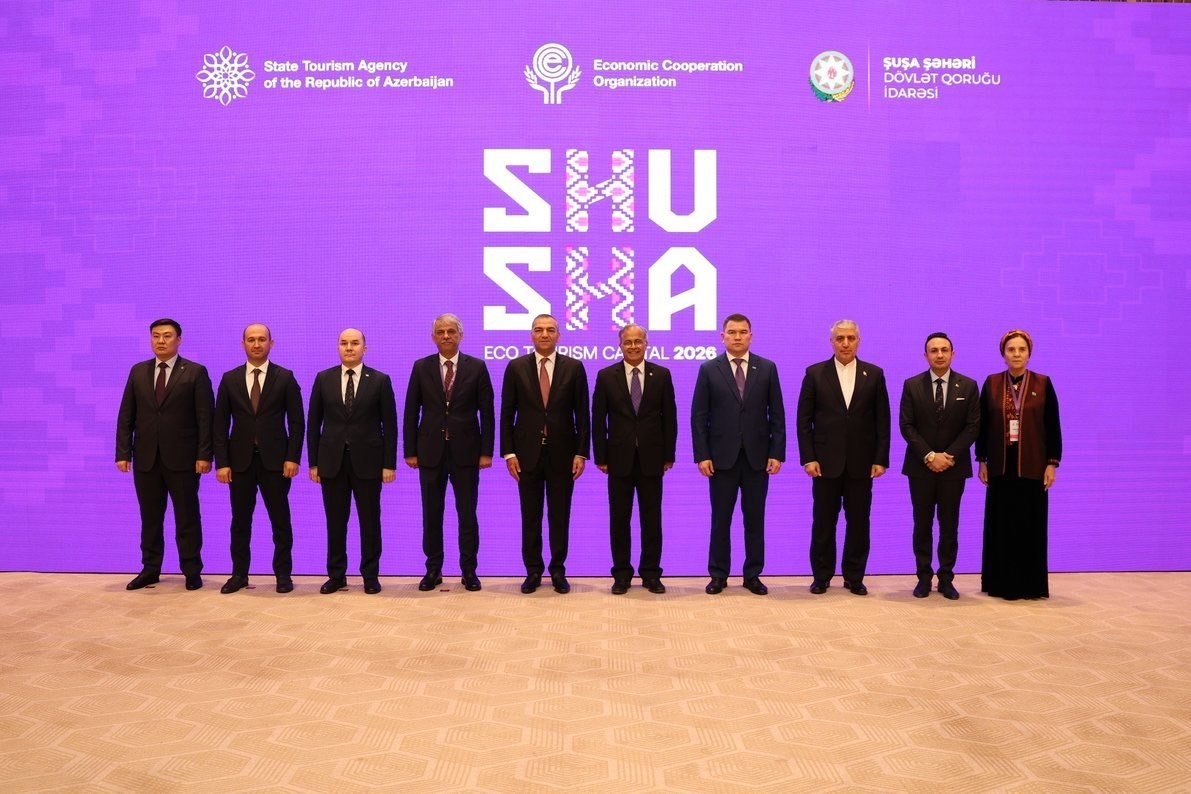


Shusha has officially marked its year as Tourism Capital 2026 of the Economic Cooperation Organization (ECO), following a series of high-level meetings held from 27 to 29 April that brought together ministers and senior experts from across the organisation’s member states.
The programme culminated in the 7th ECO Ministerial Meeting on Tourism, where participants adopted the “Shusha Declaration”, setting out the organisation’s priorities for regional cooperation in the sector. The declaration places a strong emphasis on sustainable tourism development, strengthening tourism education, increasing private sector participation and advancing joint initiatives, including the creation of regional tourism routes and the promotion of ecotourism.
“We are very grateful to Azerbaijan for hosting this very important event,” said Asad Majeed Khan, Secretary-General of the ECO to AZNews, adding that the designation would help “showcase Shusha’s attractions, its beautiful valleys and its cuisine to the rest of the region”.
At the national level, the Chairman of the State Tourism Agency of Azerbaijan, Fuad Naghiyev, described the hosting of the ECO events in Shusha as symbolically important, underlining the city’s cultural and historical heritage and its growing role as a tourism destination. He also noted that ECO member states account for a significant share of visitors to Azerbaijan, reflecting strong historical and cultural ties across the region.
Azerbaijan’s broader tourism ambitions
The launch of Shusha’s ECO Tourism Capital year comes as Azerbaijan continues to expand its tourism strategy and international positioning.
“Today, Azerbaijan is investing in the future of tourism, upgrading its infrastructure to make every visitor’s journey smooth and memorable. Combined with our simplified visa system, visiting Azerbaijan has never been easier,” President Ilham Aliyev has said previously.
The country is actively developing sectors such as MICE and adventure tourism, with a clear ambition to attract international events. Azerbaijan hosted COP29 in 2024 and is set to host the World Urban Forum in early 2026 in collaboration with UN-Habitat. It is also investing in winter tourism, with Shahdag Mountain preparing to host major international competitions in 2026.
This broader strategy is reflected in the country’s tourism performance. According to the World Travel and Tourism Council, Azerbaijan welcomed more than 2.57 million foreign visitors in 2025, a 2.1% increase year on year, while international visitor spending reached ₼3.4 billion.
Aktau named Tourism Capital 2030
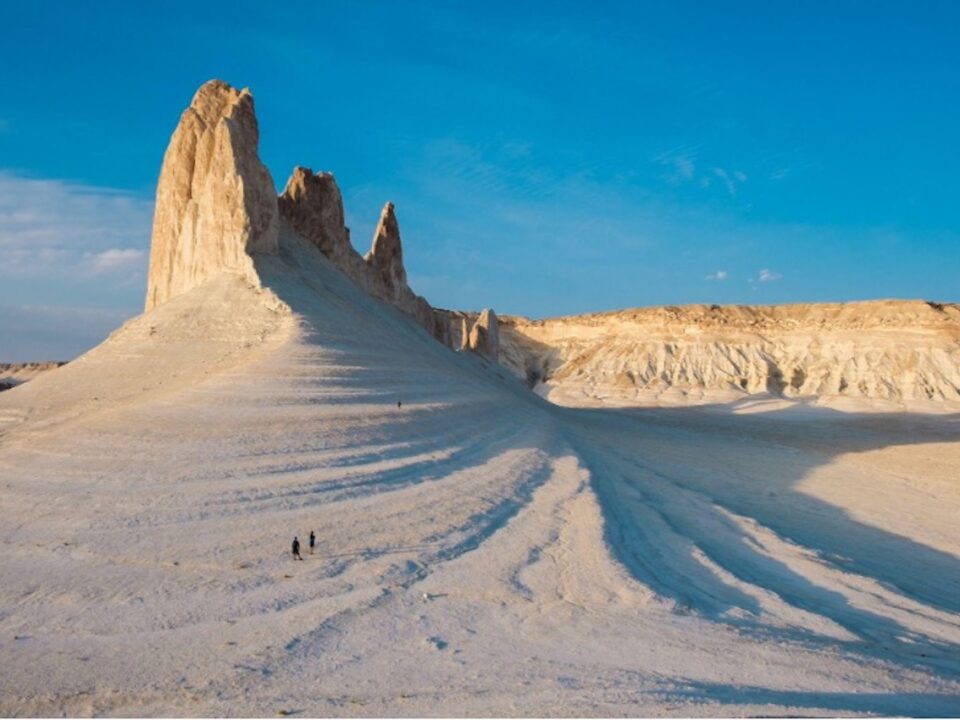
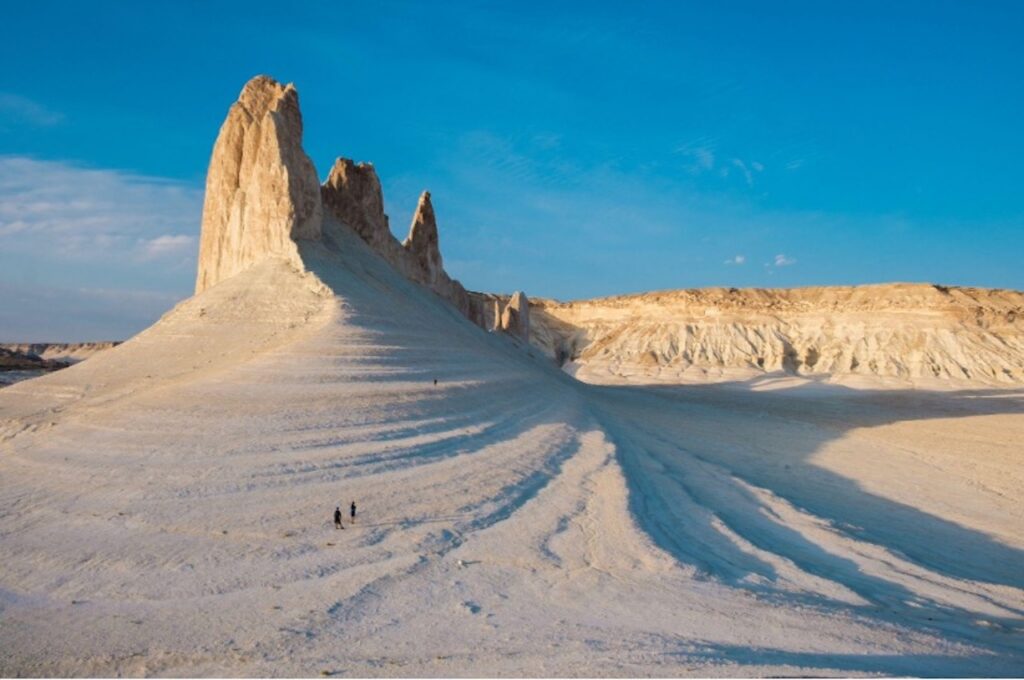
During the ministerial meeting, Aktau was selected as ECO Tourism Capital for 2030, providing continuity to the initiative and reinforcing the organisation’s long-term tourism agenda. The city has also attracted international attention for its natural environment. In 2020, Aktau gained global visibility when a large flock of flamingos gathered at nearby Lake Karakol, highlighting the area’s ecological appeal and potential for nature-based tourism.
Aktau’s selection was based on a range of criteria, including its tourism potential, infrastructure, cultural and historical significance, readiness to host international events, sustainable development credentials and security. According to ECO Deputy Secretary-General Yerzhan Mukash, the city was the only candidate nominated for the status.
Located on the shores of the Caspian Sea, Aktau has seen steady growth in its tourism infrastructure in recent years, supported by expanding transport links and an increasing number of hotel developments.
Although called a sea, the Caspian Sea is the world’s largest inland body of water, yet it offers all the characteristics of a seaside destination. In Aktau, the beach season typically runs from May until September or October, with summer temperatures often reaching 45° Celsius and minimal rainfall.
Aktau has also been positioning itself as a seaside destination, attracting both domestic and international visitors seeking beach tourism along the Caspian coast.