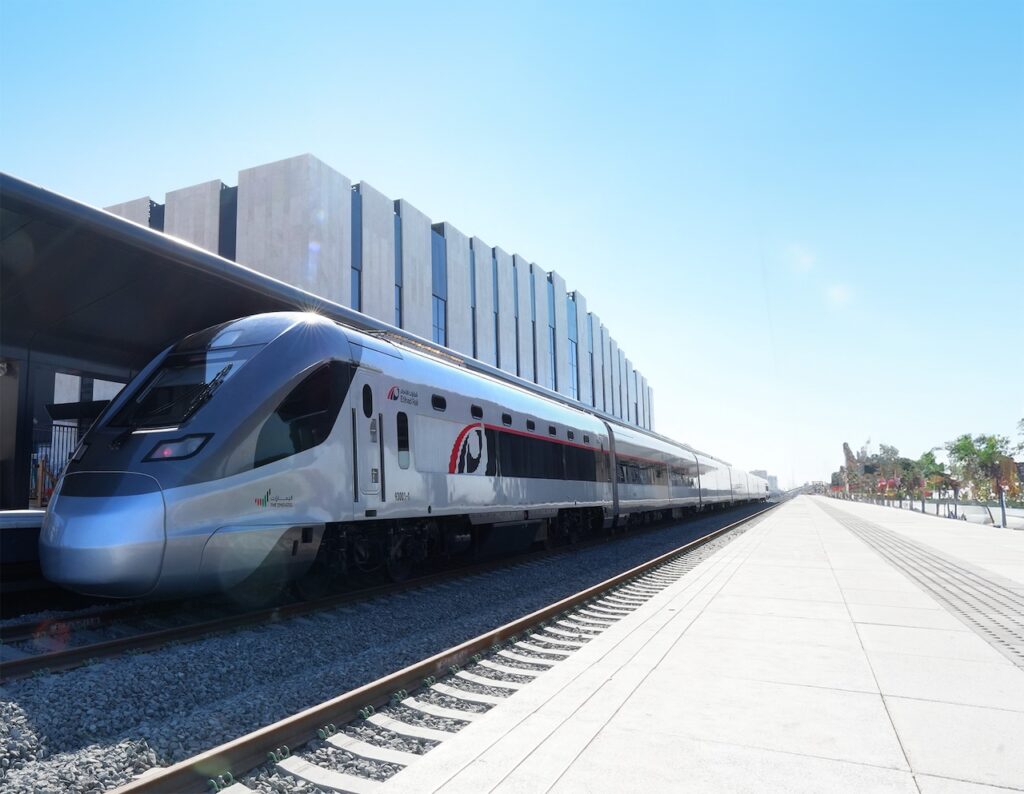
Two new trains, which promise to transform transport and connectivity in Egypt, were unveiled for the first time at TransMEA 2025 in Cairo. A new revolution is sweeping the country at 250 km/hour… and it’s on rails.
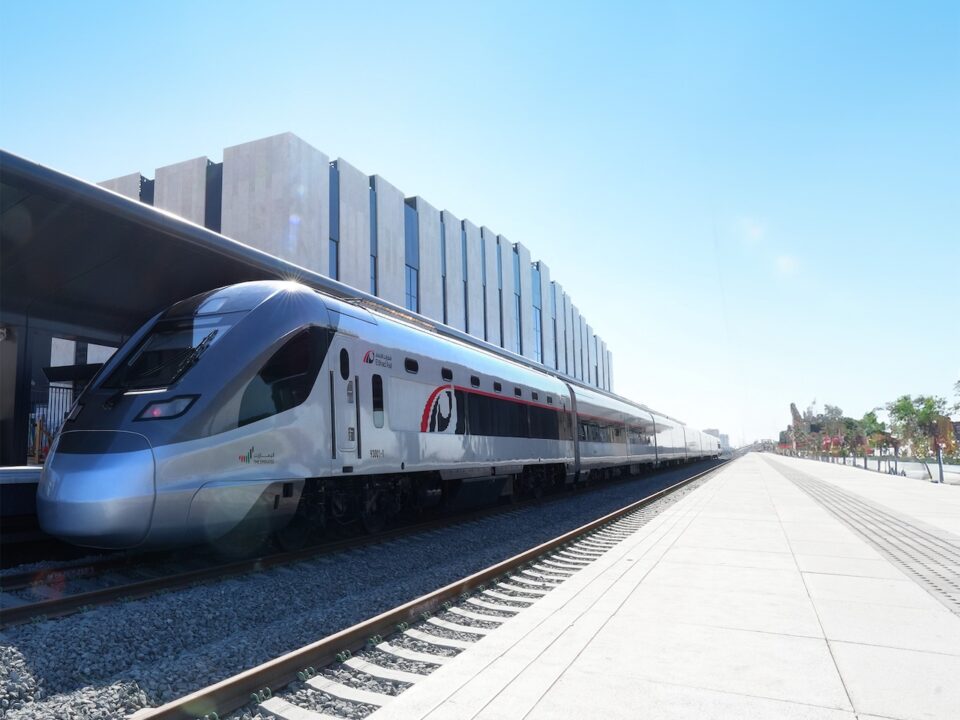
Egypt has introduced two new additions to its railway network: Siemens Mobility’s Velaro high-speed train and the Desiro HC regional train.
Designed for high-speed express service, the Velaro will operate on Egypt’s future network, connecting Ain Sokhna on the Red Sea to Cairo, Alexandria and Marsa Matrouh on the Mediterranean coast.
The Desiro HC will serve the same corridor as a regional service, connecting Cairo with Alexandria and Ain Sokhna with intermediate cities along the route.
Together, these trains will transform travel across the country for locals, tourists, and businesses. They represent a significant milestone for Egypt, strengthening its position as a leader in modern infrastructure in Africa and the Middle East.

The Velaro has been tailored to meet Egypt’s operational demands. It can reach speeds of up to 250 km/hour, has space for 489 passengers and is built to withstand desert conditions, with upgraded filtration and cooling systems. Siemens stated that they used Altair’s advanced simulation tools to optimise the train’s ‘digital twin’, which is a high-fidelity virtual model used to test performance prior to physical manufacturing.
The Desiro HC regional train, which was also built by Siemens Mobility, completed its inaugural run on the newly built tracks to the west of Cairo, near the 6 October dry port. With a storage capacity of 260,000 containers and five rail lines, the port forms an integral part of the Green Line, which is the 660-kilometre first phase of the network currently under construction, dubbed the ‘Suez Canal on Rails’.
Once completed, it will connect Ain Sokhna with Cairo, Alexandria and Marsa Matrouh along Egypt’s northern coast. According to Siemens, the new high-speed rail system will increase Egypt’s freight capacity by 46%.
Each Desiro train can carry 849 passengers and travel at speeds of up to 160 km/h. They feature air conditioning, ETCS Level 2 signalling protection and full wheelchair accessibility, expanding mobility to a wider segment of the population. The high-speed network is being developed by Siemens Mobility in partnership with Arab Contractors and Orascom Construction.
Egypt’s Deputy Prime Minister and Minister of Transport and Industry, Lieutenant General Engineer Kamel El-Wazir, said the debut of the two trains marked “a defining moment in Egypt’s transport modernisation strategy”, adding that the project would “redefine passenger experience, reduce travel times and boost connectivity between cities”.
Roland Busch, president and CEO of Siemens, said that Egypt was “witnessing the future of mobility take shape”, describing the public unveiling of the trains as ‘a powerful symbol of progress and partnership’ and a testament to the country’s ambitions for sustainable mobility and economic growth.
Overall, Egypt will build three new lines totalling over 2,000 kilometres, linking major urban centres and serving 90% of its population. Once completed, it will be the world’s sixth-largest high-speed rail network by length. Siemens will also supervise and maintain all rolling stock across the system, including the Velaro, Desiro, and 41 Vectron locomotives.
Morocco became the first African country to have a high-speed train when it linked Tangier and Casablanca in 2018, with speeds of up to 320 km/hour.
Other countries on the continent are following suit: Nigeria, for example, has announced plans for a multi-billion-dollar, 4,000-kilometre high-speed network, while the African Union is advancing a long-term continental vision through its African integrated high-speed railway network under Agenda 2063.