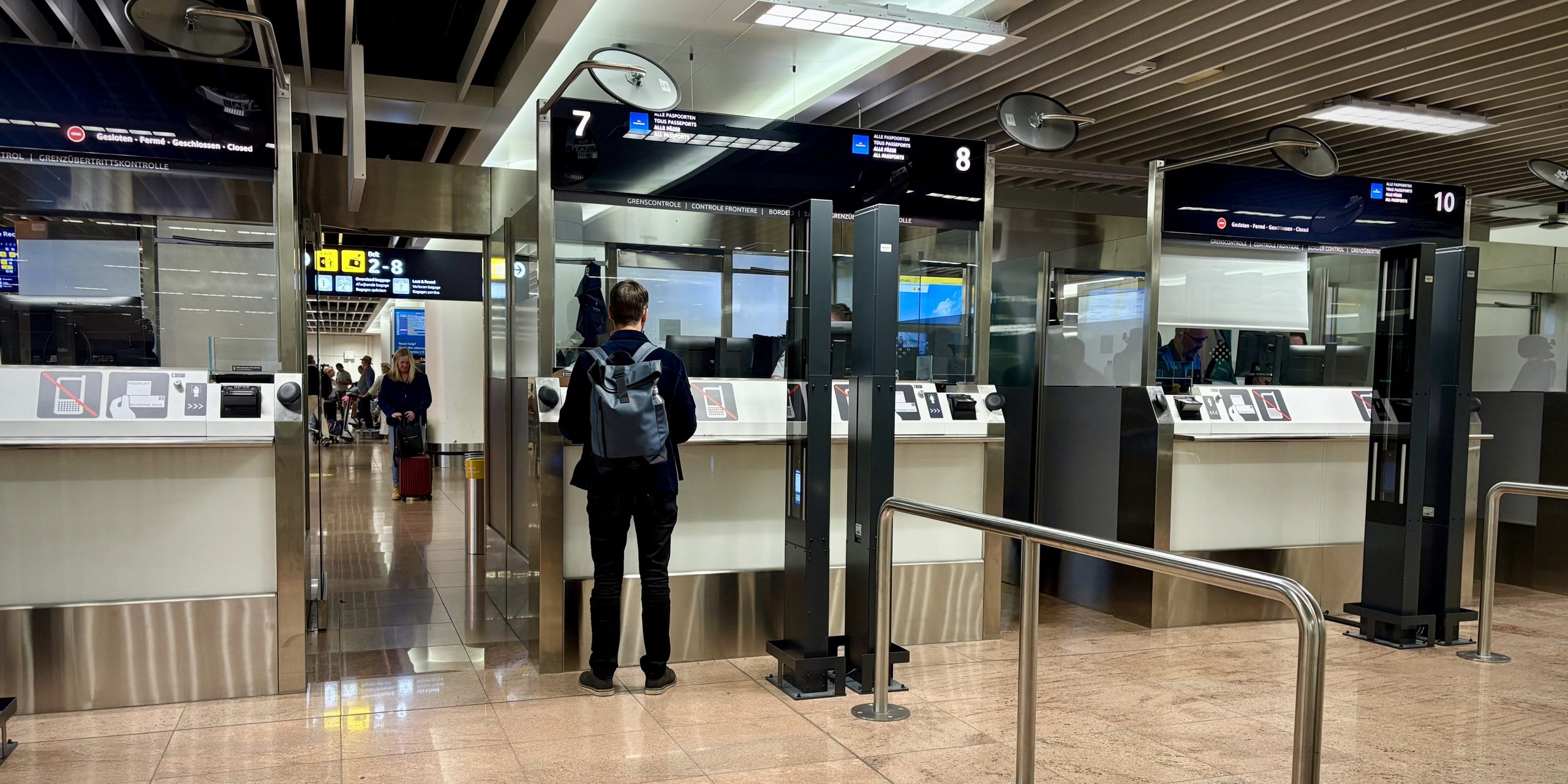



Errors in the European Union’s Entry / Exit System (EES) could mean that travellers could be wrongly accused of overstaying their welcome, leading to penalties and bans from entering the bloc, according to consumer champion Which? and comments from the UK government.
The EES requires third-country nationals to register biometric and passport information when they enter the Schengen Area and when they leave again. But various outlets are now reporting that the new registration system (which applies to visitors from the United Kingdom, USA, and others) is, in some cases, failing to properly record when someone has left the zone.
Since there is a limit on how much time third-country visitors are permitted to spend in European Union countries, such mistakes could cause problems for those individuals. British passport holders are only allowed to spend 90 days in every 180-day period in the Schengen Area, and overstays can result in costly fines and refusals of future visits.
A high-profile example shared with media is that of author Jojo Moyes, who wrote the bestseller, Me Before You. Moyes went to Portugal in spring 2026, and later returned to the EU bloc, where her entry and exit record was checked by French immigration officers in Marseille. Though she had spent a total of only 23 days in the bloc, she was incorrectly found to never have left Portugal and was informed by authorities she could be charged €10,000 and be banned from entering the EU for two years if she attempts to return before the problem is sorted out. Rectifying the record could entail the expense of hiring a lawyer.
Anyone concerned that they may face the same issue can see on the EES website how many days within the last 180 the system has them down as being present in an EU nation. If there is a suspected error in the record, it can be corrected by informing the relevant country’s Data Controller, including a passport scan and proof of travel in the email. Which? reports that the right controller can be identified on the Travel to Europe data protection page.
The UK’s Foreign and Commonwealth Development Office confirmed in comments to The Guardian that it is “aware of reports of inaccuracies in some EES records affecting British nationals, including incomplete records and the registration of some individuals who are exempt from EES. We are raising these issues as part of our engagement with the European Commission.”
The failure to record exits is not the only problem EES has generated. Its implementation from October 2025 came later than expected, and when it was rolled out, connection issues, staff and infrastructure shortages, and other glitches created huge queues and travel disruption in major hubs around Europe, as travellers attempted to engage with the system for the first time. Some flexibility to suspend EES protocols at peak times was allowed during the phase-in, but that is no longer the case, despite pleas from a suite of travel stakeholders.
Last year, the EU’s IT agency, eu-LISA, launched a legal procedure against the tech consortium behind the €212-million EES development, due to the chronic delivery and schedule delays.