

Future aircraft movements could abandon pre-defined flight paths and see aircraft bunched closer together in the skies if moves by the United Nations International Civil Aviation Organization (ICAO) are adopted worldwide.
The news comes as the ICAO hosts talks to promote new procedures to reduce aviation delays and cancellations, including a new process to allow airlines, airports, and air traffic control to better exchange real-time information, the abandonment of pre-defined flight paths, and reviews of how efficiently airspace is being used.
Dubbed “Airport Collaborative Decision Making” (A-CDM), one part of the process enables decisions like when and how flights take off or land to be made together, which the ICAO claims improves the reliability of flights. It is part of a “Total Airport Management” concept that will see this type of coordination across all airport activities, from baggage and refuelling to passenger movements.
In addition to publicising the development of coordinated airport activities, an ICAO press release highlights the organisation’s focus on making more space available. The gradual adoption of “free route airspace” will, the agency says, enable pilots to select “the most direct and efficient path rather than following pre-established routes. It describes how entire portions of controlled airspace can be dynamically managed to traffic need following the ATFM “flexible use of airspace” principle.
The agency argues that the implementation of ATFM is already required in many circumstances, and with the goal of ramping up and expanding its general usage, the ICAO has convened stakeholders representing all areas of global aviation operations for international talks to find the way forward.
A top priority, the ICAO says, is ensuring that “every region and airport can accurately measure and manage airspace and airport ‘capacity,’” which is the maximum number of aircraft that can be safely handled during a given time. The agency is also intent on reviewing minimum aircraft separation distances to safely increase the maximum capacity of airspace.
Sustainability and decarbonisation are also on the agenda. The ICAO forecasts that by 2050 international aviation emissions could triple compared to 2015, and notes that in 2022, direct emissions from aviation accounted for 3.8% to 4% of total EU GHG emissions. Aviation generates 13.9% of transport emissions, making it the second biggest source of greenhouse gas emissions in the transport sector, after road transport. The European Commission proposed a review of its emissions trading system in July 2026 to improve Europe’s competitiveness and keep it on track for 2040 climate targets.
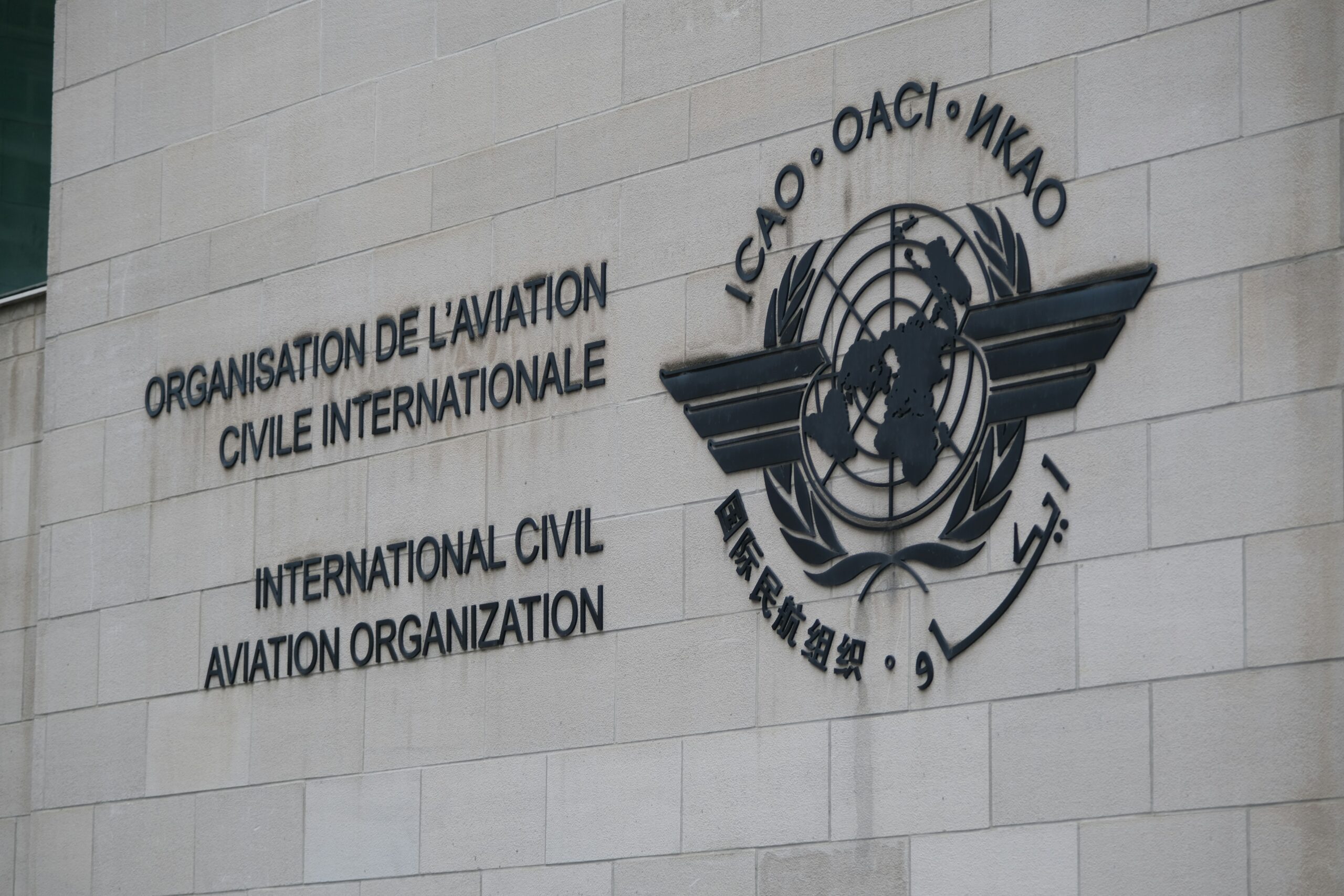
Addressing delegates at ICAO Headquarters in Montréal, Secretary General Juan Carlos Salazar said in an opening statement. “Together, we will deliver a truly connected network for air traffic flow management, enabling every flight to operate in a predictable and efficient manner while enhancing safety and sustainability.” He added that “By the end of this week, we should ensure we have coherent and practical plans, working side by side in coordination with our neighbours and partners.”
After the talks’ conclusion on 9 October 2026, the ICAO said it will update its guidance to Member States to help with the rollout of the new procedures.